How Often to Water Potted Plants in Spring: The Finger Test
If you’re asking how often to water potted plants in spring, my starting answer is: check daily for a pot in full sun or exposed wind, and every two to three days for one in cool, sheltered part shade. Water when the mix is dry 2–5 cm (1–2 in) below the surface, not because a calendar says so.
Those are inspection intervals, not watering appointments. A 20 cm (8 in) plastic pot may still be damp below a crisp surface after a cool shower, while a 10 cm (4 in) pot has a smaller reserve. The useful question is how long this particular pot takes to dry where its roots are working.
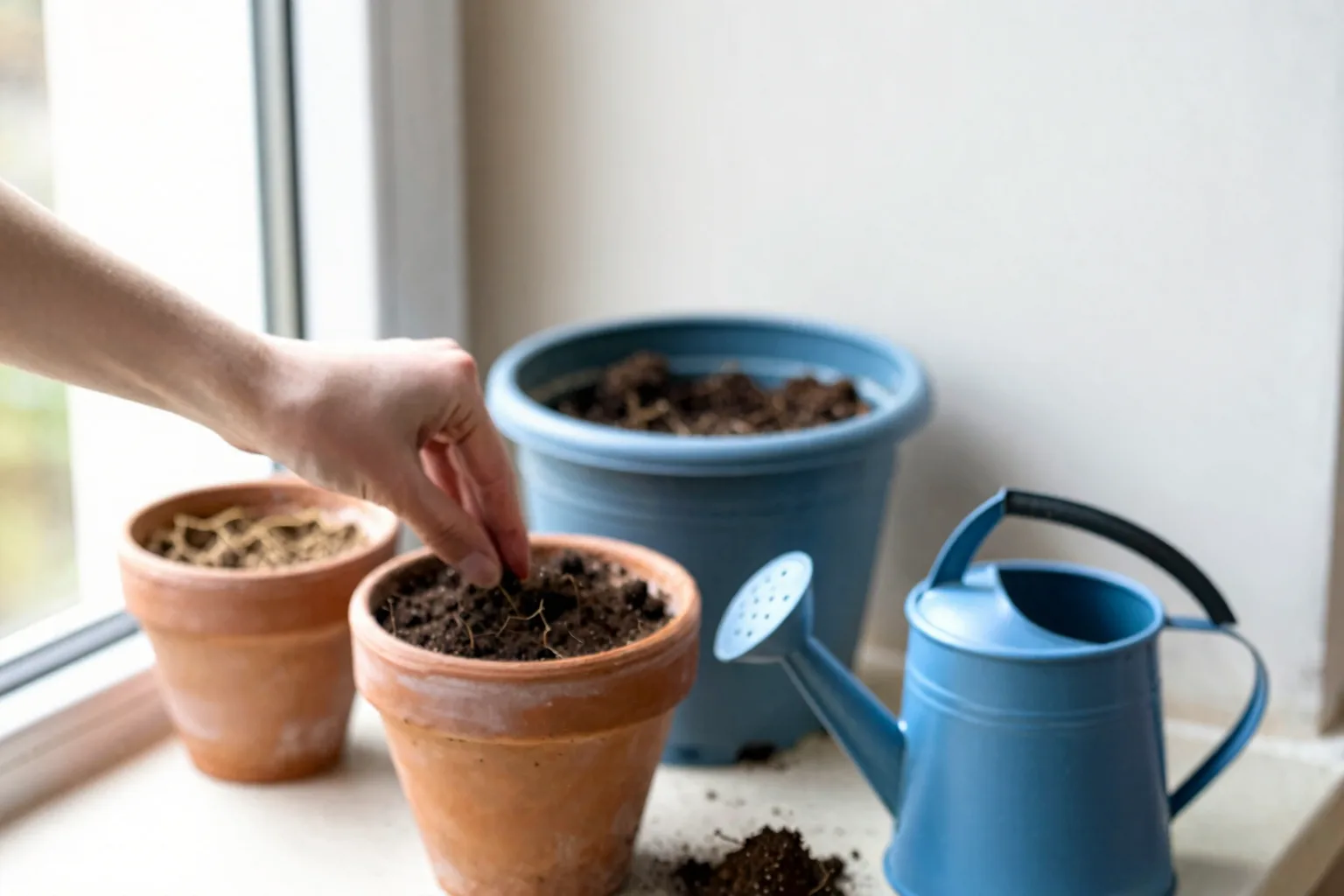
There is no spring watering schedule—start with the pot, not the calendar
A spring balcony can change from cool and wet to bright and windy within a day. The plant, pot and position decide the interval: root volume, pot material, drainage, plant maturity, leaf growth, temperature, recent rain and wind all change how quickly usable moisture disappears.
Root volume is the first practical variable. A large container holds a bigger reserve, but its lower mix can remain wet after the surface looks dry. A small pot has less reserve and more exposed surface relative to its volume, so it can reach a dry root zone sooner under the same conditions.
Suppose two basil plants sit side by side, one in a 10 cm (4 in) pot and one in a 25 cm (10 in) pot. Check both at the same depth rather than watering them together. If the small pot is dry and the larger pot is still cool and damp below the surface, the answer is not to split the difference; water the small pot and recheck the large one later.
Material changes your margin for error. In the same size and exposure, unglazed terracotta can lose moisture through its walls, so it may buffer an enthusiastic waterer but punish a missed check. Plastic usually holds moisture longer, giving more reserve during a hot spell but less help if you keep watering wet mix. Neither material replaces a moisture check.
Drainage can reverse the answer. A flat-bottomed pot can press its hole against a saucer or balcony floor, slowing the exit of water. Raise it on feet or a stand that leaves an air gap, and check that the hole is open. For the hole question itself, see How Many Drainage Holes Does a Container Need? The Pot Size and Soil Volume Chart for Container Vegetables also helps explain why a deep pot can stay wet below a dry-looking top.
For a second reference, compare University extension guidance on container irrigation, potting-media moisture and drainage with your actual pot. I’d give the pot’s measured drying pattern more weight than a generic spring calendar. Mix structure matters too; the Best Potting Mix for Balcony and Patio Containers is a useful companion decision before you try to correct watering with a schedule.
The finger test, done at the right depth
Test when the pot has not just been watered and when the surface is safe to touch. You’re trying to sample the layer the plant can use, not disturb the roots or judge the mix by colour alone.
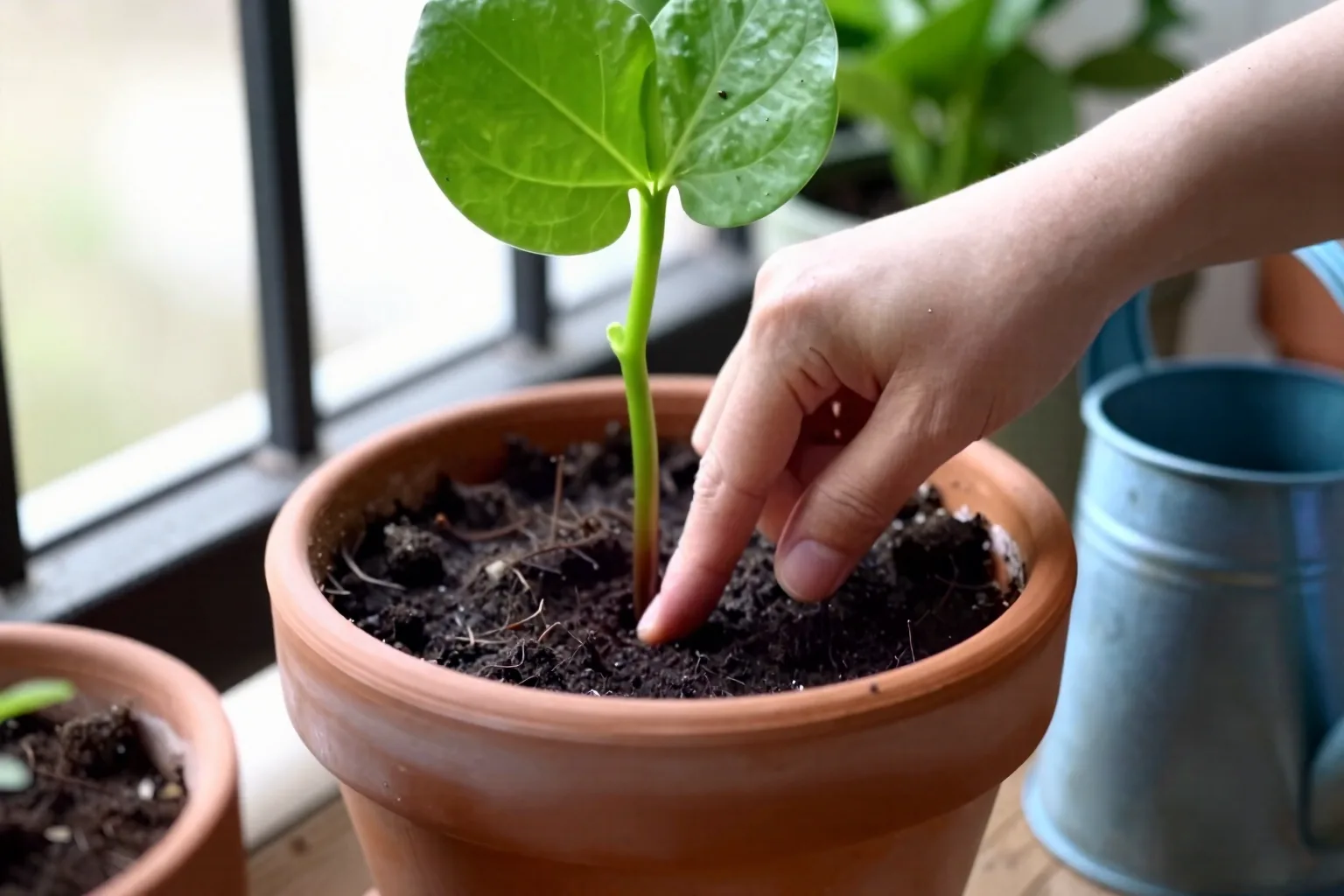
Push your finger into the mix midway between the stem and the pot edge, then use this sequence:
- Insert 2–5 cm (1–2 in) for most established containers. Do it in one smooth movement rather than scraping the surface.
- Feel for temperature and texture. Dry mix feels loose, light and barely cool. Slightly damp mix feels cool, with a few particles clinging to your skin but no paste.
- Notice resistance. A hard crust or slab can mean compaction, not dryness. A slick, heavy or muddy feel means the tested layer is still very wet.
- Test a second spot if the first reading is close to the stem, beside the wall, or different from what the leaves suggest. Water can travel unevenly through a pot.
- Record the result. Write dry, damp or wet beside the plant’s name. The change between today and tomorrow is more useful than one isolated reading.
Change the depth for the plant. In a shallow seedling pot, check about 1 cm (½ in) down because the root zone is close to the surface. In a tall container, your finger may find a dry top over damp lower mix; use a wooden skewer for the middle and lower section. Cacti and succulents need a much drier column than leafy herbs or fruiting plants, so don’t apply the same trigger to both.
A skewer is simple backup: push it down as far as practical and inspect what clings when it comes out. Dark, cool particles suggest moisture in that channel; a clean, dusty skewer suggests dryness there. Pot weight adds another clue. Lift a small pot by its rim before watering, then compare it after a thorough soak. The change becomes familiar quickly, even if the finger test cannot reach the base.
From one reading to a watering decision
Use the reading together with the plant’s moisture preference. The dry top layer does not have one automatic meaning.
| What you find | What it suggests | Next move |
|---|---|---|
| Dry at 2–5 cm (1–2 in) | Most established herbs, flowers and fruiting plants are reaching their watering point | Water slowly and thoroughly |
| Dry surface, damp below | The upper layer dried faster than the deeper root zone | Wait for an established deep-rooted plant; check a seedling sooner |
| Cool and slightly damp | There is usable moisture at the test depth | Wait and recheck tomorrow or in 48 hours |
| Wet, slick mix with limp leaves | Water is not the obvious missing ingredient | Stop watering and inspect drainage |
| Dry deeper down in a succulent pot | The plant may be ready for its less-frequent deep soak | Water fully, then let the mix dry farther down |
When watering is called for, remove the saucer first. Apply water slowly across the surface so it has time to enter the mix. If it runs straight down the gap between pot and mix, pause for a minute and apply another pass closer to the centre. Continue until the root ball—the roots and mix held together in the pot—is wet through and a small amount drains from the holes. Empty collected water rather than leaving the pot standing in it.
Repeated tiny sips create a different problem. A splash that wets only the upper few centimetres leaves lower roots dry; repeating that pattern can encourage roots to remain near the surface, where the next dry afternoon affects them first. A full soak followed by a genuine drying check gives the whole container a clearer wet-to-dry cycle.
If very dry mix repels water, one pass may run around the root ball without wetting it. Give a slow first pass, wait about ten minutes, then repeat. That pause lets the dry particles take up some water instead of sending the second dose down the same open channel.
Should I water potted plants in spring in the morning or evening?
Morning is usually the easiest time to see drainage and empty the saucer, but evening watering can work when the root ball is genuinely dry. The moisture reading outranks the clock.
Does rain count as watering for plants in pots?
Only if enough rain reaches and wets the root ball. Pots beneath a balcony overhang may receive almost none; check below the surface after the shower and empty a filled saucer.
Can I use a moisture meter instead of the finger test?
A meter can supplement the test, but it samples one narrow point and may behave inconsistently in coarse or extremely dry mix. Compare it with pot weight and a manual reading.
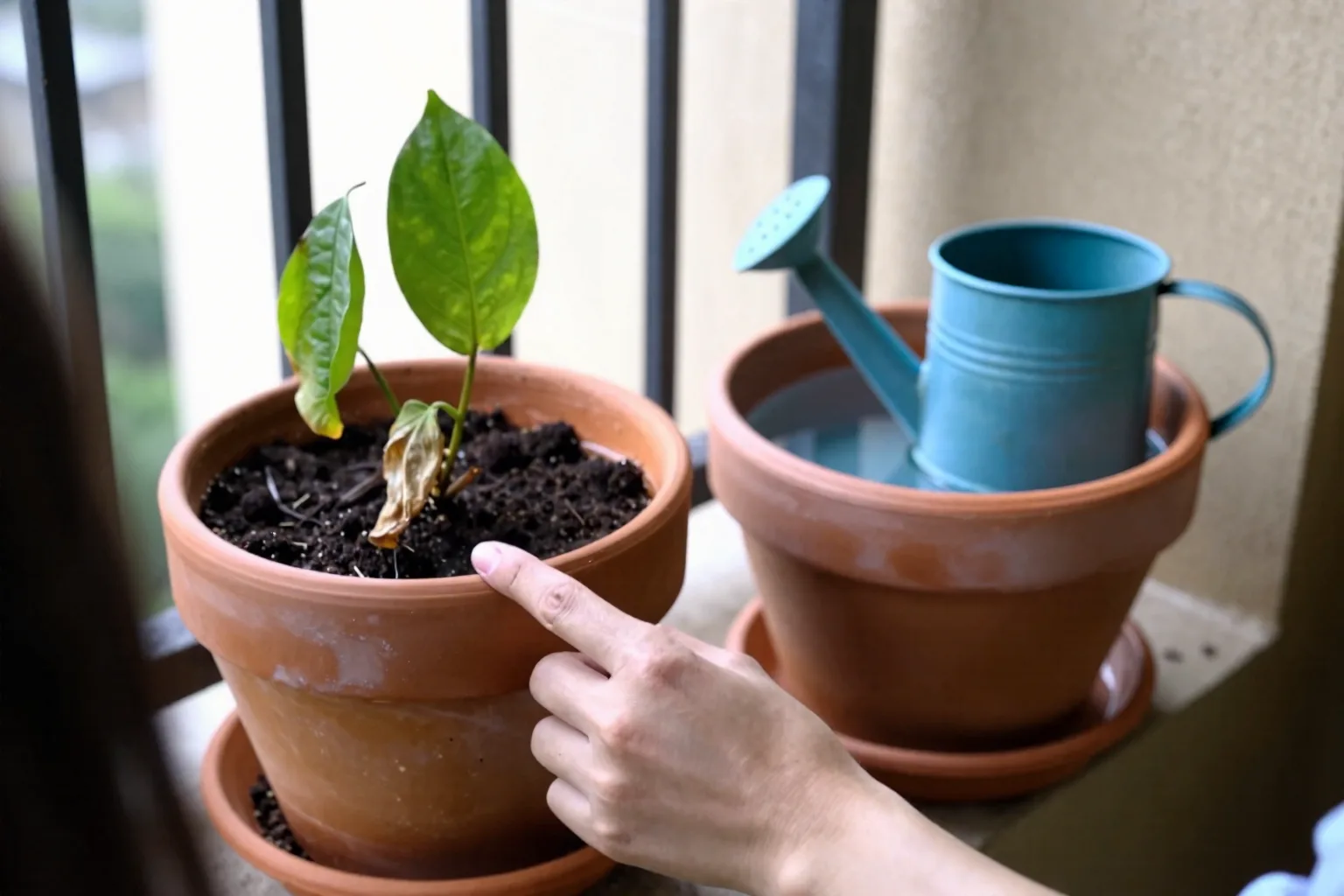
When dry leaves and wet soil point in opposite directions
Now compare the leaves with the soil, but let the moisture reading decide which explanation to test first. Wilting is a loss of firmness, not a diagnosis by itself.
Dry mix plus limp leaves: rehydrate slowly. If water beads, races down the sides or appears immediately beneath the pot, use the two-pass method above. Move a wind-exposed pot out of the strongest gusts while it recovers, but don’t keep it permanently shaded if the crop needs sun.
Wet mix plus limp or yellowing leaves: don’t add water. Saturated pores contain less air, so roots can struggle to take up water even though water surrounds them. Remove the saucer, clear the holes and move the pot out of rain. If the mix stays wet, compaction or an oversized container may be holding too much moisture.
Dry top plus wet lower mix: suspect a perched water table. In plain terms, a fine or compacted mix can keep a saturated band above the drainage holes: free water leaves, but capillary forces hold water in small pores. The top then looks thirsty while the bottom remains oxygen-poor. Wait for an established deep-rooted plant, and correct the mix or container setup rather than adding more water.
Drying unusually fast: check small volume, dark sun-heated pots, strong wind and roots filling the container. During a cold, rainy spell, evaporation and plant water use can slow, so yesterday’s interval may be too short. Before changing your plan, check Local meteorological service data on spring rainfall, wind and frost conditions and then test the pot itself.
Today, choose three pots with different sizes or positions. Check each at the same depth, write down dry, damp or wet, and repeat tomorrow; if conditions are cool, repeat in 48 hours. That small log gives you a pot-specific spring rhythm. The line worth saving is: check by depth, water the root ball, and empty the saucer.
Frequently Asked Questions
Should I water potted plants in spring in the morning or evening?
Morning is usually the most practical time because it gives foliage and the soil surface time to dry, but evening watering can work when the root ball is genuinely dry; avoid watering on a fixed schedule simply because it is morning.
Does rain count as watering for plants in pots?
Only if enough rain reaches and wets the root ball. Check below the surface after the shower, especially under balcony overhangs, and empty any saucer that has filled.
Can I use a moisture meter instead of the finger test?
A meter can supplement the test, but it samples one narrow point and can behave inconsistently in coarse or very dry potting mixes; compare its reading with pot weight and a manual check.