Minimum Container Size for Vegetables: A Practical Chart
Start with litres: there is no single minimum pot size for every vegetable
A tomato needs about 20 litres (5.3 US gal) of usable mix; a squat 30 cm (12 in) pot may offer only 8–12 litres once its shallow shape and headspace are counted. That is the practical reason the minimum container size for vegetables cannot be chosen from the rim diameter alone.
For a quick answer, use three bands. Quick, shallow crops can start in about 5–10 L (1.3–2.6 US gal); many greens, beans and root crops sit around 10–20 L (2.6–5.3 US gal); and fruiting plants such as peppers, tomatoes, cucumbers and zucchini generally need 20–50 L (5.3–13.2 US gal). Where a crop is listed per plant, that volume belongs to one plant, not to the whole shared pot.
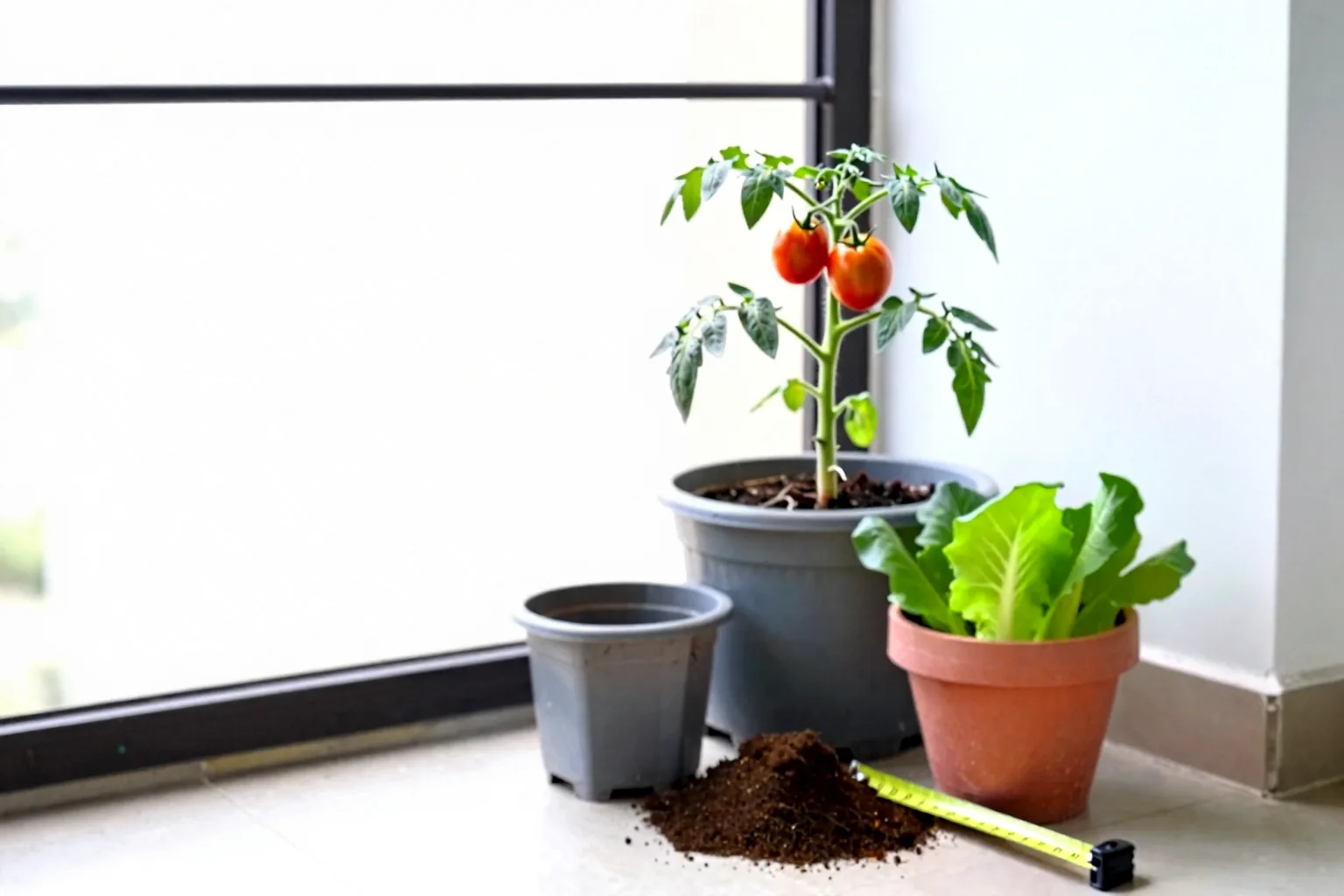
The useful definition of minimum is practical, not botanical. A plant may survive in less mix, but a small root zone gives you less water reserve, less nutrient reserve and less room for roots to anchor a top-heavy plant. I would rather call a pot one size too large than sell you a container that needs perfect watering every day. The chart below is built around that judgement.
The practical chart: minimum volume and depth by vegetable
This vegetable container size chart uses usable mix: the volume of potting mix inside the pot after allowing for taper and the space you leave below the rim. The lower end assumes a compact variety, a free-draining container mix and reliable watering.
| Vegetable or variety type | Minimum usable mix | Internal soil depth | Plants per container | Move up when… |
|---|---|---|---|---|
| Leaf lettuce, spinach, arugula and green onions | 5–10 L (1.3–2.6 US gal) per small group | 15–20 cm (6–8 in) | 4–6 lettuce heads, or a denser baby-leaf sowing | You want full heads or repeated harvests |
| Radishes | 5–10 L (1.3–2.6 US gal) | 15–20 cm (6–8 in) | 12–20 roots | The variety is long or grown to a large size |
| Short or baby carrots | 10–15 L (2.6–4.0 US gal) | 20–25 cm (8–10 in) | 12–20 roots | You are growing long carrots; use 30 cm (12 in) or more |
| Beets | 10–15 L (2.6–4.0 US gal) | 20–25 cm (8–10 in) | 4–6 plants | You want large roots or a long harvest window |
| Kale and chard | 10–15 L (2.6–4.0 US gal) per plant | 20–25 cm (8–10 in) | 1–2 plants | You want a large plant kept for repeated leaf harvests |
| Bush beans and compact peas | 10–15 L (2.6–4.0 US gal) per 2–4 plants | 20–25 cm (8–10 in) | 2–4 plants | The plants are tall, vining or need a substantial support |
| Peppers | 15–20 L (4.0–5.3 US gal) per plant | 25–30 cm (10–12 in) | 1 plant | The variety is large, the site is windy or watering is irregular |
| Broccoli and cauliflower | 20–30 L (5.3–7.9 US gal) per plant | 25–30 cm (10–12 in) | 1 plant | You want a large plant or the container will dry quickly |
| Compact or patio tomatoes | 20–30 L (5.3–7.9 US gal) per plant | 30–35 cm (12–14 in) | 1 plant | The plant is indeterminate, heavily cropped or exposed to wind |
| Full-size indeterminate tomatoes | 30–50 L (7.9–13.2 US gal) per plant | 35–45 cm (14–18 in) | 1 plant | You cannot water consistently or the support is unstable |
| Cucumbers and eggplants | 20–30 L (5.3–7.9 US gal) per plant | 30–35 cm (12–14 in) | 1 plant | The cucumber is strongly vining or the eggplant is a large cultivar |
| Potatoes | 20–30 L (5.3–7.9 US gal) per plant | 30–40 cm (12–16 in) | 1 plant | You are growing several seed pieces or need room for repeated hilling |
| Zucchini | 30–50 L (7.9–13.2 US gal) per plant | 30–40 cm (12–16 in) | 1 plant | The pot is in hot sun, the variety is large or watering may be missed |
These are working minimums, not promises of a particular harvest. A compact pepper in a 15 L pot has a different demand from a sprawling pepper kept for months. The same applies to carrots: the root has to fit the depth, while the foliage and harvest period determine how much water and nutrition the container must hold.
If you are asking how many litres for vegetables, read the table in this order: first check the soil depth, then the litres, then the plant count. A wide tray can contain plenty of mix but still fail a long carrot. A deep pot can suit a carrot but be wasteful for a quick crop of radishes.
Measure the pot you have, then calculate usable soil volume
A pot label usually gives you the rim diameter, not a reliable capacity. A 30 cm (12 in) diameter might describe a shallow bowl, a straight-sided cylinder or a deep tapered planter. Those containers do not give a vegetable the same root space.
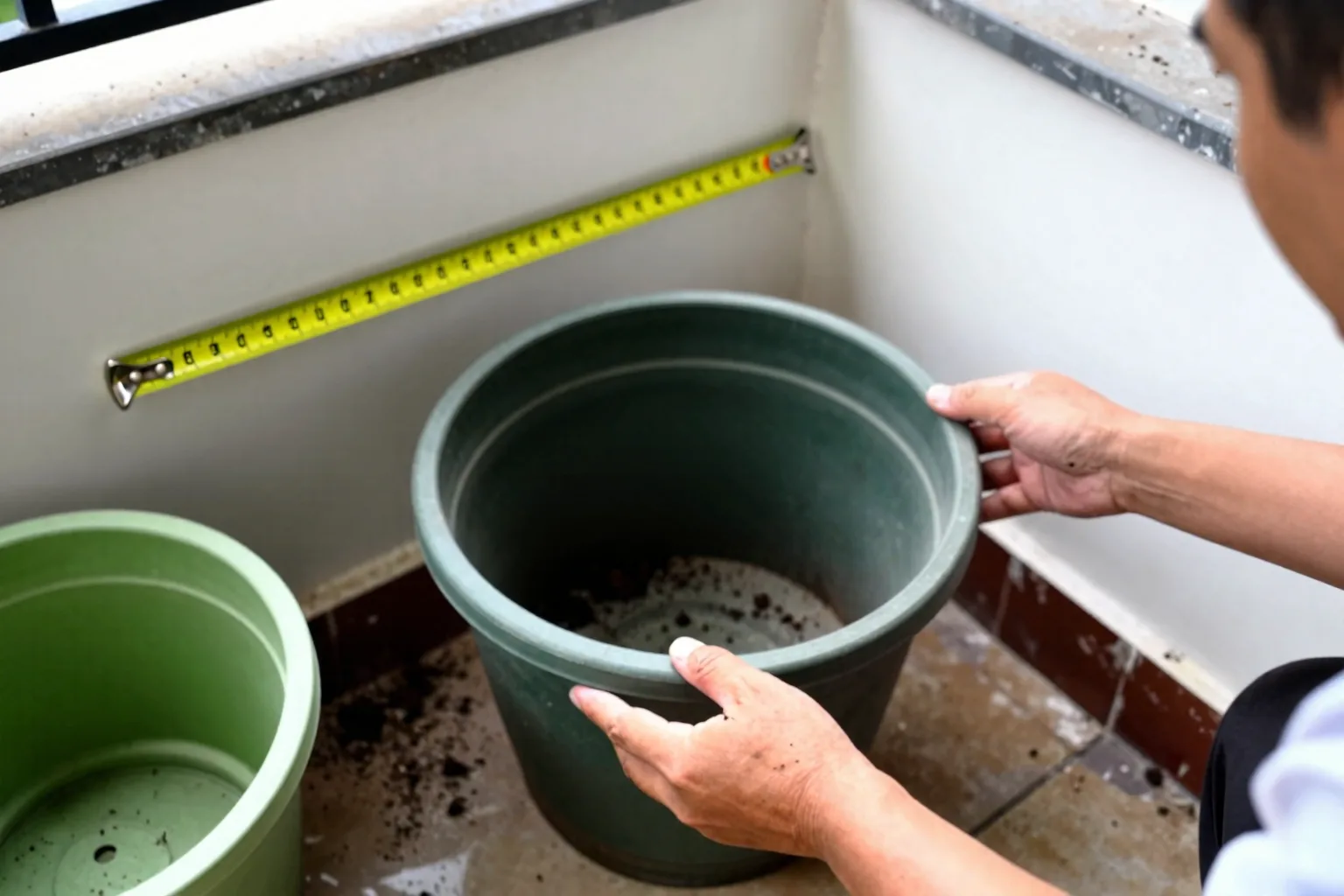
Use internal measurements in centimetres. For a rectangular or square box, the calculation is:
length × width × internal depth ÷ 1,000 = litres
For a round pot, measure the internal diameter, divide it by two to get the radius, and use:
3.14 × radius × radius × internal depth ÷ 1,000 = litres
Here is a useful example. A box measuring 30 × 30 × 30 cm has a nominal volume of 27 L because 30 × 30 × 30 equals 27,000 cubic centimetres. If you leave 3 cm below the rim, the filled depth becomes 27 cm and the working volume falls to 24.3 L. That difference is enough to move a compact tomato from the lower end of its range to a more comfortable starting point.
A round pot with an internal diameter of 30 cm and an internal depth of 30 cm calculates to roughly 21.2 L before headspace. Leave 3 cm unfilled and it is closer to 19.1 L. A tapered pot holds less than the same top measurements suggest because its base narrows. Thick walls, feet and an inset base also do not add root volume.
For a fuller worked method, keep How to calculate litres of potting mix for any container nearby. My store-aisle rule is simple: if you cannot measure the lower part of a tapered pot, treat the printed capacity as nominal and choose the next size up rather than trusting the rim.
One plant or several? Apply the chart to shared containers
The chart works well for one plant or a clearly defined group, but you cannot always divide a per-plant figure casually. Roots compete for the same water and nutrients, and every extra plant adds leaves that pull water from the shared root zone.
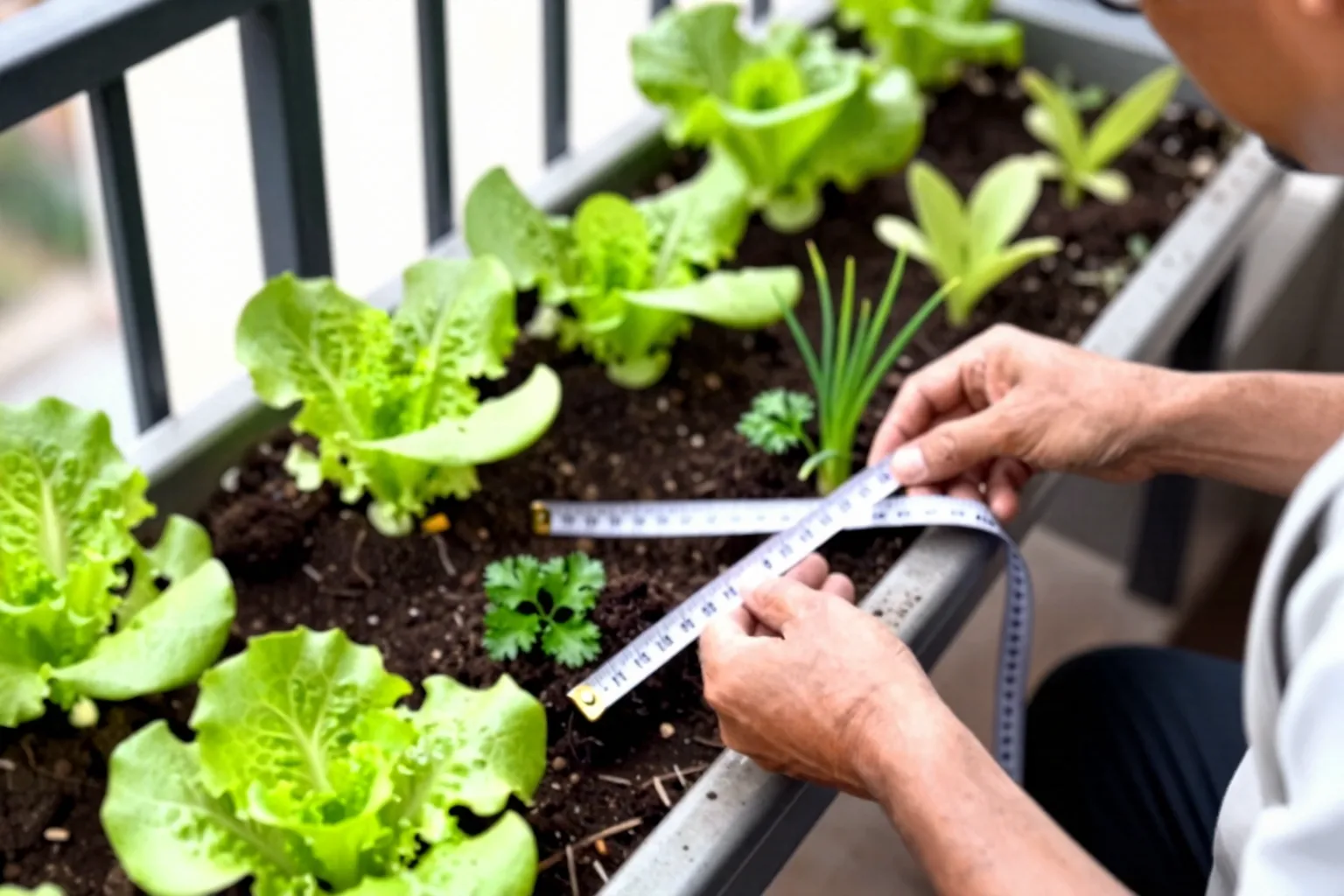
Shallow crops are the easiest to share. A 60 × 25 × 20 cm trough has a nominal volume of 30 L. Filled to 18 cm, it offers about 27 L of usable mix: enough for four small lettuce heads at roughly 15–20 cm spacing, or a denser sowing of baby leaves and radishes. Green onions can occupy the gaps because their narrow roots and foliage take less horizontal room.
A 60 × 25 × 25 cm trough filled to 22 cm holds about 33 L. That gives two compact peppers at opposite ends a workable 16–17 L each, provided the plants are not large varieties and the trough is easy to water. Give beans or peas a support before the foliage becomes heavy; the support changes the wind load even if it does not change the soil volume.
Tomatoes, zucchini, cucumbers and eggplants are different choices. Their roots, foliage and fruit load make a shared pot much less forgiving. Two 20 L tomato plants do not belong in one 20 L pot: before headspace and root competition, each plant has only about 10 L of the stated volume.
My practical judgement is to share a container when the crops have similar watering needs and modest canopies. Share lettuce with radishes; do not squeeze a tomato into a mixed salad trough just because there is an empty corner. The empty corner is cheaper than a permanently thirsty root zone.
Four conditions that move the minimum up or down
1. Variety changes the demand
Dwarf, bush and patio varieties are useful because they limit the size of the plant above the pot. An indeterminate tomato, by contrast, keeps extending and setting fruit, so its stems, leaves and support continue adding demand. A compact cucumber may fit the lower end of the chart; a strongly vining cucumber needs more room and a trellis that will not pull the pot over.
Read the mature size, not just the word container on a seed packet. That label often describes suitability, not a promise that every container size will perform equally well.
2. Exposure changes the water reserve you need
Full sun, wind, dark plastic and hot weather all shorten the time between waterings. Sun warms the foliage and mix, wind removes moisture from leaves and the surface, and a dark container can become warmer than a pale one. The pot therefore needs a larger water buffer when you cannot check it twice a day.
Part shade may slow evaporation, but it does not turn a sun-hungry tomato into a productive shade crop. If your balcony gets only one or two hours of direct sun, compare the crop choices in Best vegetables for a balcony with only one or two hours of sun. Leafy crops are usually a better use of the square footage than a large fruiting plant waiting for light it cannot receive.
3. Baby harvests need less depth than full-size harvests
A baby carrot or beet can be harvested before the root reaches its variety’s full length. That is why a 20–25 cm (8–10 in) root zone can work for short carrots, while long carrots need around 30 cm (12 in) or more. The same principle applies to radishes: short spring varieties fit the lower range, while long or winter types need more depth.
4. A quick crop and a full-season crop use different reserves
A tray of baby greens may be harvested before its roots and foliage have made a large demand on the mix. A tomato, pepper or zucchini kept for a full season needs a reservoir that can supply water and dissolved nutrients between visits. Larger pots do not create sunlight or cure poor drainage, but they give you more margin when the weather changes or a watering day is missed.
Set your watering plan beside the pot size. The decision tree in How often to water vegetables in pots on a sunny balcony is more useful than a fixed calendar because plastic, terracotta, wind and plant size alter how quickly a container loses water.
A minimum pot still fails without the right drainage and mix
A volume is usable only if roots get air between waterings. Use a potting mix made for containers rather than soil dug from a garden bed, and choose a container with unobstructed drainage holes at the base. Fill the pot to about two fingers below the rim so water has somewhere to sit briefly instead of running straight over the edge.
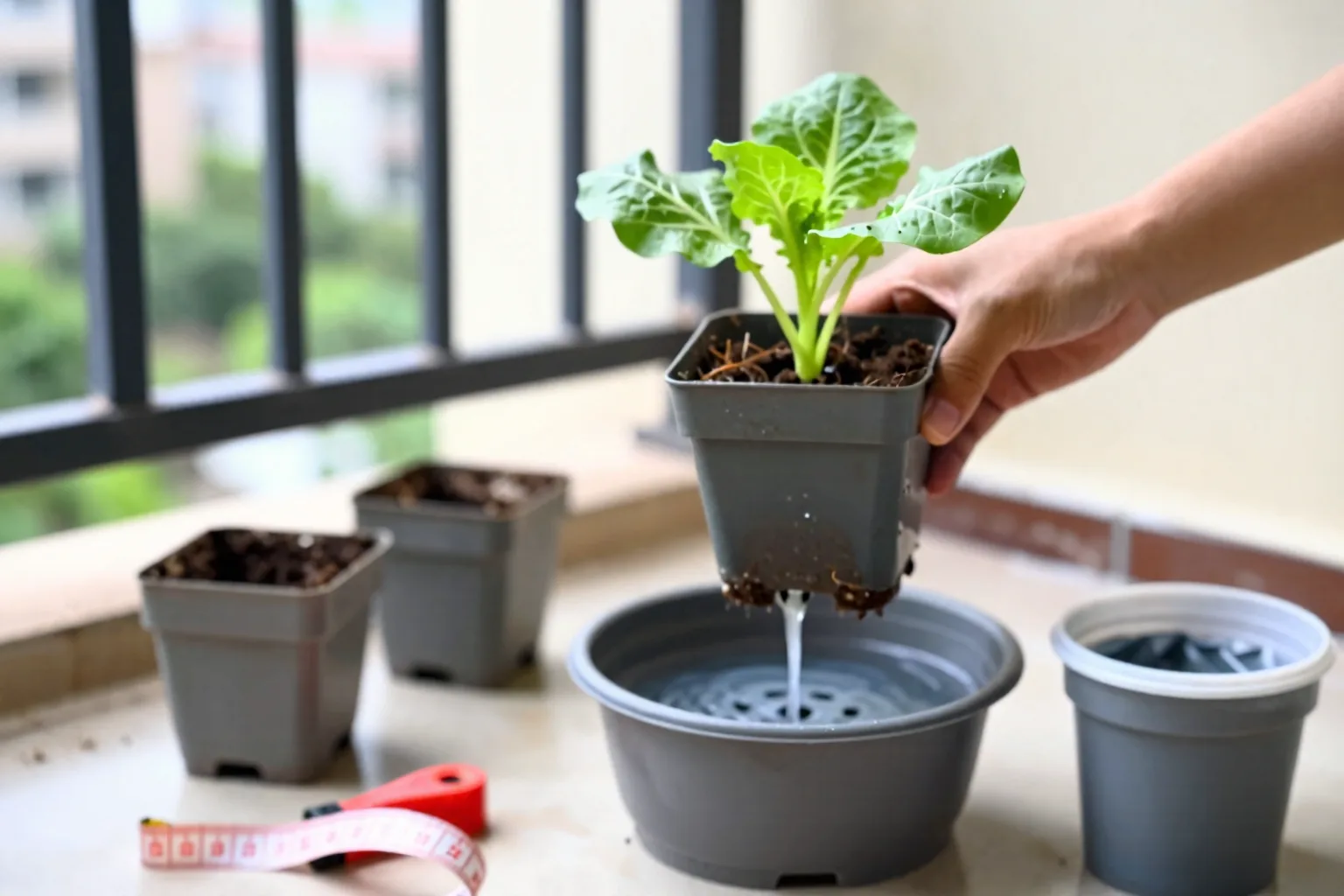
Water slowly across the surface until a little emerges from the holes, then let the pot drain. A saucer or balcony tray can catch the runoff, but it should not seal the holes or leave the base standing in water.
A perched water table is a layer of wet mix that remains above the drainage opening. It forms because fine particles hold water in their small spaces; gravity can move excess water downward, but it cannot make every pore in the mix instantly empty. The wet layer is part of the root zone, so a nominally deep pot may offer less oxygenated space than its outside dimensions suggest.
Gravel at the bottom does not create extra root space. It takes up part of the pot, and the fine mix above the coarse layer can remain wet at the boundary rather than draining cleanly into the stones. For the full mechanism, see Why container drainage holes matter and why gravel at the bottom backfires. Put the effort into a suitable mix, a real drainage opening and a pot large enough for the crop.
The two common failures look confusingly similar. A small pot with fine, saturated mix can produce wilted, yellowing or stunted growth because roots lack air. A small porous pot in sun can produce wilted, yellowing or stunted growth because the mix has dried and salts have become concentrated. Check the mix before watering: feel several centimetres below the surface, lift the pot if you can, and look for actual runoff rather than guessing from the leaves.
The store-aisle checklist: choose the next workable size
Take the crop label and your tape measure to the shop. Then make the decision in this order:
- Name the crop, variety and plant count. Write down compact tomato versus indeterminate tomato, or short carrot versus long carrot. That single detail can move you between rows of the chart.
- Choose by usable litres. Start with the chart’s mix volume, then account for the space left below the rim. Do not treat a 30 cm diameter as a 30 L capacity.
- Check internal depth. Measure from the inside base to the point where the mix will finish. A pot can meet the litres requirement and still be too shallow for a carrot or potato.
- Count the plants before filling it. If the figure is per plant, multiply it before you buy. A shared container needs crops with similar water demands and enough spacing for their mature leaves.
- Inspect the base. Look for drainage holes that are open and positioned so a saucer cannot block them. For an unfamiliar crop, compare the starting point with extension guidance on vegetable container depth, spacing and cultivar choice.
- Move up one size for difficult conditions. I would do this for a tapered pot, a windy balcony, dark plastic in hot sun, irregular watering or a plant kept for a long season. The extra mix is a water-and-root buffer, not wasted space.
On an elevated space, check weight before you buy several large containers. As a conservative planning rule, fully wet mix can approach roughly 1 kg per litre, before the container, support and plant are added. A 30 L pot may therefore represent about 30 kg (66 lb) of wet mix, and a 50 L pot about 50 kg (110 lb). That is not a building-load calculation; check your landlord, strata or local building authority’s guidance on balcony loads and placement.
For food-safe vegetable pots, use containers sold for food contact or clearly intended for edible growing. Avoid former chemical containers, treated timber in direct contact with the mix, and decorative pots with an unknown glaze. If you have an unlabelled bucket or planter, identify what it previously held before planting food in it.
Before the weekend, write the crop and plant count on a note, measure the candidate pot inside, and reject it if either litres or depth misses the chart. A week after planting, check the mix several centimetres down at the hottest part of the day; that one inspection will tell you whether the chosen minimum is giving the roots a useful reserve or asking you to water around the clock.