Catfacing Tomatoes: What Causes It and How to Prevent It
Catfacing tomatoes: the scarred fruit is the symptom, not a contagious disease
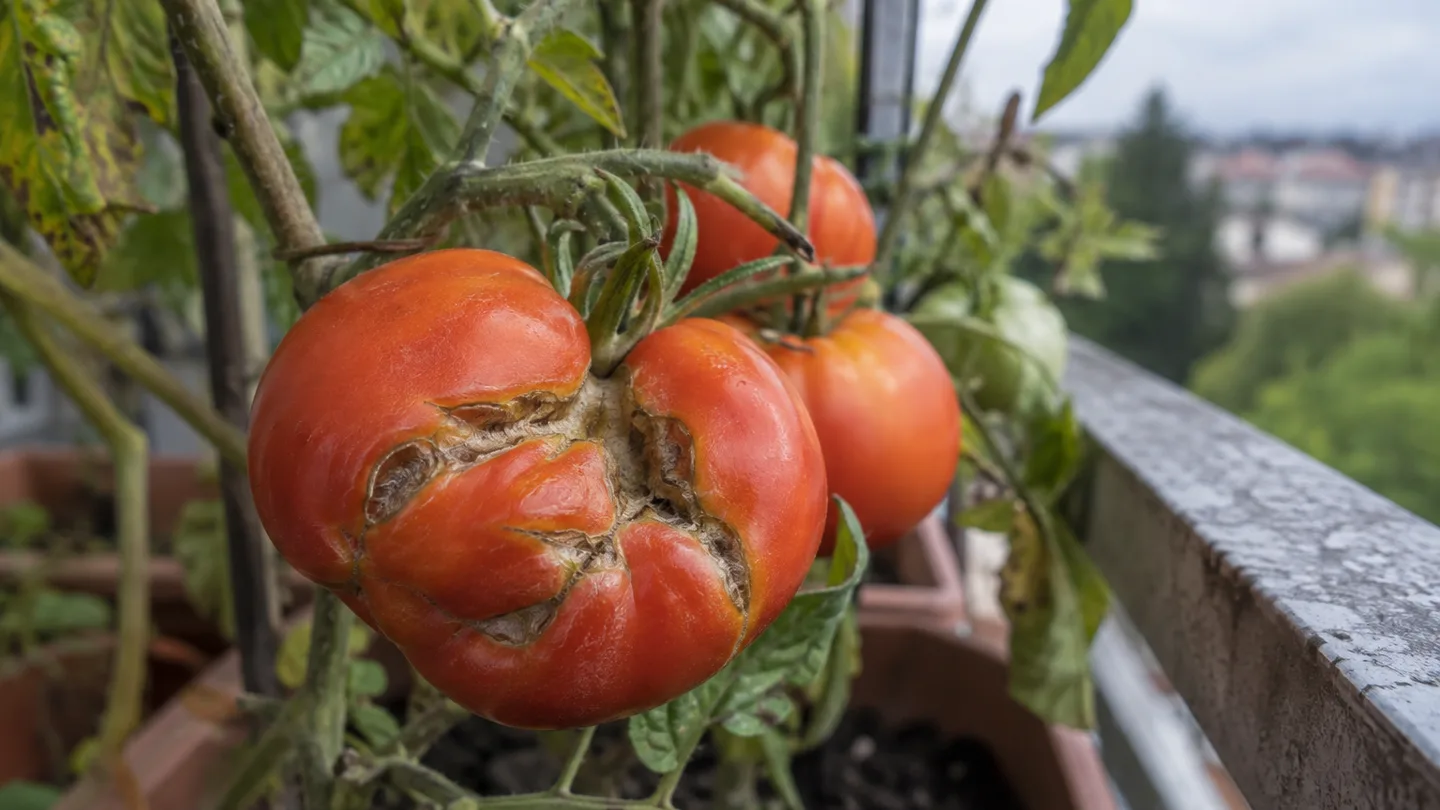
Catfacing tomatoes have deep puckers, fused lobes, zipper-like scars, or a hollow-looking cavity near the blossom end. The damage usually starts before the tomato looks like a tomato, while the flower is developing or the tiny fruit is first setting, so calcium, extra water, or a better plant tie cannot smooth it out later.
On a balcony or patio, I first separate catfacing from three less similar problems. Blossom-end rot is usually a dark, sunken patch at the blossom end. Cracking produces clean splits through the skin, often after a dry spell followed by heavy watering or rain. Uneven ripening changes the colour or softness of the fruit without creating the deep, folded shape that marks catfacing.
How the scar differs from ordinary ugly fruit
A catfaced tomato can look as if several small tomatoes have been pressed together. The blossom end may be pleated, corky, split open, or marked with a long scar running from the stem end. The fruit may still enlarge and ripen, but its outline was distorted before the skin had much room to expand.
The first one or two fruit clusters can look particularly bad while later clusters are smooth. That pattern matters. If the leaves, stems, and growing tip look healthy, I don’t start with disease spray or a calcium supplement. I start by asking what the open flowers experienced during the previous week or two.
The critical window is the week or two around flowering
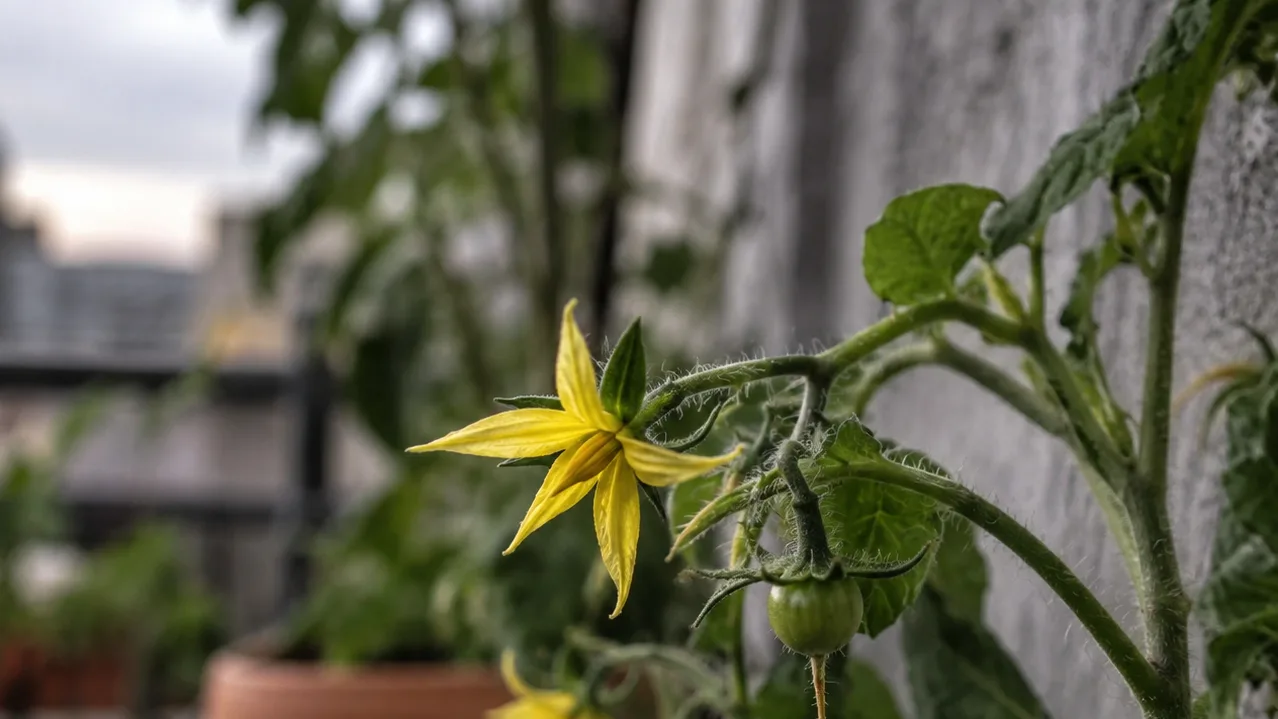
A tomato flower is already carrying the basic plan for the fruit inside it. The ovary at the flower’s centre will expand into the tomato, while the surrounding tissues become the skin and the structures around the blossom end. If cold, rough weather, or another injury disrupts those tissues during flower development or very early fruit set, the fruit can enlarge around the damage instead of correcting it.
Night temperatures around 50°F/10°C are a useful risk marker for tomato flowers, not a magic cutoff. A night slightly below that figure does not guarantee catfacing, and a warmer night does not guarantee a perfect set. Variety, wind, plant age, and the shelter around the pot all change the result. I use the number as a prompt to protect flowers, not as a promise that every fruit below it will be misshapen.
Cold is harder on a container plant than the forecast may suggest. A pot standing in an exposed balcony corner loses heat from every side, and wind strips away the little warm pocket that might exist beside a wall. The afternoon can feel pleasant while the open flowers spend several hours chilled after sunset. That is why a healthy tomato plant can produce one scarred truss, meaning a branching stem carrying flowers or fruit, and then set normal fruit once the weather settles.
In my own balcony setup, I once left a large-fruited tomato beside the railing during a run of chilly nights. The first cluster developed the classic lumpy, folded fruit, even though the leaves stayed green and the plant kept growing. I moved the pot against a brick wall and covered it on the coldest evenings. The next cluster was much smoother. I didn’t treat that as a controlled test, but the timing made the diagnosis clearer: the first flowers had experienced the cold; the later flowers had not.
That is the useful mechanism. A misshapen tomato is often a record of conditions from days earlier, not a report on what the plant is experiencing today. If the weather has improved, the plant may already be capable of making better fruit even though the damaged tomato is still hanging there.
Variety, cold, or chemical injury: the pattern on the plant tells you which
I diagnose catfacing by looking at the pattern across the plant, not by judging one ugly tomato in isolation. This comparison is a practical starting point:
| What you see | Likely explanation | What I would inspect | What later fruit may do |
|---|---|---|---|
| Deep puckers, fused lobes, or zipper-like scars, especially on the earliest clusters | Cold exposure during flower formation, sometimes combined with a variety that is prone to distortion | Overnight temperatures, wind exposure, and the fruit type | Later clusters may normalize after the weather improves |
| Several large, heavily ribbed fruits are distorted while the leaves remain normal | Large-fruited beefsteak or heirloom genetics increasing the plant’s sensitivity during a difficult set | Seed packet description and whether smaller fruiting varieties nearby look better | The tendency may repeat, especially during another cool spell |
| New leaves are twisted, cupped, narrow, or kinked along with distorted fruit | Possible herbicide injury rather than ordinary catfacing | Recent lawn or weed treatment nearby, wind direction, and the newest growth | New growth may remain distorted; don’t assume the fruit problem is nutritional |
| A dark, leathery, sunken patch is centred at the blossom end | Blossom-end rot, a different problem involving water movement and calcium delivery to fast-growing tissue | Watering swings and whether the damage is limited to the blossom end | The damaged fruit will not repair, but later fruit depends on growing conditions |
| Clean radial or concentric splits through the skin | Cracking after the fruit expands faster than the skin can stretch, often following uneven water availability | Recent rain, heavy watering, and a dry period beforehand | New fruit can avoid the splits if moisture becomes steadier |
Large beefsteaks and some heirlooms deserve extra attention because their broad, irregular fruit gives a small flower injury more room to show. That does not mean every heirloom will catface or that a small tomato is immune. It means that if perfect shape matters, I would not make the biggest ribbed variety my only balcony tomato during a cool spring.
Extra calcium is not my first response to catfacing. Calcium already in the potting mix cannot rebuild flower tissue that was injured before the fruit enlarged. Likewise, tapping an open flower may help move pollen, but it cannot repair the shape of fruit tissue that has already been formed. The timing is different: tapping is a pollination step, while catfacing is an early tissue-development problem.
If the pattern is confusing, I would compare the symptoms with university extension guidance on tomato catfacing and other fruit disorders before reaching for a spray. For twisted leaves and stems, extension diagnostic references for herbicide injury are more relevant than a general fruit-feeding guide.
A 7–14-day prevention plan for balcony and patio tomatoes
The order matters here. I reduce the plant’s exposure first, then protect the flowers, then keep the root environment steady. Feeding a stressed plant before dealing with a cold, windy position is usually the wrong priority.
- Choose the fruit type deliberately. If shape matters more than growing a giant slicer, choose a small- or medium-fruited variety for the first pot. Cherry, cocktail, plum, and many compact salad tomatoes generally give you a more forgiving starting point than a heavily ribbed beefsteak. I’m not saying the bigger varieties cannot grow in containers; I’m saying their first fruit can show weather damage more dramatically. If you’re choosing between a compact determinate and a long-season vine, use the site's guide to determinate vs indeterminate tomatoes, but don’t mistake growth habit alone for a catfacing cure.
- Harden seedlings for 7–14 days. Put a young plant outside for a short period in bright shade and shelter on the first day, then extend the time gradually. Increase light and wind exposure in stages rather than taking a soft indoor plant straight to an exposed railing. Bring it back in or shelter it if the evening turns cold. Hardening does not make a variety immune, but it avoids adding sudden wind and temperature stress during the same period the plant is beginning to flower.
- Transplant when nights are mostly above 50°F/10°C. Treat that as a practical balcony rule rather than a rigid law. A single cool night can be managed with a cover, but repeated cold nights while the first flower trusses are opening create a longer risk window. If the plant is already in its pot, move it instead of waiting for perfect weather: a warmer wall, enclosed porch, or sheltered corner can make a useful difference.
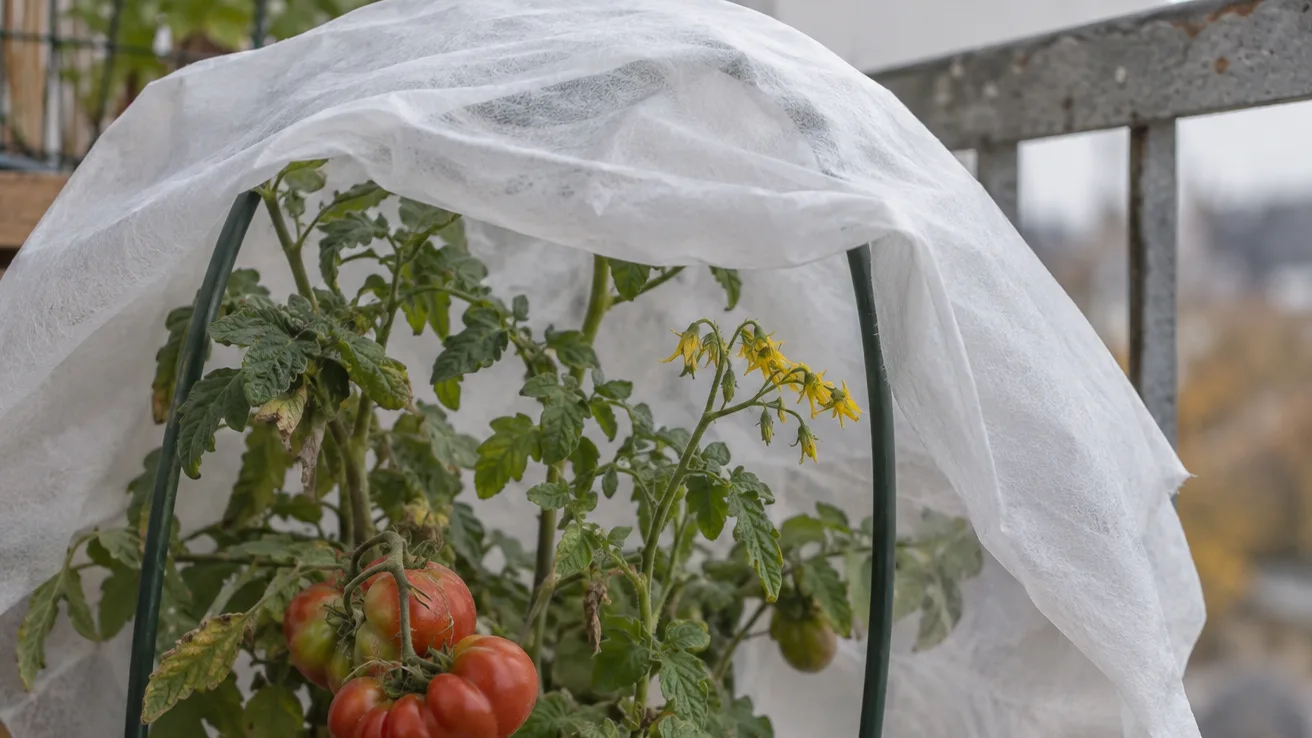
- Use a temporary cover without crushing the flowers. A layer of fleece or row-cover material held above the plant can reduce direct exposure to cold wind. Keep the material from pressing against open flower clusters and secure it so it cannot flap across the growing tip. I avoid sealing a potted tomato inside clear plastic overnight; trapped heat and condensation can create a new set of problems, and the plastic can rub against tender growth.
- Vent or remove protection as the day approaches 80°F/27°C. A cover that helps at dawn can become excessive by late morning. Open the sides or remove the cover once the sheltered space is warming strongly, especially against a sunny wall. The exact timing depends on the material and the position, so I check the plant rather than leaving a cover on by habit. Wilting under a hot cover is not a sign that the cold problem has been solved.
- Keep moisture and feeding even. Letting the pot become bone dry and then flooding it does not repair catfacing, but it can add stress while new flowers are trying to set. Check the mix with a finger before watering, water slowly until some drains from the holes, and empty any saucer that keeps the pot sitting in water. Feed at the label rate for a tomato fertiliser rather than doubling the dose to compensate for an ugly first cluster. Even moisture and sensible feeding support continued growth; neither can undo cold injury already formed.
Container growing does offer one advantage that an in-ground bed cannot: mobility. I’d rather spend five minutes moving a pot away from a cold railing than spend the week trying to correct a problem with supplements. If tomatoes are only one possibility for your balcony, Easy fruits and vegetables to grow in pots is a useful list for choosing crops that fit your space and patience.
Read the next two trusses as a weather record
Once a tomato has set with deep puckering or fused lobes, it cannot be reshaped. The next useful evidence is on the flowers and fruit that are forming now. I use the next two trusses as a short diagnostic record rather than pulling the plant apart or changing five inputs at once.
- Compare the first two trusses with the newest one. If the first one or two are distorted and the later cluster is clean, an early cold event is the leading explanation. The plant has moved through the difficult window, so the best action is protection and patience.
- Write down overnight lows for seven days. Put the minimum temperature beside the plant tag or in your phone. A seven-day record is more useful than trying to remember whether the balcony felt cold. Note wind as well, because a still 48°F/9°C night beside a wall is not the same exposure as a windy night on an open corner.
- Inspect the leaves and growing tip. If every new flower cluster is distorted and the newest leaves are twisted, cupped, narrow, or unusually strap-like, broaden the diagnosis toward herbicide injury. Look for a nearby lawn treatment, a neighbour spraying on a windy day, or a contaminated material brought into the pot. Do not treat those symptoms as proof, but do not dismiss them as a calcium issue either.
- Check where the damage sits. A dark, sunken blossom end points toward blossom-end rot. Splits radiating from the stem or circling the fruit point toward cracking. Deep folds, fused lobes, and zipper scars that began on a flower are more consistent with catfacing.
- Inspect open flowers, not just set fruit. If new flowers look normal and the next tiny fruit begins with a regular outline, conditions have probably improved. If fresh flowers are exposed to another run of cold nights, continue the cover-and-shelter routine before deciding that the variety or the potting mix has failed.
The useful question is not how to make one damaged tomato pretty. It is what the flower experienced, and whether the next flowers are experiencing the same thing. That shift keeps you from overcorrecting a one-off weather event.
What to harvest, what to cut away, and what cannot be repaired
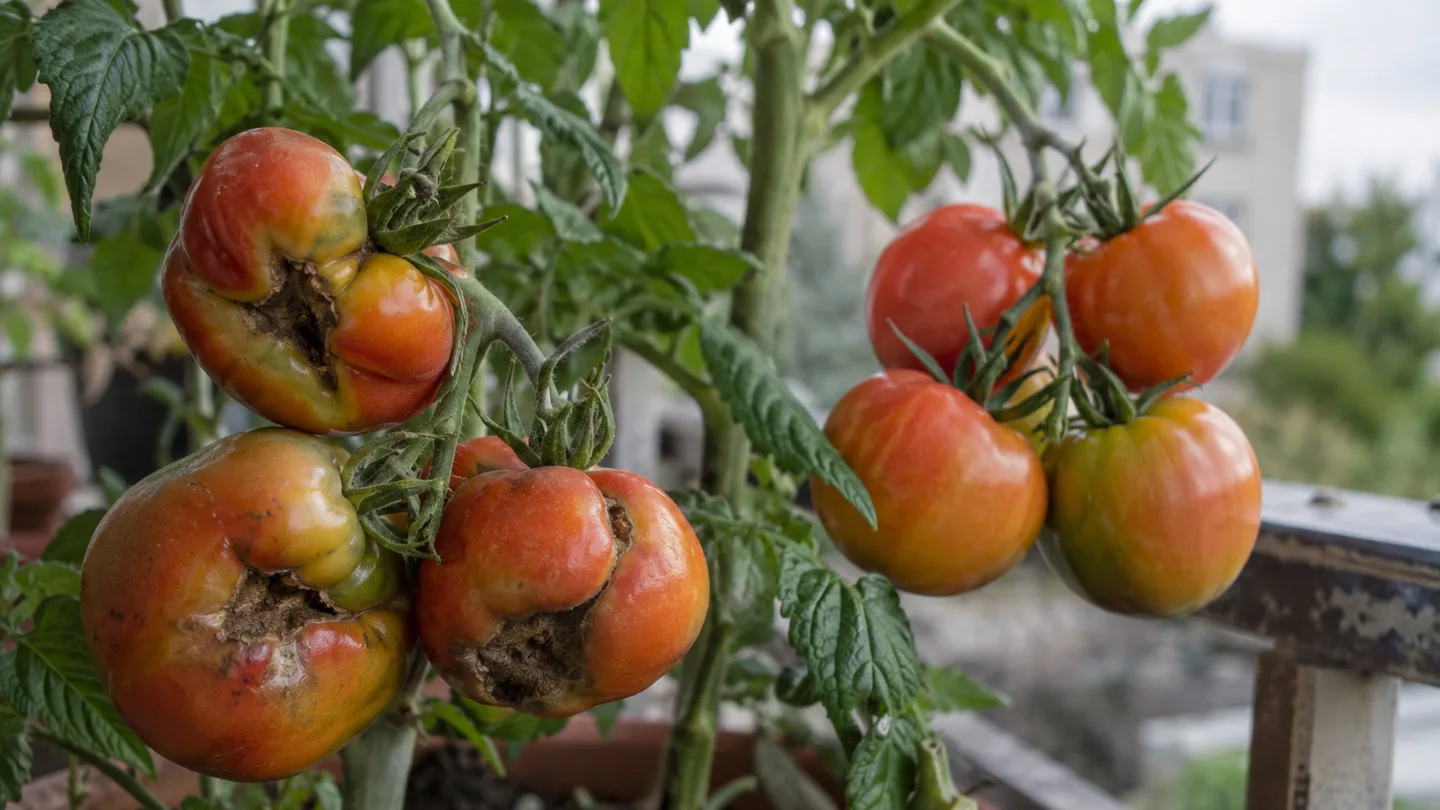
A catfaced tomato will not straighten as it ripens. It may still colour normally and provide usable flesh, although the deep folds can make it awkward to slice. I harvest it when it reaches the usual ripe colour and firmness for that variety rather than leaving it on the plant in the hope that the scar will disappear.
A dry, superficial scar is a quality problem rather than an automatic reason to discard the fruit. Cut away the damaged surface and inspect underneath. If the tissue contains penetrating mould, wet rot, a soft spreading decay, or substantial insect damage, discard the fruit. The shape alone is not the deciding factor; the condition of the tissue is.
I also don’t strip every ugly but sound tomato from the plant. Later trusses come from separate flowers, so removing one misshapen fruit does not make the next truss straight. I remove fruit when it is rotting, badly damaged, or blocking the plant’s structure, not simply because it looks like a small green sculpture.
The plant can recover even though the individual fruit cannot. If the weather improves, the growing tip stays healthy, and the next flowers set with a normal outline, leave the plant alone and let it continue. For next season, the practical adjustment may be a less-prone variety, a more sheltered position, or a slightly later transplant date.
Tonight, move the pot beside the warmest sheltered wall available, protect the next open flower cluster if a cold night is forecast, and record the minimum temperature for the coming seven days. In a week, inspect the two newest trusses: smooth new fruit means the plant has probably left the catfacing window; fresh distortion means the exposure is still active and needs attention.