Fast Growing Vegetables in Pots for Beginners: 9 Easy Picks
Radishes, baby arugula and loose-leaf lettuce are the quickest reliable pot crops on this list: under suitable temperatures, light and moisture, you can often take a first usable harvest in roughly 20–35 days.
That clock means baby leaves, shoots or immature roots, not a full-sized vegetable. A small pot doesn’t make a crop fast; an early harvest does, and that distinction prevents a lot of disappointing packet choices.
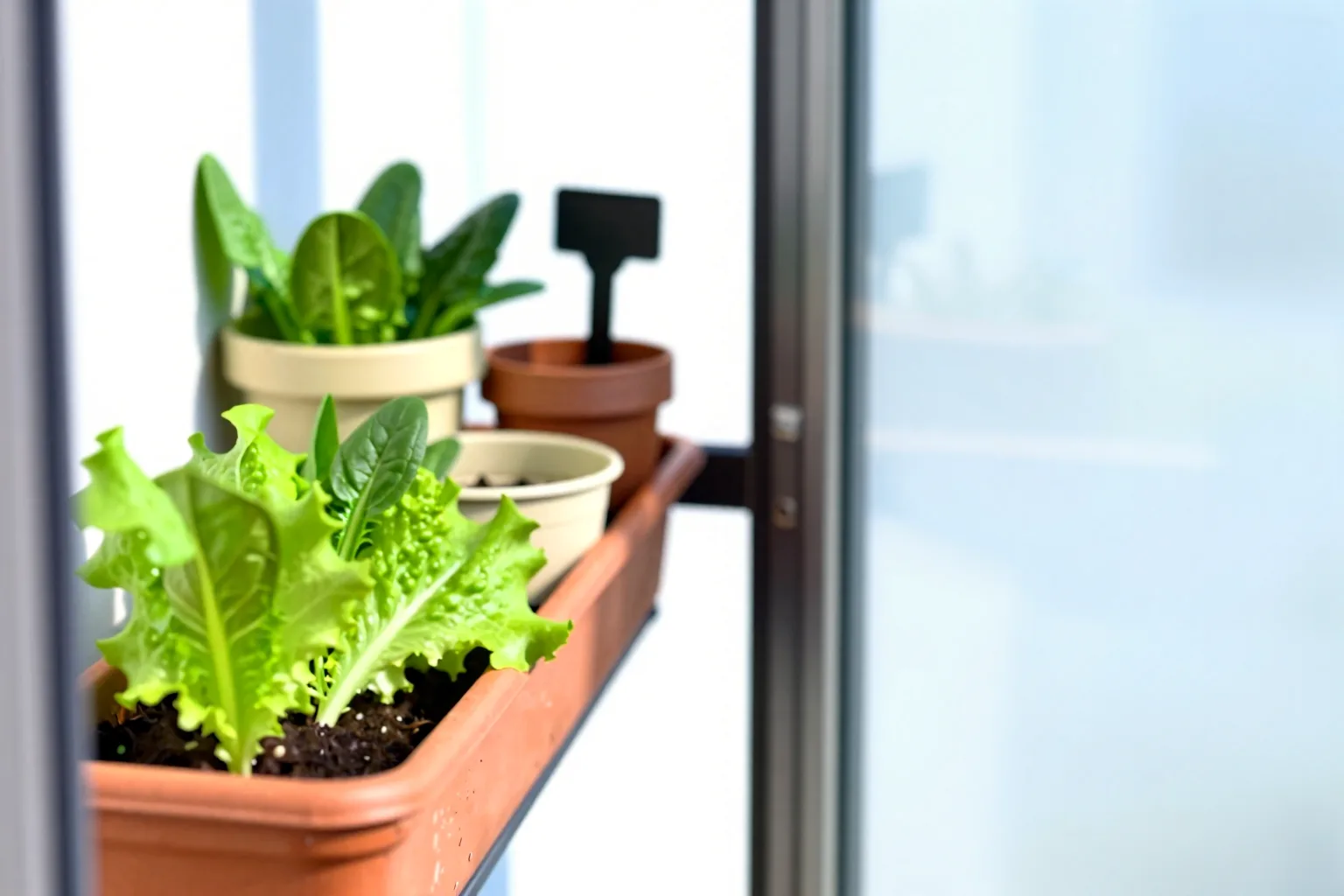
The 30-minute setup: define “fast” before you buy a packet
The quickest pot harvest starts before you open the seed packet. Stand where the containers will live and watch the light at breakfast, midday and late afternoon. One or two hours of direct sun can still support cut-and-come-again leaves, but growth is likely to be slower than the packet suggests. If speed matters, give the brightest position to radishes, carrots, beans and peas; use a slightly less sunny spot for lettuce, arugula, spinach, kale and scallions.
For most leafy crops here, choose a container with 15–20 cm (6–8 in) of usable mix depth. That is the distance from the surface of the potting mix to the bottom, not the outside height of a tapered decorative pot. Fresh potting mix is a better starting point than soil dug from a garden bed. Garden soil contains fine particles that settle together in a pot, reducing air spaces and slowing drainage around the roots.
Drainage means an actual hole in the base. It doesn’t mean a layer of stones. Water can remain in the mix above the hole in a wet band called a perched water table; gravel underneath usually takes away root volume without removing that wet band. Keep a saucer from holding standing water after irrigation. For the mechanism in plain language, see Does gravel improve drainage in pots?
Volume matters alongside depth. A narrow 15 cm (6 in) trough may have the right depth for lettuce but less water reserve than a wider container, so wind and warm sun can make it dry quickly. Plastic generally loses water more slowly than porous unglazed terracotta; glazed ceramic usually retains moisture better than porous clay but is heavier. On a balcony or rooftop, wet mix, the container and a mature plant all count toward the load, and a tall leafy crop can act like a sail in wind. Check your building or landlord’s rules before grouping several heavy pots at a railing.
Every watering that drains away can carry some soluble nutrients with it. Start with a mix intended for containers, then follow its fertiliser instructions. If repeated harvests are followed by pale new growth or stalled leaves, feeding may be needed; adding more fertiliser to a wilted plant before checking its moisture can make the diagnosis worse. For a second explanation of the basics, compare this setup with container vegetable guidance from a local extension service.
| Crop | First usable harvest to plan for | Usable depth | Approximate mix |
|---|---|---|---|
| Radish | 20–30 days | 15 cm (6 in) | 5–10 L (1.3–2.6 US gal) |
| Loose-leaf lettuce | 25–45 days | 15–20 cm (6–8 in) | 5–10 L (1.3–2.6 US gal) |
| Arugula | 21–30 days | 15 cm (6 in) | 3–5 L (0.8–1.3 US gal) |
| Baby spinach | 30–45 days | 15–20 cm (6–8 in) | 5–10 L (1.3–2.6 US gal) |
| Scallions | 20–30 days from sets; 50–70 from seed | 15 cm (6 in) | 3–5 L (0.8–1.3 US gal) |
| Baby kale | 25–40 days | 20 cm (8 in) | 5–10 L (1.3–2.6 US gal) |
| Bush beans | 50–60 days from seed | 20 cm (8 in) | 10–15 L (2.6–4 US gal) per plant |
| Baby carrots | 50–60 days | 20–25 cm (8–10 in) | 8–12 L (2–3 US gal) |
| Compact peas | 20–30 days for shoots; 50–70 for pods | 20–30 cm (8–12 in) | 10–15 L (2.6–4 US gal) |
Use those figures as planning windows, not promises. Variety, temperature, light, crowding and whether you harvest baby growth all move the clock. If you are standing in a shop aisle comparing containers, Best pot size for vegetables by crop is the more useful next reference than a label that simply says “large pot.”
Radishes: the 20–30-day test of a small pot
Radishes are my first choice for a beginner who wants proof that a balcony pot can produce food quickly. Choose a fast, round or short-rooted variety, use at least 15 cm (6 in) of depth, and allow roughly 5–10 litres (1.3–2.6 US gallons) of mix for a small sowing. The 20–30-day window is for young roots; a larger, crisp mature radish may need longer.
Direct-sow them where they will grow. Make shallow holes about 1 cm (½ in) deep, cover lightly, then thin the seedlings while they are small. Leave roughly 3–5 cm (1–2 in) between plants, adjusting for the variety. Crowded radishes make a roof of leaves while their roots stay thin. Keep the mix evenly damp rather than alternating between dust-dry and soaked. Harvest when the shoulders of the roots show above the mix. Delayed harvest and sharp moisture swings can leave roots pithy, split or excessively hot.
If you get large leaves and no useful root, check crowding, heat, drying and high-nitrogen feeding in that order. Nitrogen encourages leaf growth, while the swelling root needs steady conditions and enough light to store carbohydrates. That is a more useful diagnosis than blaming the packet.
Loose-leaf lettuce wins by letting you harvest early
Loose-leaf lettuce earns its place because it doesn’t ask you to wait for one perfect head. In a pot 15–20 cm (6–8 in) deep with about 5–10 litres (1.3–2.6 US gallons) of mix, outer leaves can be picked at roughly 25–45 days while the centre continues producing.
Sow thinly, keep the surface damp during germination and give the pot the coolest bright position available once the weather warms. At harvest, take the larger outside leaves with clean scissors, leaving the central rosette and several smaller leaves intact. Stripping every leaf at once removes the plant’s working surface and turns a repeat harvest into a single cut.
Heat and repeated drying can push lettuce into bolting, which means it sends up a flower stalk instead of continuing compact leaf growth. The plant may become bitter before the stalk is obvious. Afternoon shade, a larger pot and checking moisture before the mix becomes pale and loose can extend the useful stage, but no container trick can make a cool-season lettuce enjoy prolonged heat.
Arugula is quick—until heat turns it bitter
Arugula, also called rocket, is a strong small-space crop because a 3–5 litre (0.8–1.3 US gallon) pot or narrow trough can provide baby leaves. Plan on about 21–30 days for a first cut in cool, bright conditions, then sow another small batch rather than expecting one planting to last indefinitely.
Scatter the seed thinly over a 15 cm (6 in) deep mix, cover it lightly and thin crowded seedlings. Dense growth makes harvesting awkward and increases competition for water. Pick young leaves before they become coarse. In hot weather, move the container away from harsh afternoon sun if you can. Heat and long bright days encourage the plant to bolt; once the flower stem rises, the leaves usually become sharper and less tender.
A useful balcony rhythm is one arugula sowing every two weeks during its cool season. That schedule is not a guarantee of uninterrupted salad, but it gives the next batch time to replace a pot that has bolted or been harvested heavily.
Baby spinach belongs in the cool-season slot
Spinach is quick only in the part of the year it actually likes. Give it a 15–20 cm (6–8 in) deep pot, around 5–10 litres (1.3–2.6 US gallons) of moisture-retentive but free-draining mix, and plan to pick baby leaves at roughly 30–45 days. Spring and autumn are usually more cooperative than midsummer; local extension planting calendars can help you place the sowing around your area’s frost and heat patterns.
Sow a few seeds every two or three weeks, then thin the seedlings rather than letting the pot become a crowded mat. Harvest the outside leaves first and leave the centre growing point in place. Small, bitter plants or a sudden flower stalk point me toward heat, long days, crowded roots or dry mix. Watering more often may help the last problem, but it won’t reverse a crop that has already been pushed into flowering by hot conditions.
Scallions turn a narrow trough into a useful crop
Scallions, green onions and bunching onions suit a windowsill, railing planter or narrow balcony trough because the edible part is harvested above ground. A 15 cm (6 in) depth is a practical minimum. Green tops from sets or transplants may be usable in about 20–30 days, while seed-grown scallions commonly need closer to 50–70 days, depending on variety and temperature.
Plant sets or seedlings upright, or sow in a shallow line, leaving enough room for each base to expand without becoming a tangled plug of roots. Snip or pull individual stems from the outside of the row so younger plants keep growing. If you cut leaves, leave the basal portion in the mix rather than removing the whole plant when you want another flush.
Supermarket-root regrowth is worth trying as a windowsill experiment, but I wouldn’t count it as a dependable full crop. A rooted base may produce fresh green leaves without forming a substantial new bulb, and the result depends on how much living tissue remains. Buy seed or sets if your goal is a predictable row of scallions.
Baby kale: cut the lower leaves, don’t wait for a full plant
Kale takes longer to become a large plant, but it qualifies as fast food in baby-leaf form. Use a container about 20 cm (8 in) deep with roughly 5–10 litres (1.3–2.6 US gallons) of mix for a small planting. In a bright position with regular moisture, tender lower leaves may be ready around 25–40 days.
Harvest one or two of the larger lower leaves at a time, cutting close to the stem while keeping the central growing point untouched. That point is where new leaves emerge. If you cut the crown, the plant loses the part that can replace the leaves you picked.
Leggy stems usually tell you the pot is not getting enough usable light. Tough leaves usually mean they were left too long, not that kale is inherently inedible. Holes and ragged edges call for an inspection of both leaf surfaces, especially underneath, where caterpillars and flea beetles can hide. Remove visible pests by hand and harvest young leaves before damage spreads.
Bush beans need more root volume than their small footprint suggests
Bush beans are the fastest fruiting crop in this group, but they are not a tiny-pot vegetable. Give each plant at least 20 cm (8 in) of depth and approximately 10–15 litres (2.6–4 US gallons) of mix; a larger container is easier to manage if the balcony is hot or windy. From seed, plan around 50–60 days to the first pods, with variety and weather doing much of the arguing.
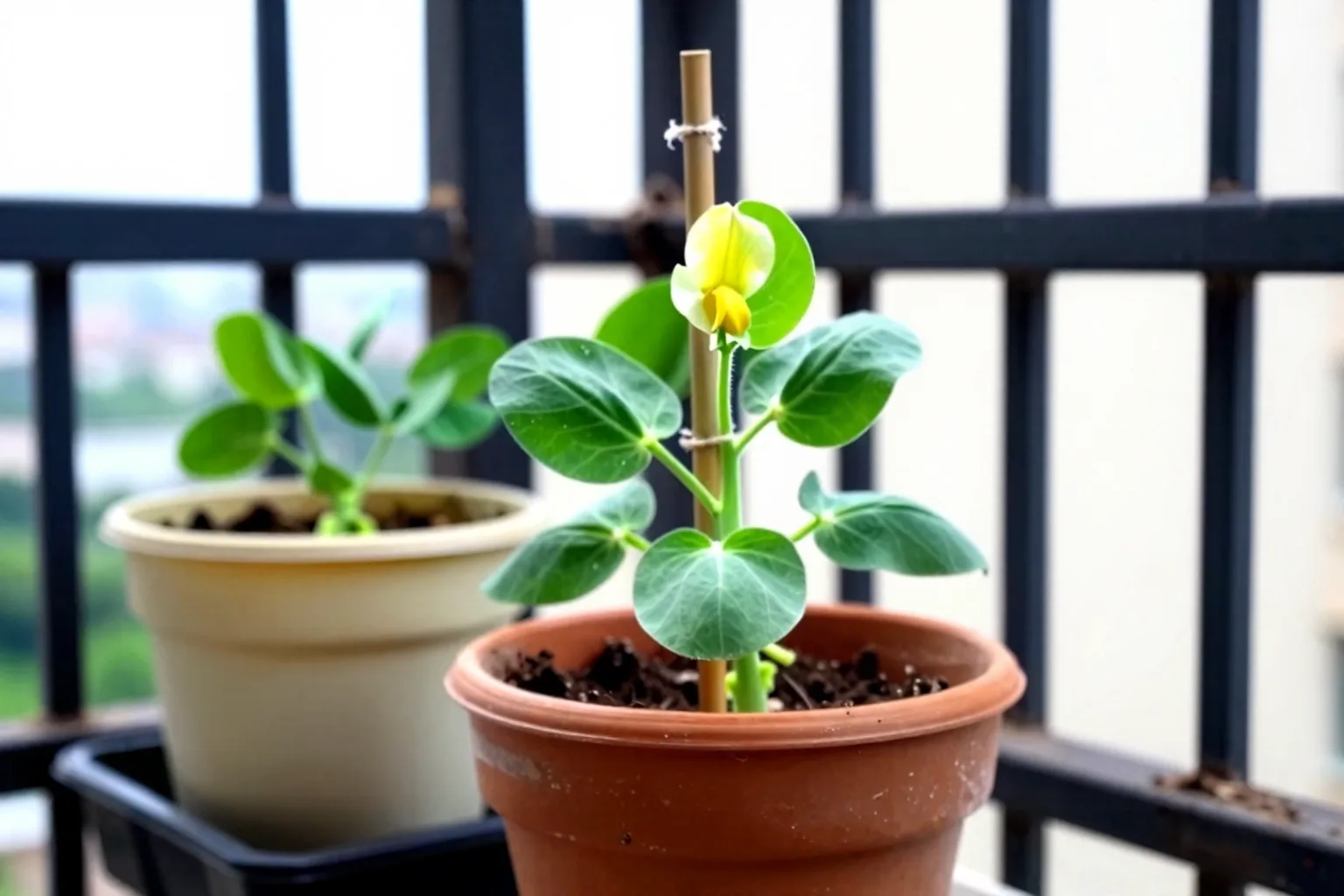
Bush beans are forgiving once the root zone stays evenly supplied. Sow directly after cold weather has passed for your location, place the pot in the brightest position and leave enough room for air to move between plants. A bean can look leafy and healthy yet set few pods if its container dries while it is flowering or if a heat spell stresses the plant. In a small plastic pot in full sun, check the mix more often than in a glazed pot in part shade; use the pot’s weight and the moisture below the surface instead of a fixed calendar. For a fuller watering decision tree, see How often to water container vegetables in summer.
Pick pods while they are still slender and before the seeds swell noticeably. Removing ripe pods prevents the plant from putting all its remaining effort into seed production. A short cane or loose tie is worthwhile where balcony wind makes stems lean, even though a compact bush variety does not need the tall trellis used by climbing beans.
Baby carrots only count as fast if you choose short roots
Carrots belong on the list with an honest footnote: baby roots can be ready in about 50–60 days, but full-sized carrots usually take longer. Choose short-rooted or round varieties, provide 20–25 cm (8–10 in) of usable depth and fill about 8–12 litres (2–3 US gallons) with loose, stone-free mix.
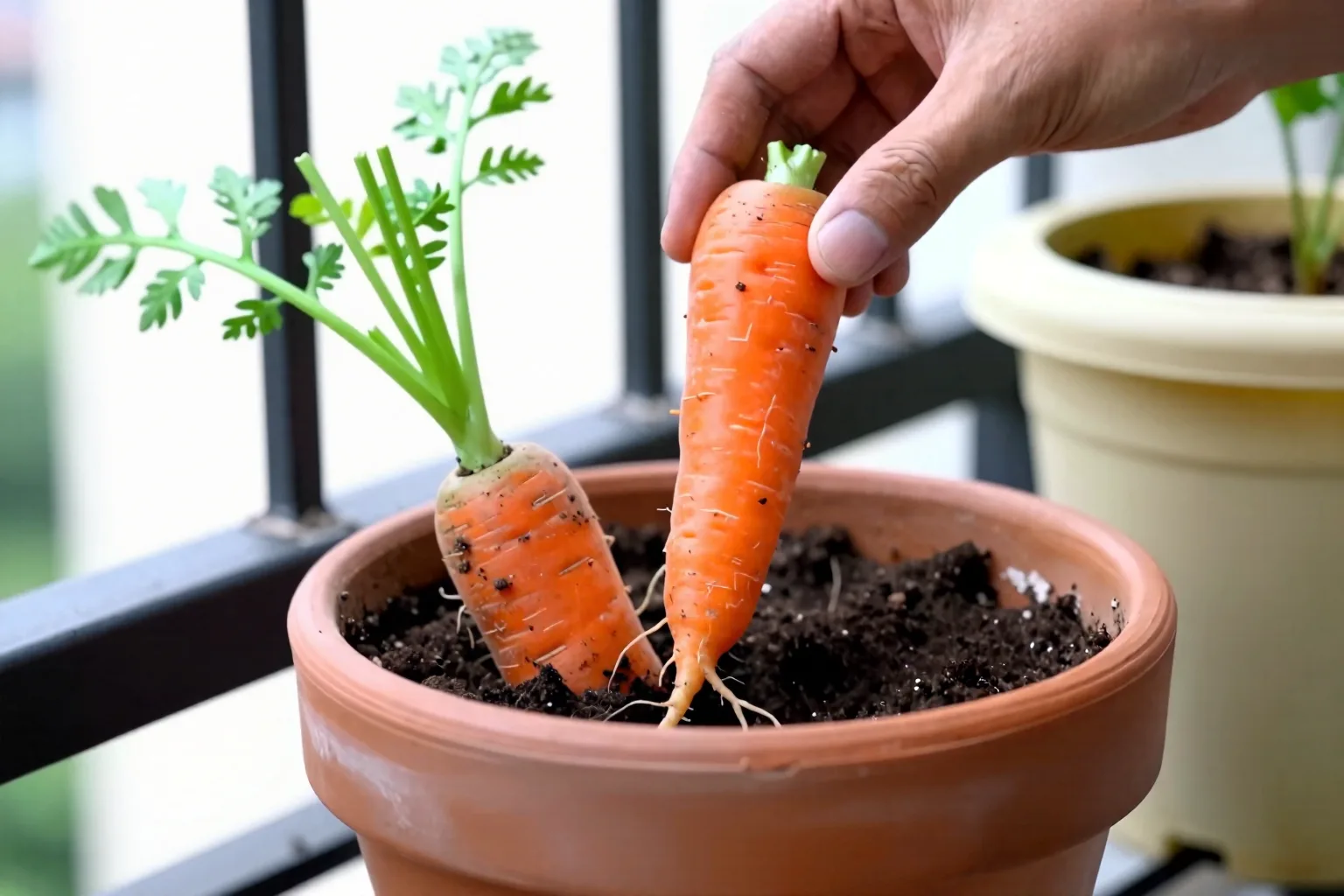
Choose short-rooted varieties before you choose the pot. A shallow container cannot be negotiated by a long carrot; the root meets the base, bends or stops. Compacted mix and stones create the same problem. Direct-sow because disturbing a young carrot’s taproot can lead to forked or misshapen roots. Thin by snipping unwanted seedlings at the surface, rather than pulling them and shifting the neighbours.
Keep the mix consistently moist during germination and root swelling. A visible shoulder is a useful harvest clue, but the most reliable test is to pull one carrot gently and inspect it. Splitting usually follows a dry spell and sudden heavy watering; stubby or forked roots point me toward depth, obstruction or crowding.
Adding gravel to the bottom does not create extra carrot depth or repair a dense mix. It occupies the very space the root needs while leaving the wet boundary above the drainage layer. If the container drains poorly, improve the mix and use a pot with a real drainage hole; don’t build a gravel shelf beneath the roots.
Compact peas offer two harvest clocks: shoots or pods
Peas give you a choice that makes them more useful in a small garden. Pea shoots may be cut after roughly 20–30 days, while dwarf pea pods commonly need about 50–70 days and cool conditions. Use a 20–30 cm (8–12 in) deep pot with approximately 10–15 litres (2.6–4 US gallons) of mix for a compact planting.
Install a light trellis, mesh panel or twiggy support before sowing. Waiting until the vines are tangled turns a simple job into a session of unwinding stems, and unsupported growth is more exposed to breakage in wind. Peas are cool-season plants: hot weather can interrupt flowering, while low light can produce weak, stretched growth. Keep the root zone from swinging between dry and saturated, with particular attention during flowering and pod fill.
If you want shoots, cut the tender tips above a leaf joint and leave lower nodes to make more growth. If you want pods, harvest shoots sparingly so the plant retains enough leaf area to feed flowers and developing peas. Pick pods promptly once they reach the size and tenderness you want; mature seed-filled pods are a different crop from crisp young pods.
Run the pots in waves: a 30-day sowing plan for a first harvest
Here is the plan I’d give someone buying their first two containers. Treat the dates as waves, not promises. The aim is to avoid having every pot become ready, bitter or bolted in the same week.
- Wave one: Put radish, arugula, loose-leaf lettuce, spinach, kale and scallions into the cool-season group if the weather is mild. Give carrots their own deeper pot. If it is already warm, start with lettuce, scallions and a heat-tolerant leaf variety rather than sowing every cool-season crop at once.
- Wave two, two to three weeks later: Repeat a small sowing of radishes and one or two leafy crops. This second batch is your replacement for the first pot, not an attempt to double the work.
- Wave three, another two to three weeks on: Sow again wherever the first planting is being harvested heavily. Keep one larger pot free for bush beans after the local cold period, or use it for peas if the season is still cool.
Several greens can share a trough if they have similar light and moisture needs: loose-leaf lettuce, arugula, scallions and a small number of radishes are reasonable companions for a short cycle. I’d keep carrots separate so their roots have uninterrupted depth. Beans deserve their own volume because a single plant can use the water reserve quickly, and peas need space for their support even if the roots share a pot.
A succession sowing schedule is more productive than filling every container on one morning. The first sowing gives you food; the later sowings give you insurance against heat, pests, poor germination and the day you harvest more enthusiastically than planned.
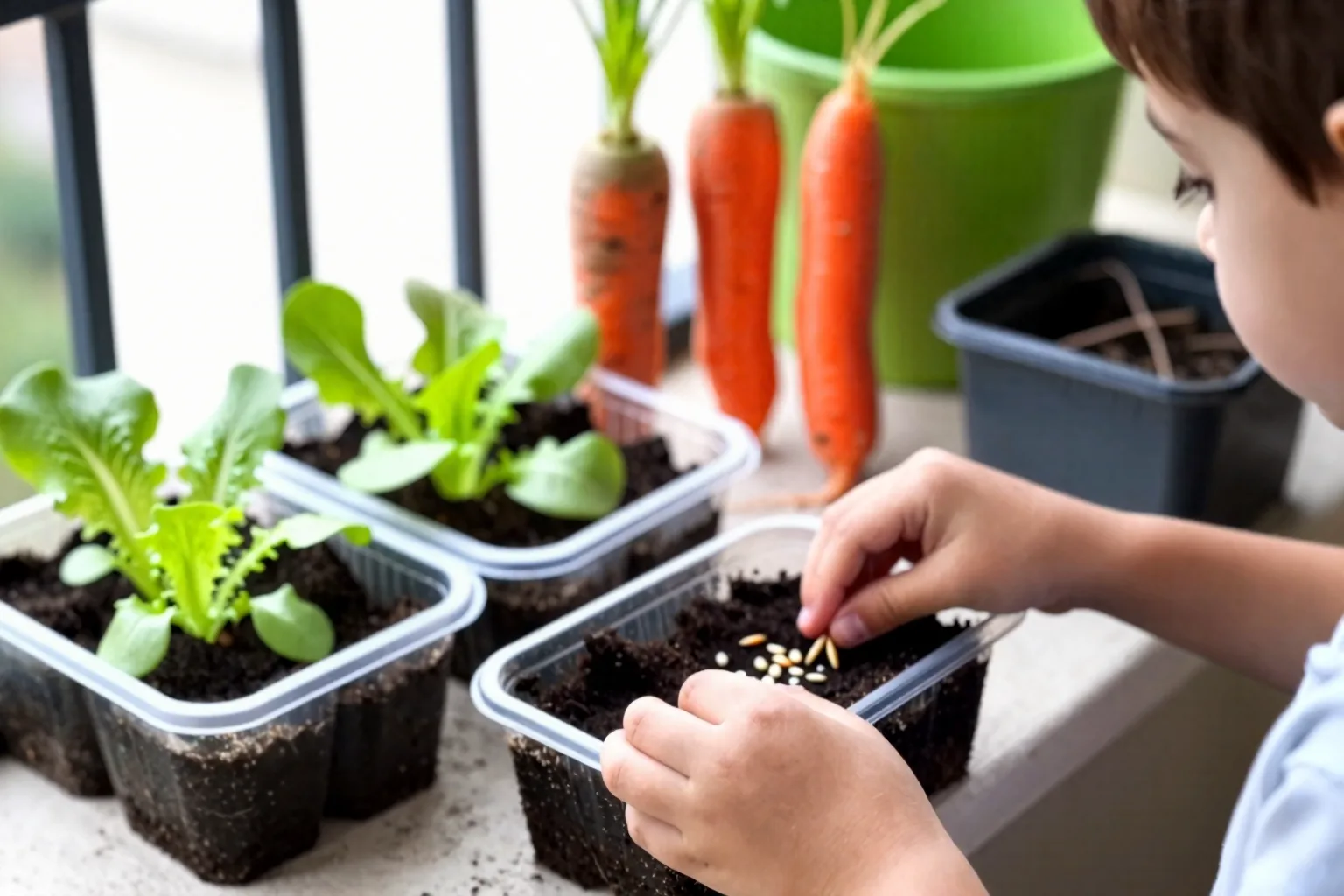
Before the weekend, buy one 15–20 cm (6–8 in) deep pot with drainage, one 10–15 litre (2.6–4 US gallon) pot, fresh container mix and two cool-season seed packets. Put the smaller pot in the brightest place, sow radish or arugula thinly, and label the date. In a week, check that the mix surface is not crusted or bone-dry and that the first seedlings are upright rather than stretched. Then decide whether the larger pot belongs to beans or peas by looking at the weather, not by forcing the wrong season.