Growing Avocado From Seed: Will It Ever Make Avocados?
Yes: an avocado grown from a pit can eventually produce avocados. For a seedling in a pot, plan for a long wait—roughly 5–13 years or more is a broad planning horizon—and accept that it may never fruit in a dim indoor spot or a cramped container.
There’s another catch: the fruit won’t necessarily resemble the avocado the pit came from. I think of a kitchen-pit seedling as a satisfying growing project, not a dependable way to choose your next crop.
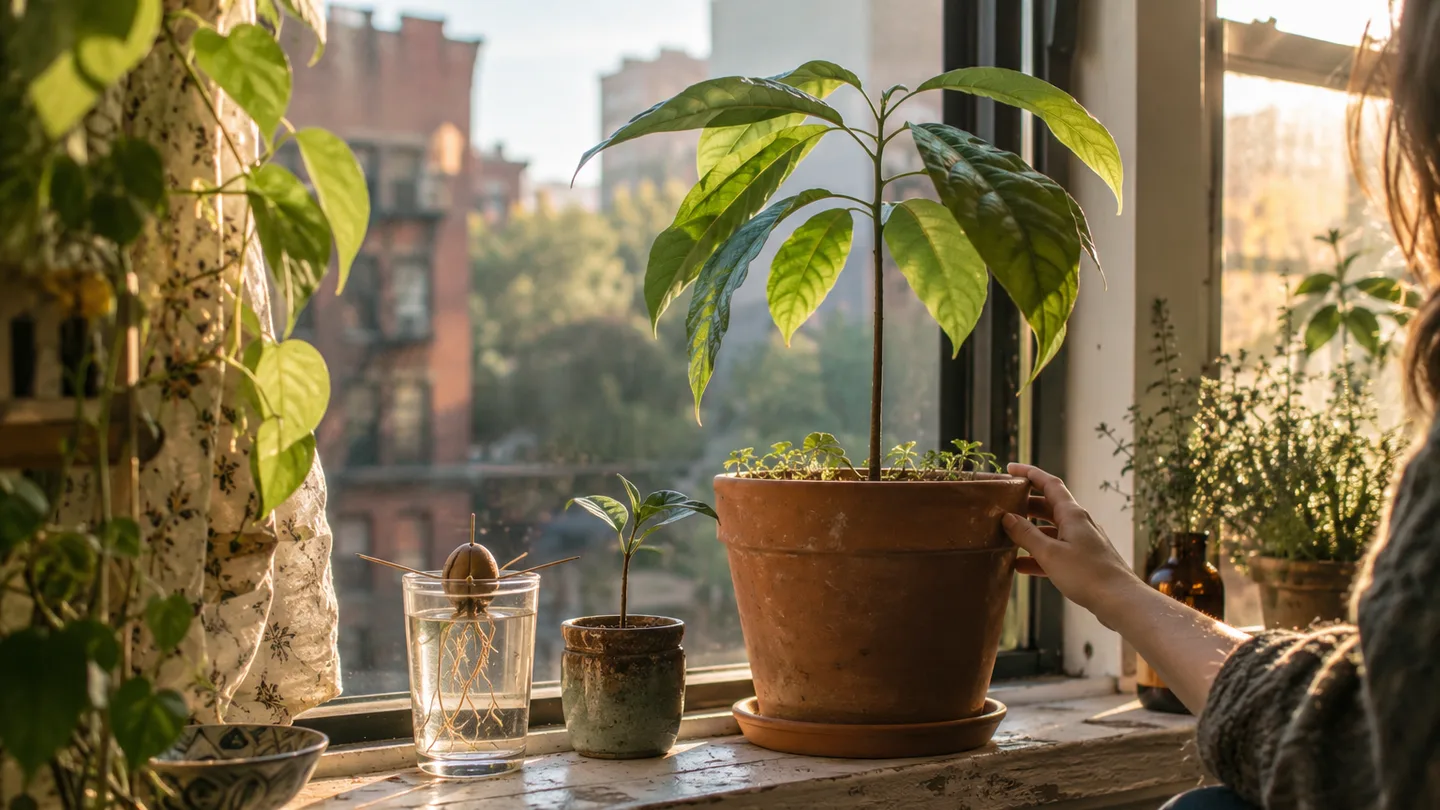
Yes, a seed-grown avocado can fruit—but expect a long, uncertain wait
A seedling has to grow through a juvenile stage before it can flower. Once it is mature enough, it still needs suitable light, warmth, healthy roots and flowers that set fruit. A seed can manage the first part and still stall before the rest, especially in a small home where winter light is weak and the plant has nowhere to grow but a pot.
Use 5–13 years or longer as a rough horizon for deciding whether you have the patience and space, not as a date circled on the calendar. Some seed-grown trees take longer, and a tree grown indoors may remain flowerless. Conditions and the seedling itself matter enough that nobody can promise a harvest from the pit in your fruit bowl.
Even if it does fruit, a seedling is genetically different from its parent. The avocado you ate came from a tree with a particular combination of inherited traits; its seedling gets a new combination. You might like the fruit, or it might be small, fibrous or otherwise unlike the one you bought. There’s no reliable way to know from looking at the pit.
That uncertainty is not a reason to throw the seed away. It’s a reason to choose the project for what it is. If you want a leafy plant and enjoy watching a root emerge, it can be worthwhile. If your goal is a particular kind of avocado, a grafted tree of a named cultivar makes more sense: it is propagated from the desired variety rather than being a genetic roll of the dice.
Start with the pit’s broad end down—and give it warmth, not a deadline
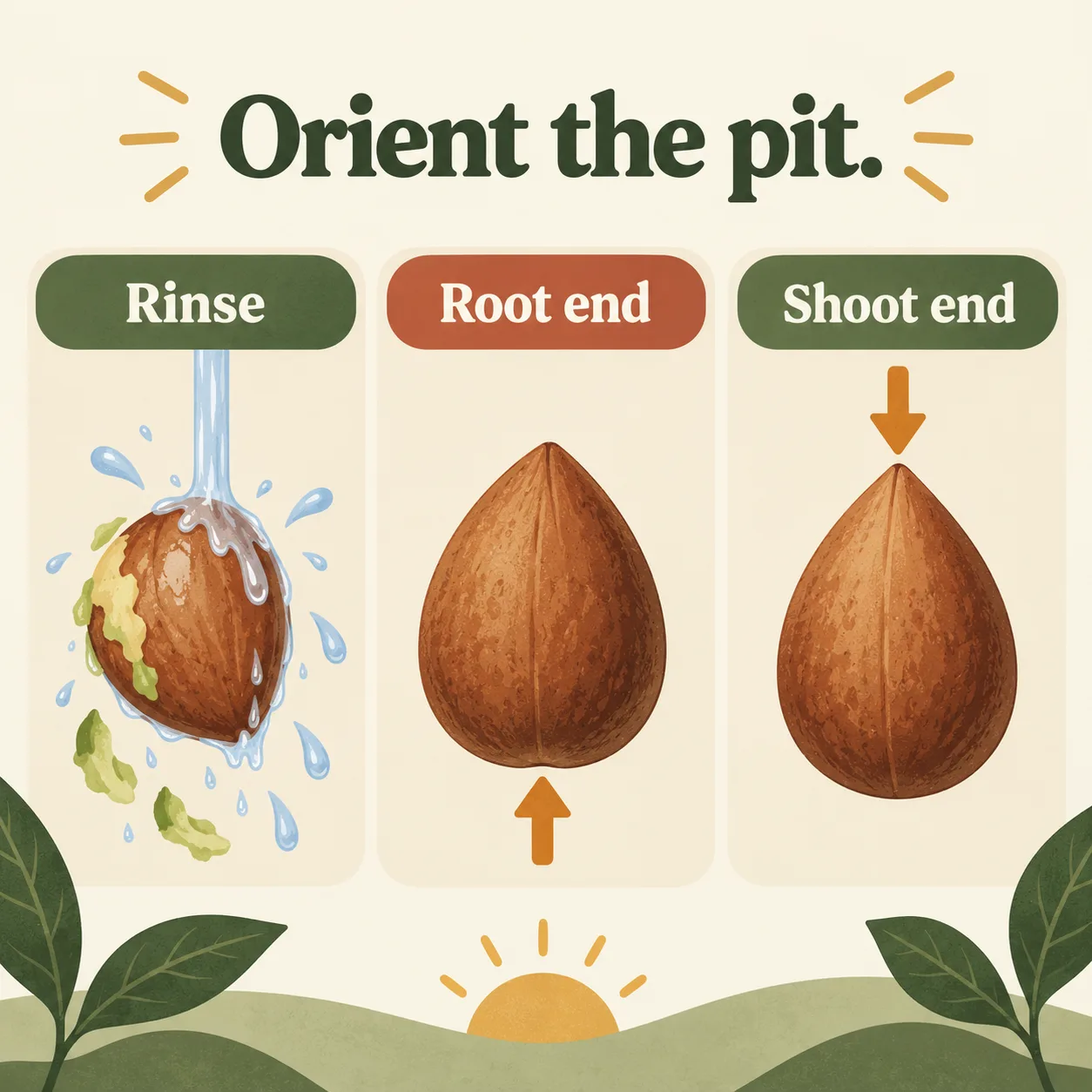
Rinse off the remaining flesh, then identify the two ends. The broad, flatter end is where the root structure emerges, so set that end downward and keep it in contact with moisture. The narrower end faces up, where the shoot can grow. A pit planted upside down may still find its way around, but there’s no advantage in asking a new root to correct your setup.
You can start the pit in a glass of water or directly in potting mix. The water method makes the root and shoot easy to watch; the trade-off is that the emerging root is exposed when you transfer it. For a direct start, use a pot with drainage holes and airy potting mix. Bury the lower part of the pit while leaving its top visible. Keep the mix lightly and consistently moist, not waterlogged. A soggy seed can soften and rot before it gets established.
For either method, warmth helps the process along, but germination is not a countdown. It can take weeks or months, and a pit may fail. Change water when it becomes cloudy, and don’t let a water-started seed sit forgotten in stale water. With a pot, feel the mix below the surface before watering; the top can look dry while the lower part is still wet.
Once roots have formed and a shoot is growing, plant or move the seedling into a draining pot of about 1 gallon (4 L). Keep the upper part of the pit above the mix rather than burying the whole seedling. Move it up when roots begin circling the pot or emerging from the drainage holes, or when the mix dries unusually fast because roots have taken up much of the space. Going up one pot size at a time makes watering easier to judge than shifting a tiny plant into an enormous tub.
When I’m working out whether a balcony crop deserves a permanent spot, I test the space before I start it: I picture the full pot, not the little seedling. That sounds fussy for a pit that fits in your palm, but it changes the decision. The hard part is rarely getting a green shoot; it’s making room for what that shoot can become.
The pot has to accommodate a tree, not just a seed
A 1-gallon (4 L) pot is a starting home, not a forever home. For a substantial container-grown avocado, think in the region of 15–25 gallons (57–95 L), with enough room for a stable root ball and a tree that may need pruning. That is a serious balcony commitment. A pot of that size filled with wet mix is heavy, and the container, plant and any water held in the mix add to the load.
| Stage | Practical pot to consider | What to watch |
|---|---|---|
| New seedling | About 1 gallon (4 L) | Drainage holes; mix that stays moist without staying sodden |
| Growing plant | Step up as roots fill the current pot | Roots circling or showing at holes; mix drying much faster |
| Long-term container | Roughly 15–25 gallons (57–95 L) | Available footprint, mature plant size and the filled-pot load |
The pot needs open drainage holes. Without them, extra water has nowhere to go and roots can remain short of air. Skip the gravel layer at the bottom: when fine potting mix meets much coarser gravel, water does not simply pass through faster. A wet layer can remain above that boundary, leaving less of the useful mix available to roots. That persistently saturated zone is sometimes called a perched water table: in plain terms, it’s water held in the mix above the bottom of the pot.
Before buying a large container, estimate the load rather than guessing from its empty weight. Count the pot, the volume of mix, the plant and the water retained after watering. A bag’s volume tells you how much space its contents occupy, not what the saturated pot weighs. If you’re on a balcony or rooftop, check the building’s load rules or ask the property manager before placing a heavy planter there; don’t assume a corner or wall is automatically safe.
My judgment call: don’t buy the biggest pot available on day one. An oversized volume of wet mix around a small root system is harder to water evenly, while a pot that’s too small dries quickly and restricts growth. A gradual move up lets the roots occupy the mix and gives you a better read on how fast the plant is drinking. For other container fruit examples, compare the space and care involved in growing citrus in containers and growing figs in containers.
Six hours of sun is a better starting point than a dim windowsill
For a tree you hope will mature and flower, give it the brightest outdoor position you can manage. About six or more hours of direct sun is a useful starting aim. A balcony that gets only an hour or two may keep a young avocado alive, but it is a poor bet for a strong, fruiting tree. A bright-looking room can still be much dimmer than an outdoor spot because glass, walls and the angle of the sun cut down the light reaching leaves.
That doesn’t mean you have to abandon the seedling if your home is short on sun. It means you should set expectations: it may grow slowly, stretch toward the window and remain a foliage plant. If you’re choosing a crop mainly for food from a low-light space, browse Easy fruits and vegetables to grow in pots before committing a large container to a tree that may not fruit.
Move a young plant outdoors gradually. Start it in a sheltered bright spot, then increase its time in stronger sun over several days. A plant raised indoors has not had to cope with outdoor sun, wind or temperature swings; an abrupt move can scorch leaves or leave them ragged. Bring the pot inside or otherwise protect it before cold nights become a regular feature. Around 10°C (50°F) is a cautious container-care cue for bringing a tender avocado into shelter, not a precise point at which every variety is damaged. Cold tolerance varies with the cultivar, the plant’s condition and how long the cold lasts.
For winter, a bright, cool indoor position is generally a better compromise than a dark corner beside a radiator. Keep the pot away from cold drafts, but don’t put it where dry heat blasts the leaves. Water according to the mix, not the calendar: a plant growing slowly in cool conditions uses water differently from one growing in warm, bright weather. If indoor light is limited, expect the tree to pause or make weaker growth rather than forcing it with extra water or fertilizer.
Think of light as the resource that decides whether the long wait is plausible. A pot can be enlarged and a branch can be pruned; you can’t prune your way into more sun. Before starting, watch the intended spot across a clear day and note when direct sunlight actually reaches it. Then check it again in another season, since a sunny summer corner may be shaded in winter.
Flowers have two timed phases; a second tree is not an automatic fix
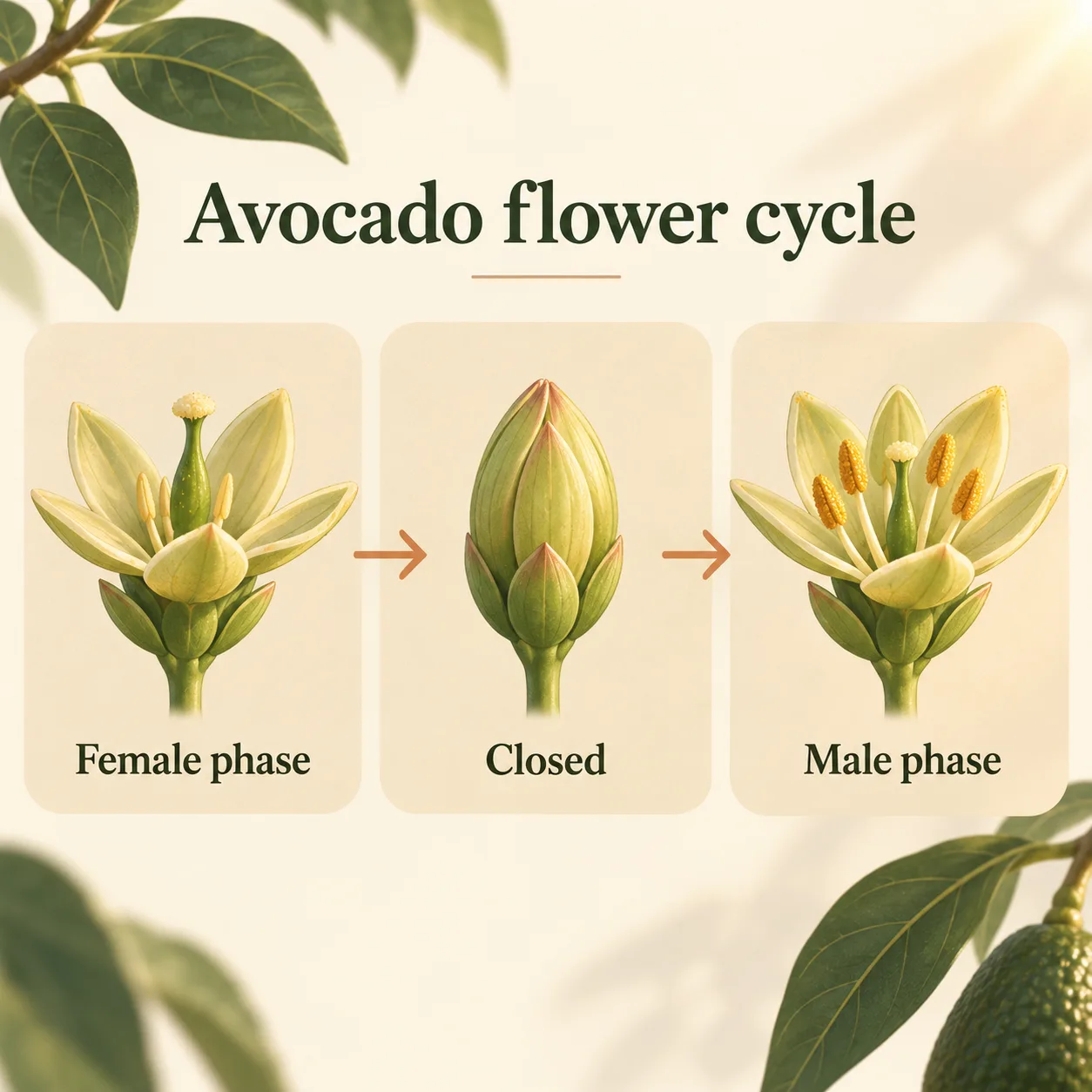
Avocado flowers open in a female phase, close, and later open in a male phase. Growers commonly sort avocado flowers into two groups, called Type A and Type B, to describe the usual timing of those phases. In broad terms, the groups can have complementary timing, which may allow pollen from one flower or tree to be available while another is receptive. Temperature can shift the rhythm, so the neat pattern described in a variety chart may not play out exactly the same way in every garden.
That timing explains why a second tree can help in some settings, but it is not a simple two-tree formula. The varieties need suitable flowering overlap, and conditions still have to let pollen reach receptive flowers. A sheltered indoor tree may have few visiting pollinators; a balcony may have more access, but that depends on where it is and what is blooming nearby. One tree can sometimes set fruit, so buying a partner tree is not an automatic requirement—or a guarantee.
And flowers are only the beginning. A blossom can open without setting fruit; a tiny developing fruit can also drop. If your tree flowers but produces nothing, note whether flowers overlap, whether the plant is outdoors where pollen can move, and whether it is growing steadily rather than struggling. For a specific named cultivar, check regional cultivar notes from a local extension office. A useful reference on a pollination reference for your cultivar should explain the flowering phases and the conditions that can affect their timing, rather than treating the A/B label as a promise of overlap.
I would not add a second large pot just because the first avocado has flowered. First look at the tree’s light, health and setting. If those are weak, another cultivar adds space and watering work without fixing the underlying problem.
Keep the seedling for the experiment; choose a grafted tree for a sooner, known crop
If you enjoy the process and have room for a long-lived plant, keep the seedling. If you want avocados from a container, look for a grafted, container-suitable tree with a named cultivar. Grafting joins a chosen fruiting variety to a separate root system, so the top is expected to retain the variety’s traits more predictably than a seedling. A grafted tree may bear sooner than a seedling; a rough 2–4-year window is sometimes used for planning, but the tree’s age, establishment, growing conditions and cultivar all affect the wait. Ask the seller how old the plant is and what variety it is, rather than treating a number on a label as a harvest date.
Pruning can keep a tree’s shape manageable, but it doesn’t turn a seedling into a genetically dwarf avocado. Cutting back a vigorous shoot may encourage branching; it cannot change the genes that influence the plant’s growth. A compact-looking young tree can still need a larger root volume over time. If you do prune, take a little at a time and keep enough healthy foliage for the plant to keep growing.
When a tree stays flowerless, start with the conditions you can inspect: has it had strong light, is it growing new leaves, does the pot drain, and is the root space becoming cramped? A plant that is barely growing is unlikely to be helped by a pollination partner. When flowers appear but drop, look at watering swings, cold or heat stress, poor light and whether the flowers’ phases can overlap. Blossom drop does not by itself diagnose one cause, and it doesn’t prove that the tree is permanently incapable of fruiting.
For a small-space gardener, my preference is clear: grow the pit if the experiment is the point; buy a grafted tree if fruit is the point. Neither choice guarantees a crop, but the second gives you a more predictable variety and a better chance of a shorter wait. If you have one sunny balcony corner and no space for a large pot, the honest choice may be to enjoy the seedling as a houseplant and reserve your best growing space for a crop with a more realistic payoff.
This week, mark the hours of direct sun on the spot where an avocado would live, then set an empty pot there to check the footprint and access. If the space works, start the pit broad end down in a draining 1-gallon (4 L) pot; if it doesn’t, choose a smaller crop before the seedling turns into a tree-sized commitment.