How Long Do Seeds Last? A Crop-by-Crop Storage Guide
Onion and leek seeds are commonly given a useful-life window of about 1–2 years; tomato seeds may remain usable for about 4–6 years when kept cool and dry. Those ranges help you decide what to use first, but a packet doesn’t suddenly stop germinating on a printed date.
For a balcony grower, that distinction can save a tray of potting mix and a week of waiting. The exact answer depends on the seed lot and how it was stored, so I use crop ranges to sort packets, then test the packet I actually plan to sow.
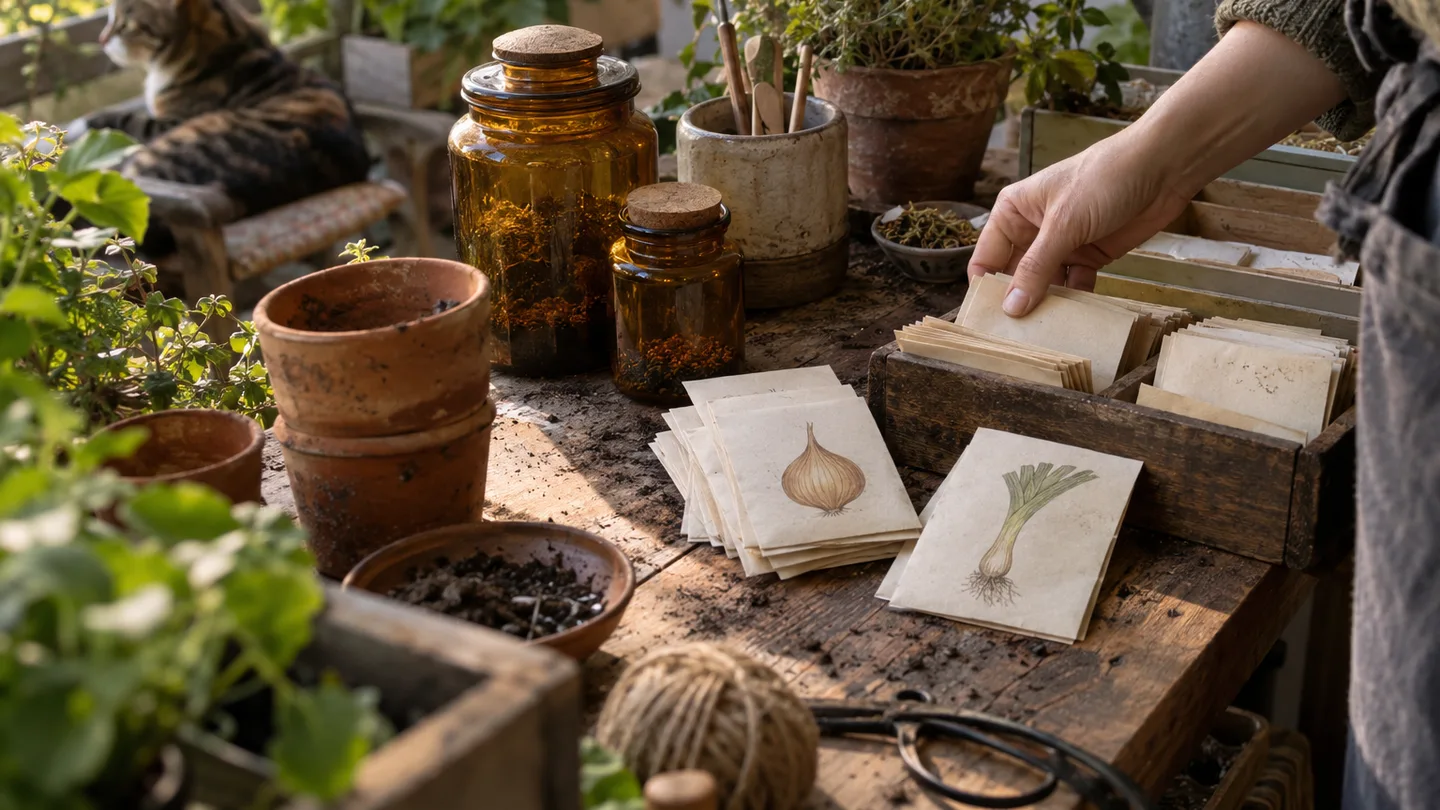
The lifespan range is a planning window, not an expiry switch
Seed viability usually declines over time, but it doesn’t fall off a cliff on one calendar day. A packet may contain seeds that germinate readily alongside others that are weaker; as the lot ages, fewer may produce normal seedlings. Warmth and moisture can speed that decline, while careful storage can help a packet stay useful longer.
The date printed on a packet is tied to that seed lot and the rules used for its sale and labeling. It is useful context, but it can’t tell you exactly how many seeds in your opened packet will sprout today. A packet stored for years in a cool, dry cupboard may perform better than a newer one left through a hot, damp season.
I treat the crop ranges below as a sorting tool: sow the short-window packets first, keep the longer-window ones in good storage, and test anything that matters before committing a whole container. The ranges are estimates for reasonably mature seed kept in decent conditions. Heat, damp, poor initial seed quality, or an incomplete harvest can move a particular packet outside them.
Use these first: onion, leek, parsley, parsnip, and carrot
These are the packets I’d put near the front of a small seed box. Their practical storage windows tend to be shorter or more variable, so planting them while they’re relatively fresh is a sensible way to avoid giving an old packet an entire pot and discovering the problem weeks later.
| Crop | Planning range in good storage | Practical move |
|---|---|---|
| Onion and leek | About 1–2 years | Use sooner, or test older packets |
| Parsnip | About 1–2 years | Prioritize fresh seed for the next sowing |
| Parsley | About 1–3 years | Test if the packet has sat for a while |
| Carrot | About 2–3 years | Sow fresh when timing and space are tight |
These bands are useful for deciding what to check first, not for diagnosing a packet by its age alone. Seed maturity and handling before packaging matter, and the same crop can vary from lot to lot. For a small balcony garden, I’d rather test an older carrot packet than discard it automatically; a quick test costs little space and tells you more than the calendar does.
Middle-range packets: corn, peppers, beans, peas, spinach, and okra
These crops sit in the middle of a practical seed-box sorting system. Their ranges overlap, and storage conditions can matter more than the difference between adjacent years. Use the table to decide when to test; don’t treat the upper number as a promise that every seed in the envelope will still sprout.
| Crop | Planning range in good storage | What I’d do with an older packet |
|---|---|---|
| Sweet corn | About 1–3 years | Test before reserving a large pot |
| Pepper | About 2–4 years | Check germination before planning a full seed-starting tray |
| Okra | About 2–3 years | Try a small test batch if the seed is valuable |
| Beans and peas | About 3–4 years | Sow a few extra if the packet is older |
| Spinach | About 3–5 years | Test first if you need a dependable stand |
A practical detail for container growers: a low germination rate matters most when each planting spot is precious. If you have room to sow a few extras, an older bean packet may still be useful. If you have only one compact tray and a narrow window to start peppers, a test lets you decide before that space is occupied.
Once seedlings are growing, the next steps in seed starting still matter: a germination test can tell you whether seeds sprout, but it won’t correct poor light, overly wet mix, or a pot that dries too quickly.
Often longer-lived: brassicas, tomato, lettuce, and cucurbits
Broccoli, kale, and related cabbage-family crops often sit toward the longer end of a home seed collection, as do tomato and many cucumber, melon, and squash seeds. Lettuce commonly falls between the middle and longer groups. These are useful packets to keep for another season when they’ve been stored well, especially if you’re trying to avoid buying seed you already have.
| Crop group | Planning range in good storage |
|---|---|
| Broccoli, kale, and other brassicas | About 4–5 years |
| Tomato | About 4–6 years |
| Lettuce | About 3–6 years |
| Cucumber, melon, and squash | About 4–6 years |
The upper end assumes mature seeds, a dry packet, and consistently cool storage. If a packet spent summers in a warm kitchen or shed, use its age as a prompt to test it rather than expecting the longest range. Seed that was harvested immature may also start with less staying power, whatever the later storage setup.
For a first-time small-space grower, I’d keep a few older tomato or cucumber packets and test them before replacing them. That’s a useful trade: these seeds can remain serviceable for several seasons, while the test protects your limited container space from a weak batch.
Why the same crop appears to last two years in one chart and five in another
Seed-life tables don’t always describe the same thing. One may show a cautious period for reliable sowing; another may give a longer span during which some seeds can still germinate. “Still alive” and “likely to give you a full, even tray” are different standards, so two ranges can differ without either being a cutoff for every packet.
Three parts of the chain change the result: the seed’s quality and maturity at harvest, the warmth and moisture it experiences in storage, and the standard used to call a packet useful. A dry, mature seed kept cool may stay viable longer than a less mature seed exposed to damp conditions. Crop names alone don’t capture those differences.
That’s why I wouldn’t use a packet date as a verdict. Think of it as one clue about the lot, then consider its storage history and run a small test if the crop is important. For a general reference, university extension seed-storage guidance is a useful place to compare handling recommendations, while your own packet test answers the question for that lot.
Cool, dry, and sealed keeps a packet nearer the high end
Choose a spot that stays cool and dry, then keep packets in a closed container that limits moisture exchange. A cupboard away from an oven, radiator, sunny window, or steamy sink is a better home than a shed that heats up during the day and cools at night. Temperature swings and damp air make storage less predictable.
A refrigerator near 4°C (40°F) can work if seeds are protected from moisture. Put packets inside an airtight container, and let the sealed container warm to room temperature before opening it. Otherwise, humid room air can condense on the cold packets and add the very moisture you were trying to keep out.
Freezing is a more demanding option. Seeds need to be thoroughly dry and sealed against moisture before they go into a freezer; when you take them out, keep the container closed until it has warmed. If you can’t control dryness and sealing, a cool cupboard is the simpler choice for ordinary household seed storage.
Don’t put seed packets in a damp garage or leave them loose in a kitchen drawer beside a kettle. The storage goal is steady conditions: a closed container helps buffer humidity, and a cool location slows the changes that make stored seed less dependable. I’d label the container with the year you packed or opened the seed so the next sorting session takes seconds.
If your main challenge is keeping edible plants going in a small space, container gardening for beginners covers the practical setup that comes after you’ve chosen viable seed.
Test 10 or 20 seeds before giving an old packet a whole tray
A paper-towel test gives you a packet-specific estimate without filling a pot or seed tray. I’d set it up at the kitchen counter beside the seed packet, write the crop and test date on a scrap of paper, and keep the towel damp rather than dripping. That simple arrangement makes it easy to remember what you tested and what the result means when you return to sowing.
Use 10 seeds for a quick check or 20 if the packet has enough. Moisten a paper towel, spread the seeds so they aren’t piled together, then fold or roll it and place it in a loosely closed bag or container. Keep it at the warmth appropriate for that crop; use the packet’s guidance if it gives a temperature or expected germination period. Check regularly, adding a little water only if the towel is drying out.
When the expected germination window has passed, count seedlings that look capable of normal growth. A seed that has only split its coat or produced a short, damaged root isn’t equivalent to a sound seedling. Remove the test seedlings as you count so you don’t count one twice on a later check.
With 10 seeds, each seedling changes the result by 10 percentage points: 7 normal seedlings means a rough result of 70%. With 20 seeds, each one changes the estimate by 5 points; 14 normal seedlings again works out to 70%. Small batches give a practical read, not a precise forecast of every seed left in the packet.
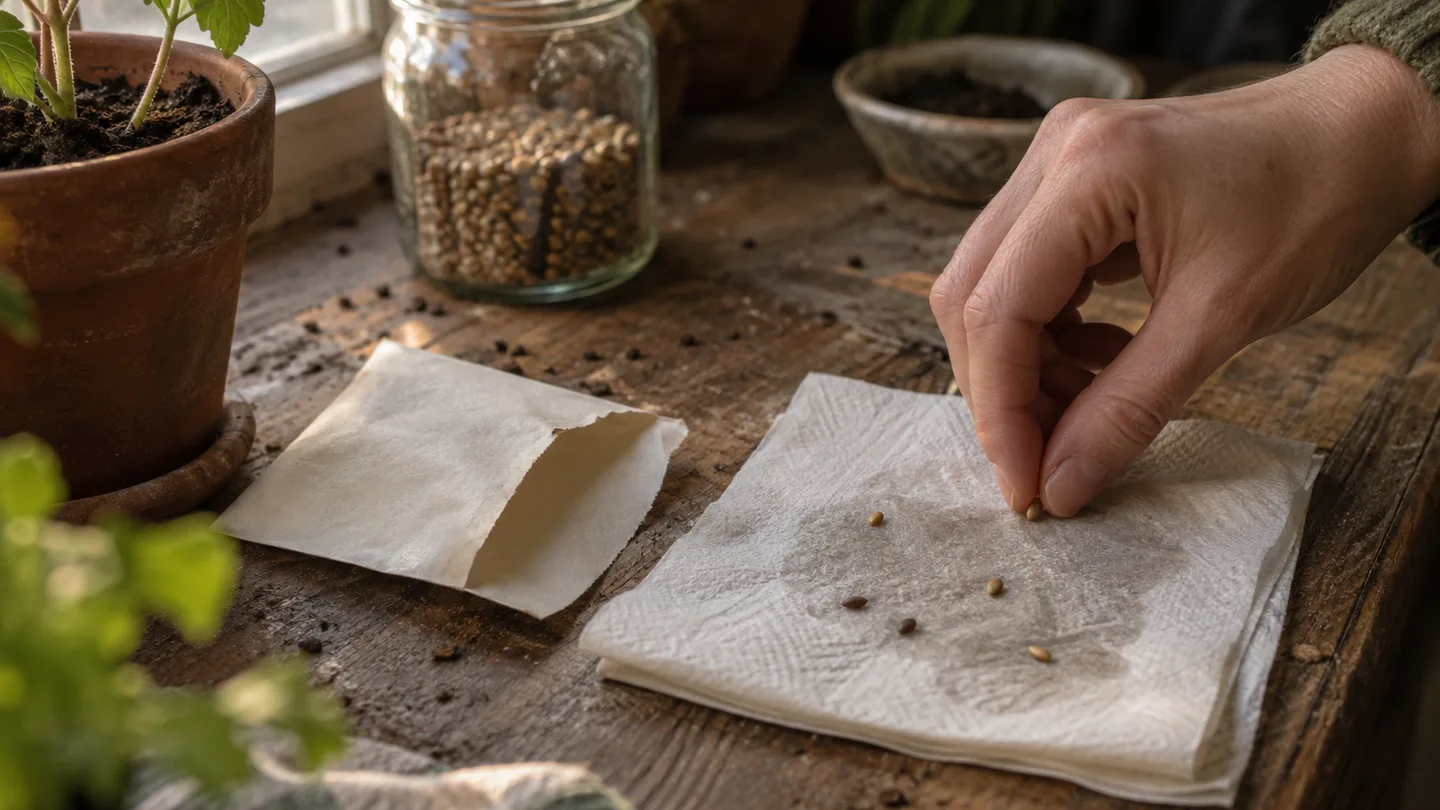
This is a useful bridge into a fuller seed starting routine: it helps you decide how much seed to sow before you prepare pots and mix. Keep the test conditions close to the crop’s needs, though. A cold counter can make a sound seed look slow, while a towel that dries out can stop germination for reasons unrelated to the packet’s age.
Turn the germination percentage into a sow-more or replace decision
Use this calculation: number of seedlings you want ÷ germination fraction = seeds to sow. If your test result is 70% and you want 10 seedlings, divide 10 by 0.70. The answer is about 14.3, so sowing 14 or 15 seeds gives you a reasonable target. Because the test is a small sample, the actual number of seedlings can still land above or below 10.
Extra sowing makes sense when seed is inexpensive, the crop is easy to start, and you have spare room. It’s a less attractive fix for scarce seed, slow-growing crops, or a windowsill with space for only a few pots. In those cases, fresh seed may be the more practical choice even if the old packet produces some seedlings.
My judgment call: for a container garden, the best seed-saving habit is not hoarding every packet or replacing everything each spring. Keep the well-stored packets with longer planning windows, test the older ones that matter, and spend your limited growing space on seeds that have a fair chance of producing healthy starts.
Before your next sowing, pull out the onion, leek, parsley, parsnip, and carrot packets first. Check how they were stored, set up a small test for any you’re unsure about, and write the result on the packet before you fill a tray.