Succession Planting in Pots: What to Sow Every 2–3 Weeks
Radishes and baby-leaf greens are the easy answer to what you should sow every two weeks in a pot. Head lettuce, cool-season spinach, turnips and compact bush beans usually fit a slower three-week rhythm, while carrots, chard and other long-season crops are better treated as a separate, longer run.
That is the useful way to think about succession planting: not as a promise to sow on the 1st, 15th and 30th, but as a queue of crops moving through a limited root zone. In a container, the next wave earns its place only when the first wave is close enough to harvest that the two will overlap without competing for the same water and mix.
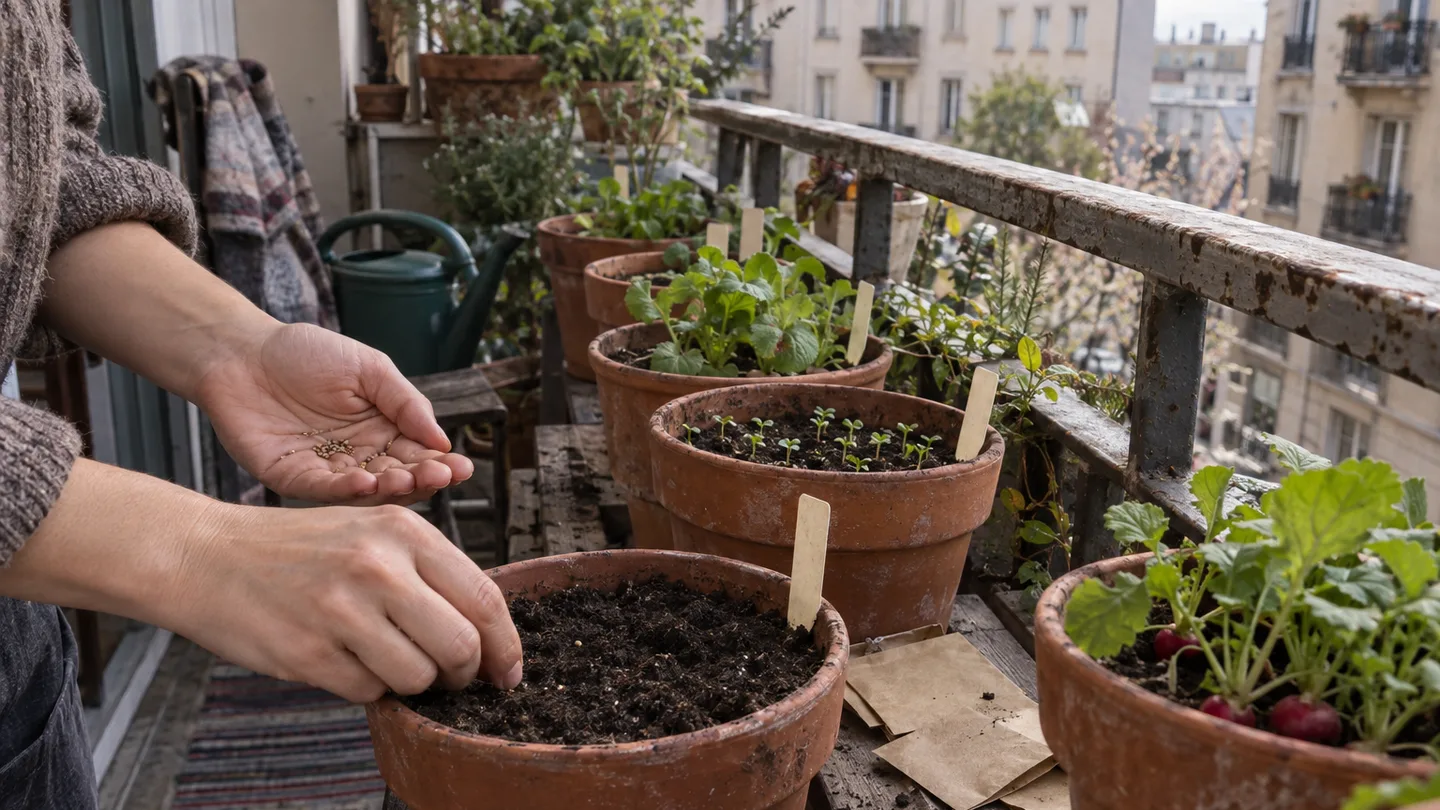
The interval is set by harvest speed, not by the calendar: 14 days versus 21 days
Succession planting means starting the same crop, or a replacement crop, in overlapping batches. The interval is the gap between sowings. It is not the number of days between harvests, and it is not a rule that every vegetable must obey.
I use a rough 14-day lane for crops that can be eaten young. Radishes and baby-leaf greens may reach a usable stage in about 20–35 days. That gives the first sowing time to establish while the second is getting started. Mustard greens and cilantro can also work in this lane, although cilantro may linger longer if you keep harvesting leaves rather than pulling the whole plant.
A 21-day lane suits crops that need more bulk before you start picking. Head lettuce often takes about 40–60 days to make a useful head, and compact bush beans may need roughly 50–65 days to flower and fill pods. Those are working ranges, not promises. Variety, temperature, wind and available light can move the harvest window in either direction.
That last point matters on a balcony. If your plants get only one or two usable hours of sun, a crop may spend more time making leaves and roots before it reaches the stage shown on the seed packet. I would lengthen the interval or choose faster crops rather than insisting on a 14-day rhythm that the light cannot support. A shaded balcony is usually a better place for repeated baby leaves than for a long queue of fruiting vegetables.
The container changes the arithmetic in another way. A pot has a finite root volume, so the first crop can use much of the available moisture and nutrients before the second crop is ready to take over. The same principle sits underneath good container gardening soil: the mix has to hold enough water for the root ball without remaining saturated after every watering. If the next sowing goes beside a mature plant, both crops may look thirsty at different times, and the smaller seedlings usually lose that contest.
My practical judgment is that shorter intervals can waste more space than they save. A new packet of seeds is cheap, but every extra pot needs a place in the sun, a watering check and enough mix to prevent the crop from becoming a miniature stress test. Start with the lane that matches the crop's real harvest speed, then adjust after you see how your balcony behaves.
A 14-day and 21-day roster: the crops that earn another pot
A 14-day lane is useful only when the crop can be harvested young or cleared quickly. The 21-day lane gives slower crops more room to develop before you ask the next batch to take over. The table is a starting roster, not a contract; if the weather turns hot, the light drops or the first sowing is still tiny, delay the next batch.
| Lane | Crop | Starting pot | Start the next wave when |
|---|---|---|---|
| About 14 days | Radishes | 2–5 L (0.5–1.3 gal), 10–15 cm (4–6 in) deep | The first roots are sizing and the shoulders are beginning to show, rather than waiting until every radish is pulled. |
| About 14 days | Baby-leaf lettuce | 2–5 L (0.5–1.3 gal), 10–15 cm (4–6 in) deep | The first pot can provide its first cut of young leaves and still has enough growth left to recover. |
| About 14 days | Mustard greens | A small-wave pot similar to the radish or baby-leaf container | The first leaves are usable and the forecast is not pushing the crop straight into heat stress. |
| About 14 days | Cilantro | A dedicated small-wave pot with free-draining mix | The first plants are established and you want a continuous supply of young leaves rather than one large, ageing clump. |
| About 21 days | Head lettuce | 5–10 L (1.3–2.6 gal) per head, 15–20 cm (6–8 in) deep | The rosette has filled out enough for outer leaves to be picked, or the head is beginning to close. |
| About 21 days in cool weather | Spinach | A medium container with enough surface area for a small patch | The first leaves are established and cool conditions are likely to continue through the next wave. |
| About 21 days | Turnips | A medium root-crop container with loose, stone-free mix | The first roots are beginning to swell, giving you a clear reason to start another batch. |
| About 21 days | Compact bush beans | About 10–15 L (2.6–4 gal) of mix per plant | The first plants are flowering or forming early pods, and the remaining warm season can still support another crop. |
| Outside this rhythm | Carrots | Plan as a longer-season run rather than a fixed 14- or 21-day lane. | Start another sowing only if you have a deliberate reason, such as a different variety or a second harvest window. |
| Outside this rhythm | Chard | Treat it as a crop you harvest repeatedly from one established plant. | Replace or resow according to plant health and season length, not an automatic two- or three-week alarm. |
For the small crops, the 2–5 L range is about giving one sowing its own manageable root zone. A 10–15 cm depth is enough for a shallow crop such as radishes or baby leaves, provided the mix is loose and the pot drains freely. Head lettuce needs more volume because the finished plant occupies the pot for longer. Bush beans need still more room per plant because their roots and top growth stay active while pods are forming.
If you are standing in a shop aisle comparing containers, the best container size for vegetables is not the biggest pot you can lift. It is the smallest one that gives the crop enough root volume for its planned harvest without making the container too heavy or too slow to dry. A small pot is useful for a fast wave; it is a poor place to force a crop that must keep producing for weeks.
Notice the harvest cue in the final column. I would not start the next wave simply because a reminder has appeared. I would start it when the first crop has reached a visible handoff point: roots sizing, leaves ready for a cut, a head beginning to form or pods appearing. That is how you create overlap without turning the pot into a crowded nursery.
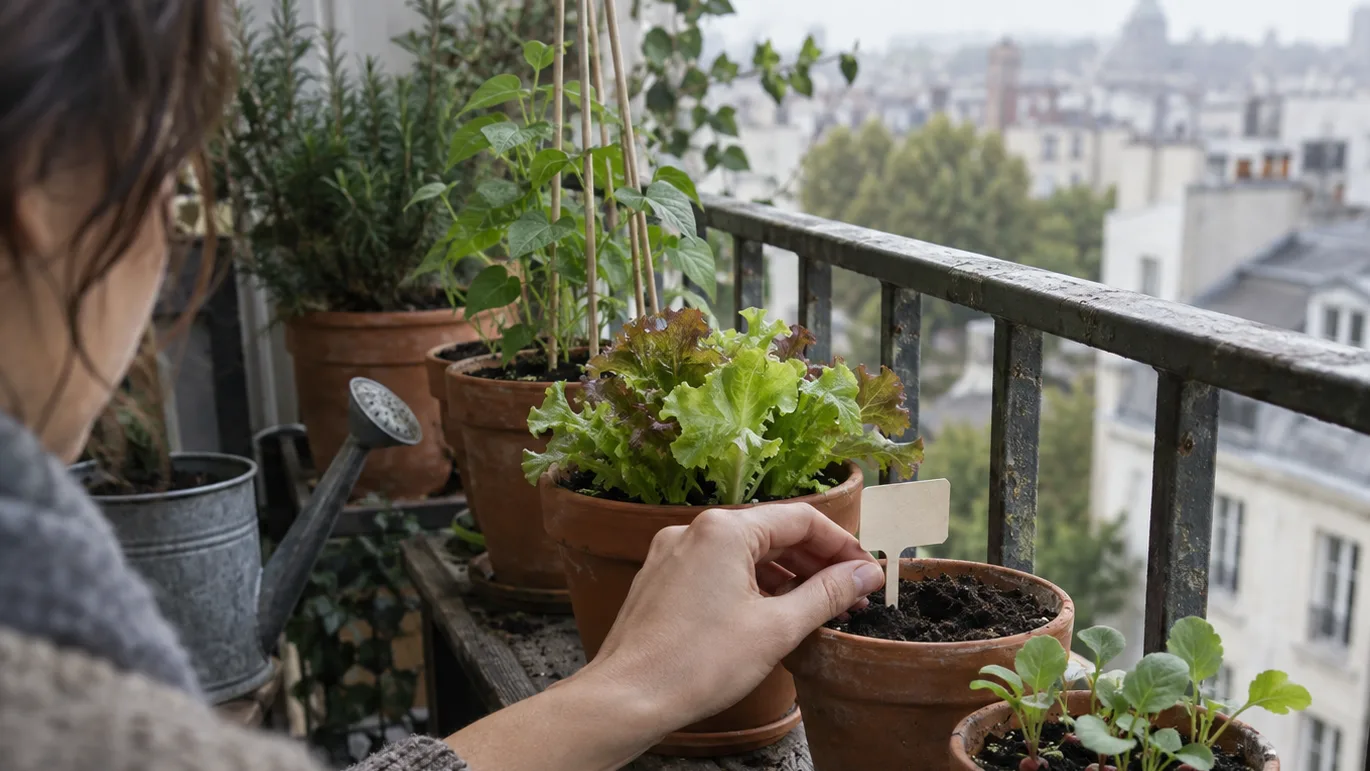
Calculate the final sowing before you buy seed: days to maturity plus a 7–14-day buffer
Start with the packet's days to harvest, add a 7–14-day buffer, and count backward from the point at which the crop is likely to stop growing well. For cool-season crops, that may be the first frost or a period when cold growth becomes too slow. For beans and other warm-season crops, it may be the local heat cutoff or the end of reliably warm weather.
The simple planning rule is:
Last sowing date = seasonal cutoff − packet maturity estimate − weather buffer.
Read the packet carefully before doing the subtraction. Some maturity figures count from direct sowing; others assume a transplant that has already spent time growing indoors. If you begin with young plants, the number can be useful as a rough guide, but it is not a stopwatch. I also check regional frost-date data from a national meteorological or horticultural service, then compare it with seed-packet maturity data and variety descriptions from seed suppliers.
Here are three hypothetical examples using the same backward method:
- Radishes on a 14-day rhythm: Imagine a packet gives 24 days to harvest. Add a 7-day buffer and plan on 31 days. If the first frost is 45 days away, sowing today leaves room for a second wave at day 14. A third sowing at day 28 would have only 17 days left, so I would skip it unless I intended to harvest very young roots.
- Head lettuce on a 21-day rhythm: Imagine the packet gives 45 days and you add a 14-day buffer, making 59 days. If the local heat cutoff is 90 days away, a second sowing at day 21 still has 69 days available. If the cutoff is only 60 days away, the first sowing is already the full plan and a second wave is too ambitious.
- Bush beans on a 21-day rhythm: Imagine the packet gives 55 days and you add a 7-day buffer, making 62 days. If the reliable warm season ends in 75 days, a second sowing at day 21 has only 54 days remaining. I would not start it unless I was happy with a smaller, earlier harvest and accepted that the final pods may not mature.
The buffer is where the balcony earns its own adjustment. A wind-exposed rooftop can lose moisture quickly, which may slow a crop after a dry spell. A dark plastic pot can heat the root zone and increase watering swings in direct sun. A shaded balcony may keep the mix moist for longer but still produce slower growth because the plant receives less usable light. These conditions do not change the packet's printed number; they change how confidently I use it.
Once the remaining suitable season is shorter than the crop's growing time plus the buffer, the 2–3-week rhythm stops. That is not a failed succession plan. It is the point where buying another packet would create a crop with no realistic finish line.
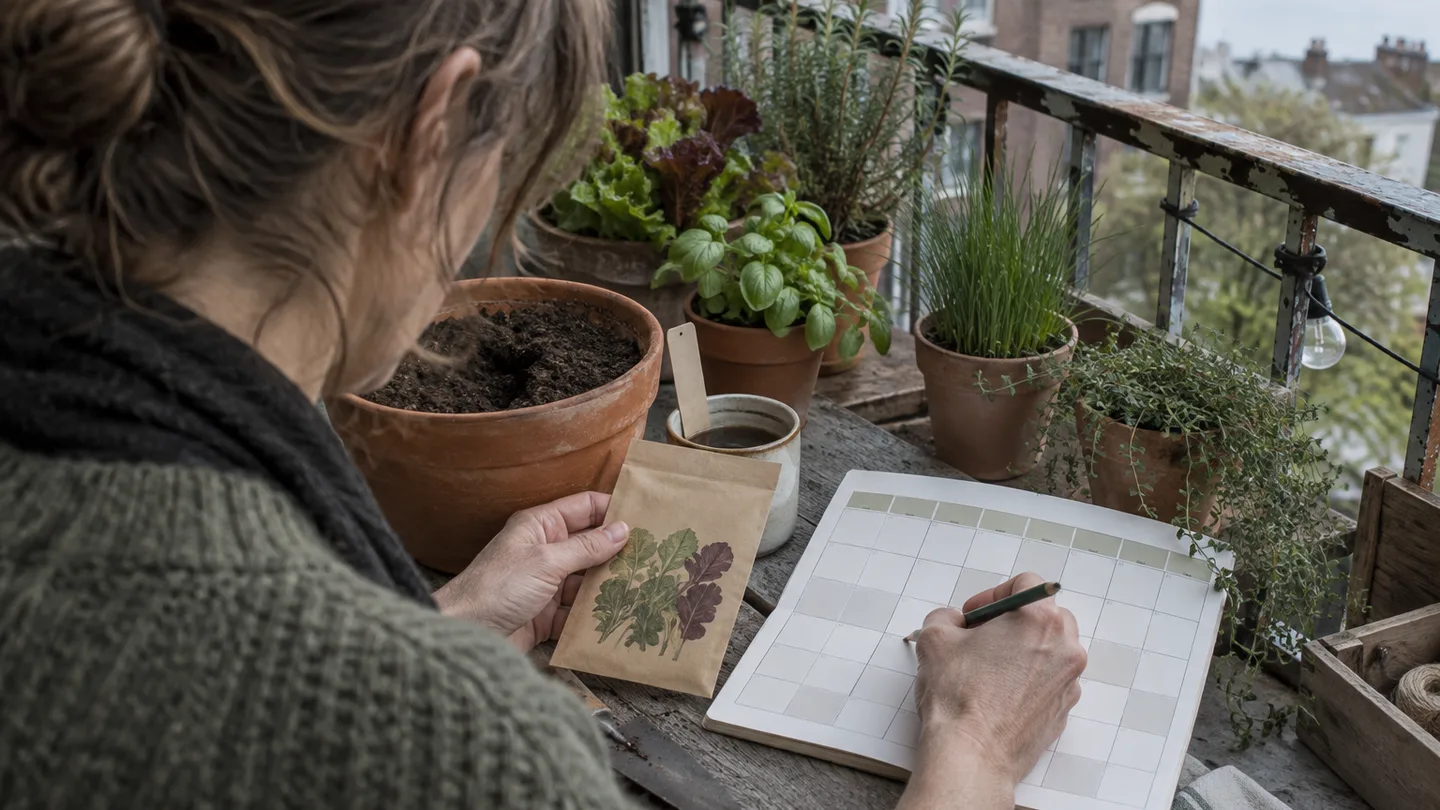
Three pots, four waves: stage succession without crowding the root zone
Three pots, four waves means four dated sowings passing through three containers over time, not four batches crammed into the same soil at once. If you want true overlapping 14-day waves, each small sowing needs its own clear patch or pot. The older crop's roots should not be competing with fresh seedlings for the same shallow moisture reserve.
For one sunny shelf and three medium containers, I would use this arrangement:
- Fast pot: Give one 2–5 L container to radishes or baby leaves. Sow the first wave, harvest it at the young stage, clear the roots and use the same pot for the next wave.
- Cool-crop pot: Give one 5–10 L container to head lettuce or cool-season spinach. Start the next batch only when the first pot has reached a usable picking stage and the weather still suits the crop.
- Commitment pot: Give the third container to a crop that occupies more root volume, such as a compact bush bean. With about 10–15 L per plant, this pot may support one main wave rather than a constant rotation.
That plan is deliberately less crowded than the schedules you may see for a large garden bed. A spare small pot is often more valuable than a clever calendar because it lets you give each sowing fresh moisture and a clean root zone. If you are planning several container gardening vegetables on one shelf, decide which crop gets the best light before you buy seed. The crop with the longest maturity window usually deserves the most reliable position.
When one pot is ready to change hands, I follow the same order:
- Check the crop's harvest stage and decide whether it is truly finished.
- Pull the spent stems and remove the main root mass rather than leaving a dense mat for the next seedlings.
- Refresh the mix or replace depleted, compacted material, especially if the old crop was heavily fed or the pot dried repeatedly.
- Water the prepared mix thoroughly and let excess water drain away.
- Sow the next wave at the packet's recommended depth, then label the crop, sowing date and expected harvest window.
Watering before sowing matters because dry mix can repel the first irrigation and leave a dry pocket around the seed. It also lets you settle the medium before placing the seed, rather than washing a freshly sown seed into a corner of the pot. After sowing, use a gentle shower if the surface needs it.
On my own balcony, I once tucked a second lettuce sowing around the edge of a mature pot because I wanted to save space. The older plant had already claimed the moisture in the root zone, and its leaves shaded the new seedlings; the second batch came up patchy and never matched the first. I moved the following sowing into a separate small container and kept the mature lettuce where it was. The improvement came from the clean root zone, not from a more complicated feeding routine.
That is the line I would remember: in a pot, succession is a root-zone handoff, not a seed-sowing race.
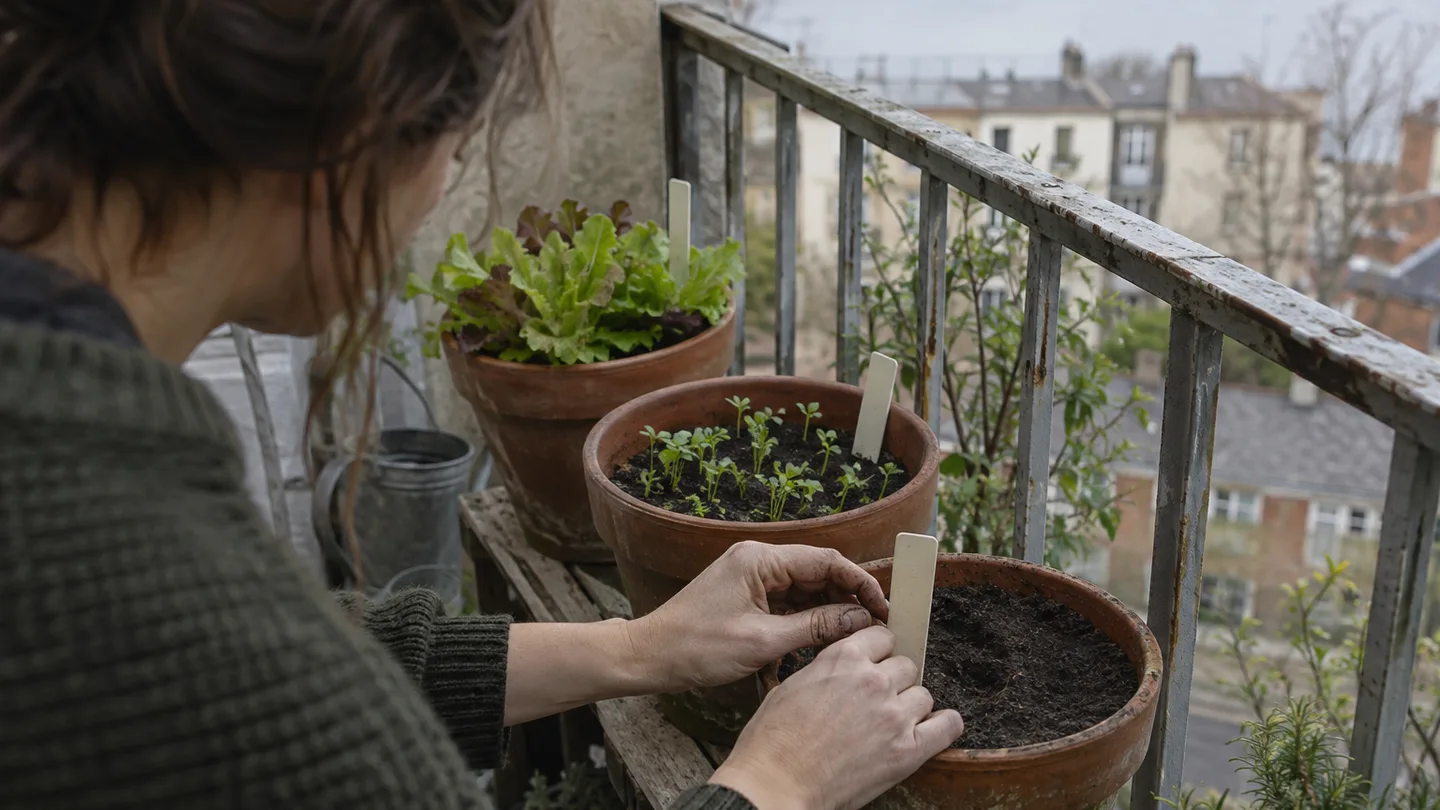
When the waves stop lining up: symptom, cause and correction
The second sowing does not emerge
Check the seed packet's stated germination window before deciding the wave has failed. A 3–14-day window means I would inspect the surface, moisture and sowing depth before resowing. If the first batch emerged in the same pot but the second did not, compare the two conditions: did the new pot dry faster, sit in a colder corner or receive a harder blast of wind?
If you are starting seed indoors or in a protected place, the practical details in seed starting matter here too. A seed can be alive and still fail to emerge if the surface dries during the first few days. Give the second batch a clear check rather than adding more seed on top of an unseen first batch.
The seedlings are tall, pale or floppy
That is usually a light problem before it is a succession problem. Move the pot to a brighter position if you can, rotate it so one side does not stay shaded, and thin crowded seedlings. The signs described in guides to leggy seedlings are especially common when a new wave is placed behind a mature crop.
Radishes make leaves but poor roots
Look at spacing and moisture before changing the sowing date. For radishes and baby-leaf stands that you want to bulk up, thin plants to roughly 2.5–5 cm (1–2 in) apart. Crowding leaves the roots competing in the same narrow layer of mix. Repeatedly letting a shallow pot dry hard and then soaking it can also interrupt root swelling, particularly in a dark container in full sun.
Lettuce bolts before the next wave is ready
Bolting means the plant shifts from making leaves to sending up a flower stalk. If that happens before the replacement crop is established, the interval was too slow for the weather or the chosen variety. Start the next cool-season wave earlier when the season allows, or skip the next head-lettuce batch and choose a crop suited to the warmer conditions. Do not keep sowing the same crop simply because the calendar says day 21.
The mature pot dries out before the replacement is ready
A mature plant has a larger, more active root system than a fresh seedling, so the handoff period can create a watering mismatch. Check the old pot separately from the new one. Wind, dark plastic and a small container can shorten the time between watering checks, while a shaded glazed pot may stay wet much longer. If the old crop is nearly finished, harvesting it a little earlier and clearing the pot may be more useful than trying to keep both stages alive in one root zone.
As a conservative balcony rule, I skip a wave when fewer than 3–4 weeks of suitable weather remain unless the crop is specifically intended for very young harvests. The goal is not to maintain a perfect sequence of sowings. The goal is to keep a useful crop moving through the pots without starting a batch that has no reasonable time to finish.
Do this today: label three containers with the crop, sowing date and likely harvest stage. Sow the first batch, then set a 14-day reminder for radishes or baby leaves and a 21-day reminder for lettuce, spinach or beans. When the reminder sounds, inspect the plants and the weather before you sow again. Let the crop earn the next wave.