Container Size for Vegetables: Why the 12-Inch Pot Fails
A 12-inch pot, filled to a finger's width below the rim, gives a plant somewhere around 15 litres of mix — call it four US gallons. An indeterminate tomato, the kind that keeps climbing until frost stops it, wants three to four times that. The pot never says litres anywhere on it. It says inches, and inches are a width.
That's the gap this piece is about. Nothing on a pot label invites you to convert the diameter into a soil volume, so a tomato gets bought into 15 litres on the strength of a number that was never describing the thing the plant responds to. Getting container size for vegetables right isn't about buying the biggest pot on the shelf — it's about knowing which number matters, and being able to work it out in the aisle with the pot in your hands and no signal on your phone.
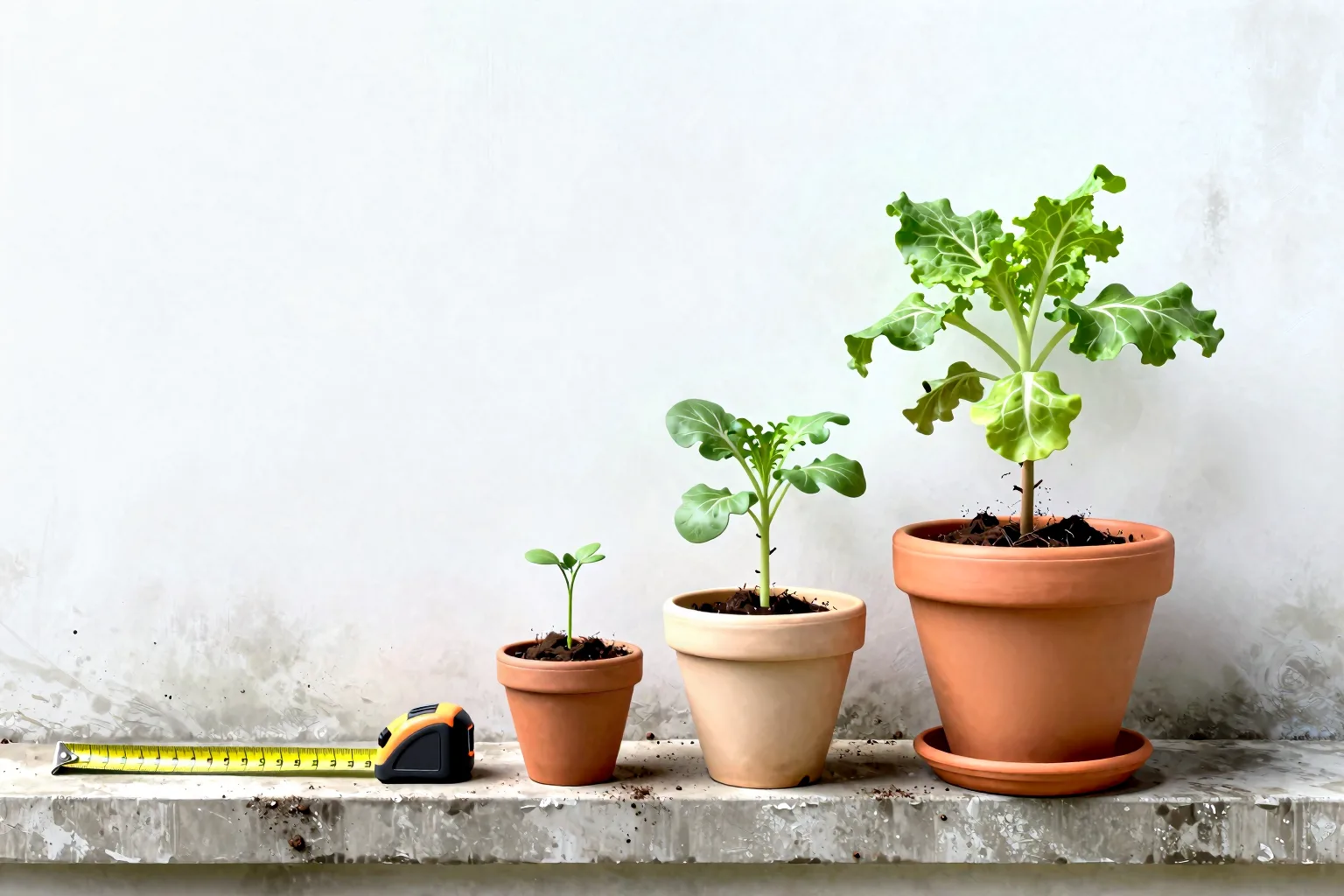
What a "12-Inch" Pot Actually Holds
Twelve inches is a diameter, measured across the rim, and it's the least informative dimension a pot has. It tells you nothing about depth, nothing about how the walls slope inward, and nothing about how many bags of mix you'll be carrying home.
Start with the flattering version. If a 12-inch pot were a perfect cylinder as deep as it is wide — about 30 cm each way — the maths is the one you half-remember from school: radius squared, times pi, times height. That lands at roughly 21 litres, or 5.6 US gallons. That's the number people picture when they pick it up.
Now the real one. Most decorative and nursery pots taper, and the base can be a third narrower than the rim. The volume you shave off comes from the widest part of the shape, so the loss is bigger than it looks. Add the two or three centimetres of headroom you leave below the rim so watering doesn't float mix over the side, and a great many "12-inch" pots settle between 13 and 17 litres of genuinely usable mix. The name suggested nearly six gallons. The plant gets nearer four.
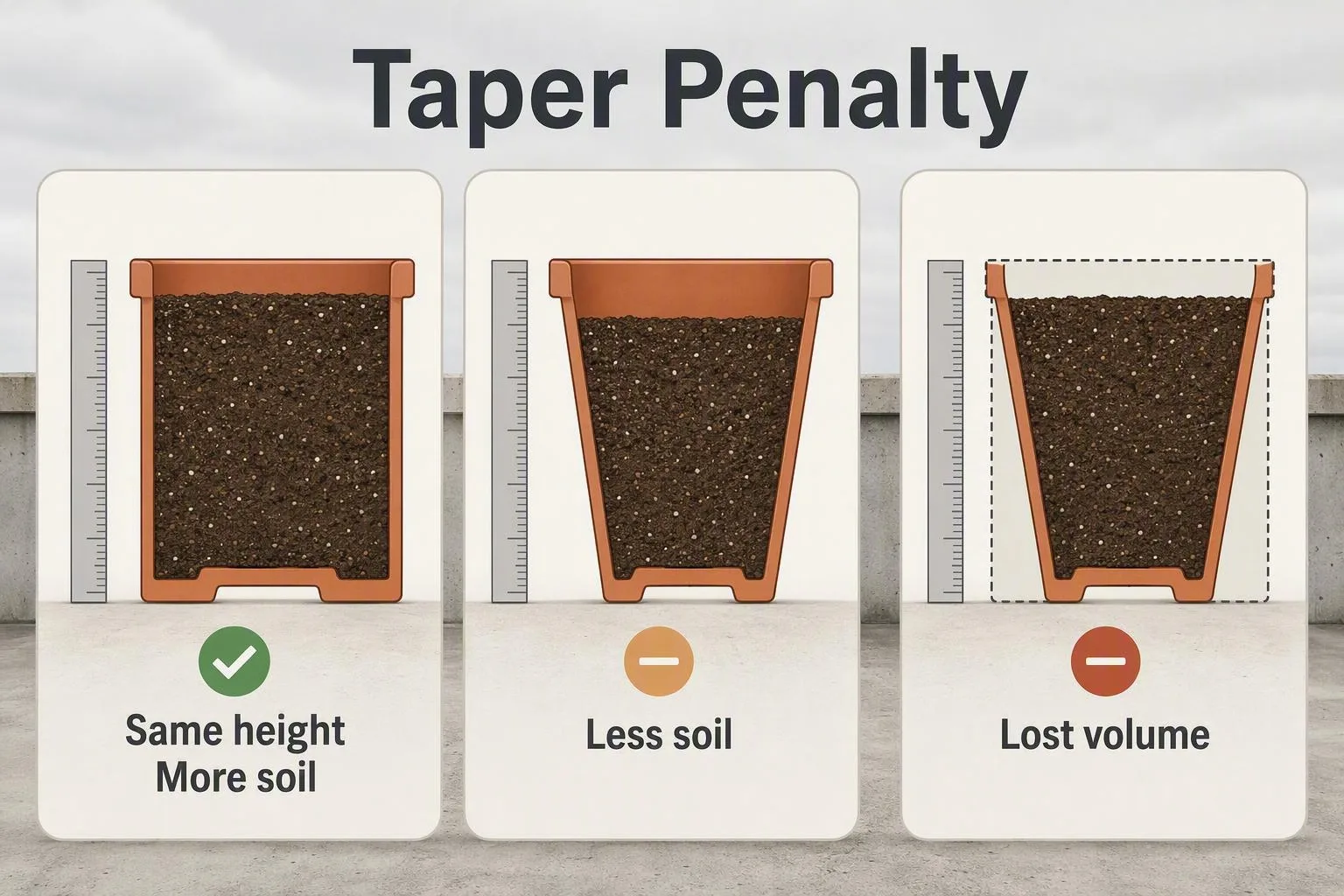
Two habits protect you. First, if there's a litre figure moulded into the base or printed on the label, trust that over the inch figure — and don't assume a "gallon" on a nursery pot is a liquid gallon, because trade sizing conventions are nominal. If it matters to your maths, check the actual capacity rather than the trade name. Second, check depth with your hand, not your eye. Wide shallow bowls photograph beautifully and hold very little: a glazed bowl sold as a 30 cm planter but only 15 cm deep works out at about 10.6 litres treated as a straight cylinder, before you subtract anything for taper or headroom. Less than half of what the rim measurement implies.
The bit nobody mentions about shallow pots
Shallow containers carry a second penalty that has nothing to do with total volume. After you water, a band of mix at the very bottom stays saturated and refuses to drain — not because the holes are blocked, but because water clings to the mix particles until there's enough weight of water stacked above to pull it through. That saturated band is called the perched water table, and here's the part that catches people out: its height is a property of the potting mix, not of the pot. A given mix might hold a 4 to 5 cm soggy layer whether it sits in a 15 cm bowl or a 50 cm tub.
Do the fractions. In a 15 cm deep bowl, that band is a third of the root zone. In a 50 cm pot, it's a tenth. Shallow containers punish you twice — less mix, and a bigger proportion of what's left is a zone roots avoid. If you've ever wondered why drainage holes alone aren't enough, this is the mechanism, and it's the strongest argument for depth over width in anything that roots deeply.
Root Depth by Crop: The Numbers That Decide Pot Size
Below is the working table. "Working root depth" means where the bulk of the feeder roots sit in a container — plants will push deeper given the chance, and nearly all of these crops root far deeper in open ground than a pot ever lets them. The volume column is per plant, and it assumes you want a crop rather than a survivor.
| Crop | Working root depth | Usable mix per plant | Smallest pot that works |
|---|---|---|---|
| Radish, spring onion | 15 cm / 6 in | 4–6 L / 1–1.5 gal | 20 cm / 8 in |
| Lettuce, mixed salad leaves | 15–20 cm / 6–8 in | 5–8 L / 1.5–2 gal | 25 cm / 10 in |
| Basil, parsley, chives, thyme | 15–20 cm / 6–8 in | 4–8 L / 1–2 gal | 20–25 cm / 8–10 in |
| Strawberry | 15–20 cm / 6–8 in | 5–8 L / 1.5–2 gal | 25 cm / 10 in |
| Bush beans | 20–25 cm / 8–10 in | 10–15 L / 2.5–4 gal | 30 cm / 12 in |
| Spinach, chard, kale | 20–30 cm / 8–12 in | 10–20 L / 2.5–5 gal | 30 cm / 12 in |
| Carrot (short/round types) | 25–30 cm / 10–12 in | 10–15 L / 2.5–4 gal | 30 cm / 12 in deep |
| Pepper, chilli | 30–40 cm / 12–16 in | 20–30 L / 5–8 gal | 35 cm / 14 in |
| Bush / determinate tomato | 35–40 cm / 14–16 in | 25–35 L / 7–9 gal | 40 cm / 16 in |
| Cucumber, aubergine | 35–45 cm / 14–18 in | 30–45 L / 8–12 gal | 40–45 cm / 16–18 in |
| Indeterminate (vining) tomato | 45–60 cm / 18–24 in | 45–60 L / 12–16 gal | 45–50 cm / 18–20 in |
| Courgette, potato | 40–60 cm / 16–24 in | 40–60 L / 11–16 gal | 45–50 cm / 18–20 in |
Read the table as a floor, not a target. These volumes are roughly where a plant stops spending its energy on staying alive and starts spending it on fruit. Below them you don't usually get a dead plant. You get a small, thirsty, prematurely exhausted one, which is a much more confusing outcome to diagnose because it looks like bad luck.
One caveat on carrots: that depth column refers to the root you're eating, not the feeder roots. A 30 cm pot suits Chantenay or Paris Market types perfectly well. Long tapered varieties want 35 cm of loose mix below the crown and will fork or stub the moment they hit the base.
Why a 12-Inch Pot Fails a Tomato (and What Succeeds)
Take a specific case. A young indeterminate — a cordon type like 'Gardener's Delight' or 'Sungold', bought as a 15 cm plug in late spring — goes into a 12-inch terracotta pot holding about 15 litres of mix. It looks generous. The plant is 20 cm tall and the pot dwarfs the one it arrived in.
What follows is a sequence, and the order matters more than the calendar dates. First, everything looks excellent: fresh mix, more room than the plant has ever had, fast top growth. Then, within the first month or so of vigorous growth in warm weather, root expansion catches up with the container. A vine tomato in good conditions builds root mass quickly, and 15 litres is a volume it can occupy during the vegetative surge, often before the first trusses have set. Roots reach the wall, turn, and begin circling.
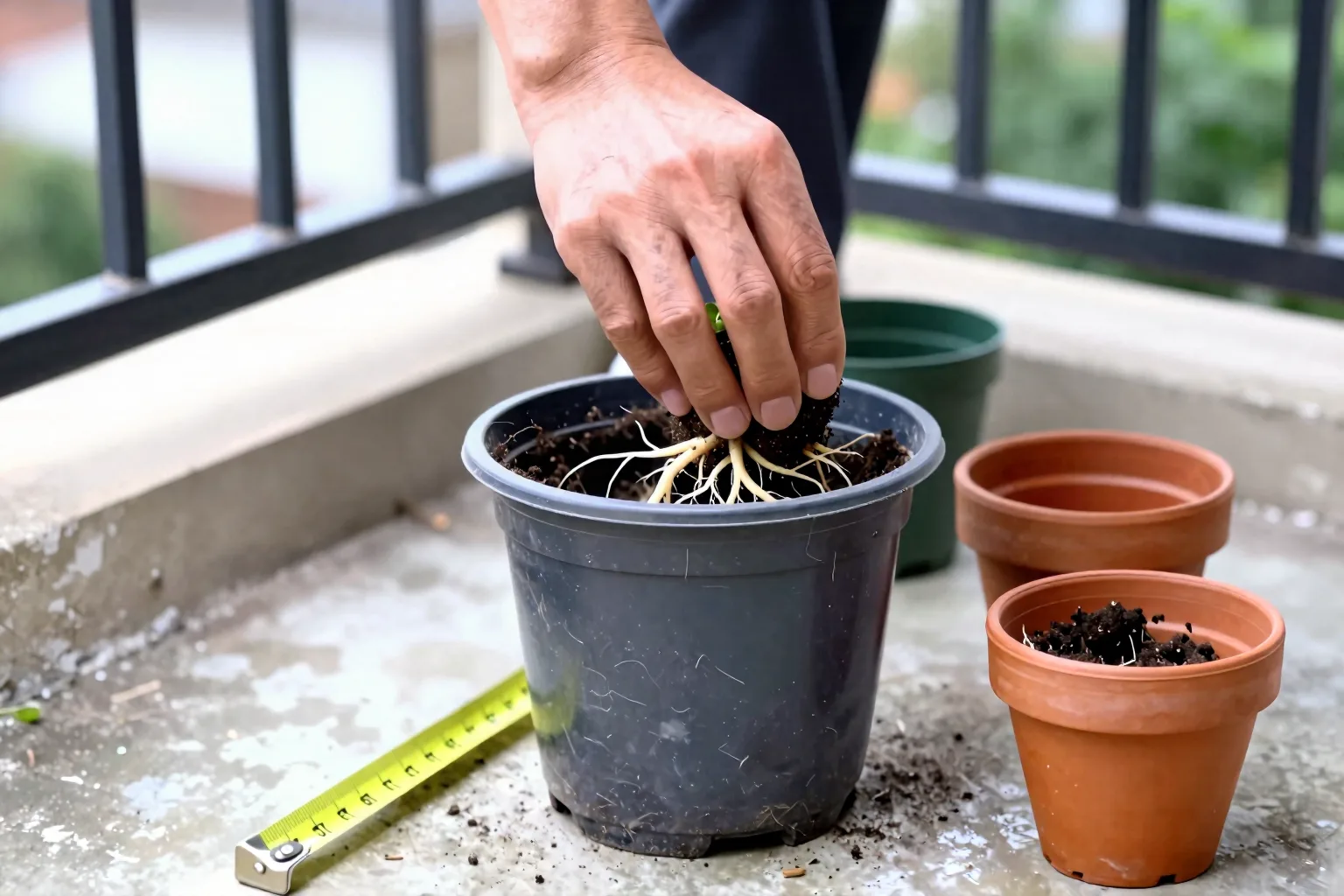
Then the water buffer collapses, and that's the part that costs you the crop. Roots and stem displace mix, leaf area keeps expanding, and the reservoir doesn't grow to match. A 15 litre pot carrying a 1.5 m vine in July sun can go from watered to wilting inside a single hot day. In a plastic pot in full sun that means twice-daily watering; in a glazed pot with afternoon shade, maybe every second day. Either way the plant is now swinging between wet and dry.
Those swings are what interrupt calcium moving into the fruit. Calcium travels with water, so when the water supply stutters, the youngest tissue at the blossom end of each fruit goes short and collapses into a sunken brown patch — blossom end rot. If the shoulders look fine but the bottoms turn leathery, check whether watering has been erratic and whether the pot dries out between drinks before reaching for a calcium supplement. The supplement addresses the symptom; the pot volume is where the fix usually lives.
What succeeds: 45 to 60 litres per indeterminate plant, in something at least 45 cm (18 in) deep. In shop terms that's a 45–50 cm pot, a 15-gallon fabric grow bag, or a half-barrel. If that sounds excessive, remember that determinate and patio varieties were bred for exactly this constraint and will crop respectably in 25–35 litres. Choosing a bush variety is a perfectly legitimate answer to a small balcony — more legitimate than squeezing a cordon into 15 litres and blaming the summer. There's more detail in our full guide to container size and soil depth for growing tomatoes.
Litres and Gallons: A Cheat Sheet for Common Pot Dimensions
These figures assume a pot as deep as it is wide, which is the friendliest case, using rounded metric equivalents. The right-hand column knocks off roughly 30% for taper plus watering headroom — that's the number to plan a mix purchase around.
| Nominal size | If straight-sided and full | Realistic usable mix |
|---|---|---|
| 8 in / 20 cm | 6.3 L / 1.7 gal | ~4.4 L / 1.2 gal |
| 10 in / 25 cm | 12.3 L / 3.2 gal | ~8.6 L / 2.3 gal |
| 12 in / 30 cm | 21.2 L / 5.6 gal | ~14.8 L / 3.9 gal |
| 14 in / 35 cm | 33.7 L / 8.9 gal | ~23.6 L / 6.2 gal |
| 16 in / 40 cm | 50.3 L / 13.3 gal | ~35.2 L / 9.3 gal |
| 18 in / 45 cm | 71.6 L / 18.9 gal | ~50.1 L / 13.2 gal |
| 20 in / 50 cm | 98.2 L / 25.9 gal | ~68.7 L / 18.1 gal |
| 24 in / 60 cm | 169.6 L / 44.8 gal | ~118.7 L / 31.4 gal |
To redo this for any pot in front of you: halve the rim diameter in centimetres, square it, multiply by 3.14, multiply by the internal depth in centimetres, then divide by 1,000. That gives litres. Divide litres by 3.79 for US gallons, or by 4.55 for imperial. A tape measure and that single line of arithmetic will tell you more about a pot than the label does — worth saving to your phone before the next trip to the garden centre.
Bagged mix is a separate headache, because a bag's stated volume is loose and compressed material settles once it's watered in. Our note on how many litres a 5-gallon pot actually holds covers the gap between what the bag claims and what ends up in the pot.
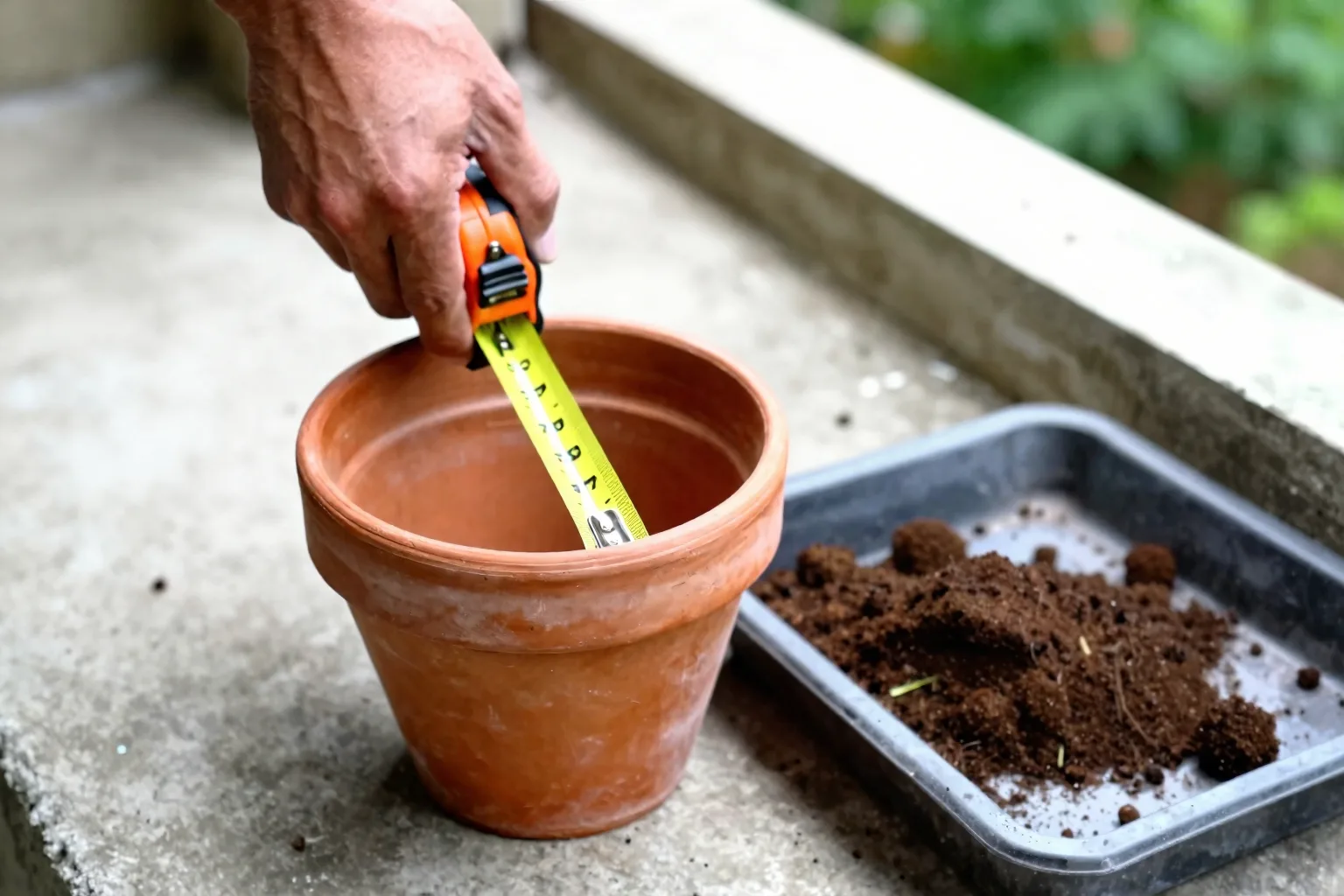
If you want to be exact rather than approximate about the taper, the shape you're calculating is a truncated cone — a frustum — and the formula for its volume handles sloping walls properly instead of averaging them away.
When a 12-Inch Pot Is Actually the Right Size
Four sections of argument against the 12-inch pot deserve a correction: for a large share of what people actually want to grow on a balcony, 12 inches is the correct pot, and buying bigger is wasted money and wasted weight.
It works properly for anything that roots in the top 20 cm and doesn't have to support fruit. That covers most of the genuinely useful stuff — a generous basil pot, cut-and-come-again salad, spinach, chard, rocket, radish, spring onions, bush beans, three or four strawberry plants, a solid clump of chives, mint (which you want confined anyway), and compact bush peppers if you're prepared to water attentively.
Here's a less common view, and it runs against the "always go bigger" reflex: for leafy crops, wide and shallow beats deep and narrow at the same volume. Leaf yield tracks the surface area you can space plants across, not the depth beneath them. A 30 cm pot that's 20 cm deep with eight lettuces in it will out-produce a narrow 25 cm-deep pot of identical volume holding three, because what you're really selling is square centimetres of light interception. Depth only starts paying for itself once a plant has to hold up fruit through a hot afternoon.
The exception worth naming: shallow means faster drying, and a wide flat pan of salad in August wind may need water twice a day. If you're away midweek, take the depth instead and accept fewer plants.
Sizing Up Without Overbuying: The Diameter-to-Volume Jump
Here's the geometry that decides whether sizing up is worth the trip. Volume rises with the square of the radius and again with depth, so on a pot that grows in both dimensions at once, capacity scales roughly with the cube of the diameter. Go from 12 to 14 inches and you've added around 60% — real, but not transformative. Go from 12 to 18 and you've more than tripled it. Go to 20 and you're at roughly four and a half times the original.
Which is why the common instinct — root-bound tomato, buy the next size up — usually wastes a pot. A 14-inch pot doesn't rescue a cordon tomato; it postpones the same failure by a couple of weeks and costs you a second lot of mix. The jump that actually changes the plant's behaviour is 12 to 18 or 20 inches, and if you can't accommodate that, the honest fix is a different variety rather than a slightly larger pot.
Weight is the counterweight to all this, and it's the thing balcony growers underestimate. Moist potting mix generally runs somewhere around 0.4 to 0.7 kg per litre depending on how much bark, sand or water it's carrying, so a 20-inch pot holding roughly 69 litres of watered mix lands in the region of 28 to 48 kg (60 to 105 lb) before you count the pot itself, the plant, or a saturated saucer underneath. That's a two-person lift and a real load on a small structure. Check what your balcony or rooftop container garden can take before you commit to a row of half-barrels, and if you're unsure, spread the weight along the edge nearest the building wall rather than clustering it at the rail — and check your tenancy or building rules, since what's permitted varies by building.
Fabric grow bags sidestep part of the problem. They're lighter empty, they drain fast, and roots that reach the fabric wall get pruned by exposure to air instead of circling — so the plant keeps building fresh feeder roots rather than a spiral. The trade-off is that they dry out faster than a glazed pot of the same volume, which brings you straight back to the water-buffer problem. That's a defensible swap on a windy balcony only if you're around most days, or running a drip line.
So before the weekend: measure the internal depth of the pot you already own, run the one-line calculation, and write the litre figure on masking tape stuck to the base. Then match it against the crop table above. If your tomato is sitting in under 20 litres and it's still early in the season, repot now while the rootball will still slide out intact — by the time it's carrying fruit, the move costs more than it gains.