Grow Lemon Tree From Seed: Pot Size, Light and Care
Start with the honest trade-off: a seedling is not a named lemon variety
You can grow a lemon tree from seed in a small pot, but the seed is not a promise of the same lemons you ate. A seed-grown tree may take years to flower, and a bright-looking room can still be too dim for it to fruit indoors.
The reward is different: you get to raise a citrus plant from a seed, watch its leaves and branches develop, and learn what your space can support. If fruit is the main goal, a named grafted lemon is the more predictable starting point. If the growing itself is the point, the seed is a perfectly reasonable beginning.
There’s a useful distinction here. A seedling grows on its own roots, while a grafted tree has a chosen fruiting variety joined to a separate rootstock. Seed-grown plants can differ from the fruit’s parent, so don’t plan your balcony around a particular lemon size, flavour, or harvest date. I’d treat a seedling as a long-term citrus project, not a shortcut to a bowl of lemons. For a broader look at the trade-offs, see growing citrus in containers.
I don’t have a personal lemon-seed trial to report, and I won’t dress up a hypothetical balcony as one. The practical choice I’d make is to start one or two seeds in small pots, then give the healthiest seedling the space and light it earns. That keeps the early commitment modest without pretending the outcome is guaranteed.
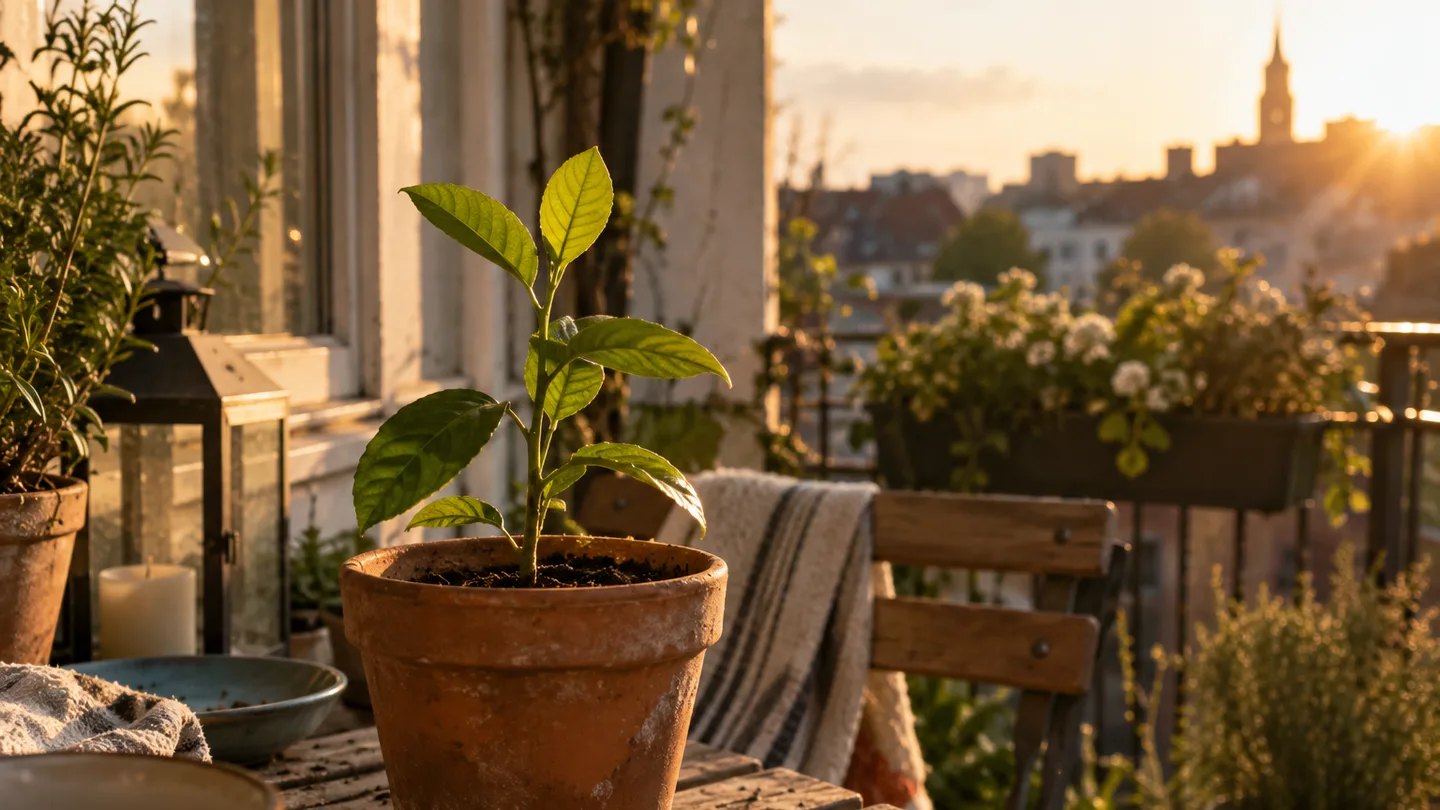
Fresh seed, warm mix, shallow sowing: the first 2–6 weeks
Use a seed from a fresh lemon and sow it soon after you remove it. Rinse away the sticky pulp; leftover fruit can encourage mould on the mix. A plump seed that hasn’t dried out is a sensible choice. If the fruit has been refrigerated, the seed may still sprout, but no seed is certain to germinate.
Fill a small pot with a free-draining potting mix, moisten it, and let excess water run out. Sow the seed about 1 cm (½ in) deep, then cover it lightly. Keep the mix evenly moist, not sodden. A clear cover can slow drying while the seed is underground, but lift it for fresh air and remove it once a shoot appears. You’re aiming for warmth around 21–27°C (70–80°F); a cold windowsill can slow the process even if the room feels comfortable.
Allow roughly 2–6 weeks for germination, with the understanding that temperature, seed condition, and moisture can shift the timing. Check the surface every few days. If it’s drying, add a little water; if the pot feels heavy and the mix stays shiny or waterlogged, stop watering and check that the drainage holes are clear. The seed needs moisture, but a sealed, saturated pot leaves little air around it.
Once a shoot emerges, move the pot into bright light rather than leaving it covered in a warm, dim corner. A seedling that appears tall and thin is reaching for light; warmth alone won’t make it sturdy. For a second perspective, university extension guidance on citrus seed propagation is a useful topic to look up.
The first pot: drainage holes and a 7–10 cm (3–4 in) starting diameter
A pot about 7–10 cm (3–4 in) across, holding roughly 0.5–1 L, is a practical starting size for one seed or a small seedling. The exact capacity varies with the pot’s shape, so use the diameter as a shop-floor guide and check the volume printed on the label when available. A small container is easier to keep evenly moist than a large tub with a tiny root system sitting in it.
Choose a pot with open drainage holes. Water needs a route out; if it collects at the bottom, the lower mix can remain wet long after the surface looks dry. Adding gravel below the potting mix doesn’t fix blocked drainage. The mix itself holds water above a change in texture, so a gravel layer can leave the wettest zone higher in the root area instead of helping it escape. Use one consistent, airy potting mix from top to bottom.
Don’t repot just because a certain number of weeks has passed. Look for roots beginning to reach the drainage holes or a root ball that holds together when you ease it from the pot. If the mix falls away and the seedling has only a few fine roots, put it back gently and give it more time. Pulling at a fragile stem to inspect it can do more harm than waiting.
When buying a container for edible plants, avoid materials or finishes that are not intended for food-growing use if they could leach into the mix. A plain, purpose-made nursery pot inside a decorative outer pot is a simple way to keep drainage functional while keeping the display tidy.
Light is the bottleneck indoors: aim for 6–8 hours of direct sun
Set the seedling in the brightest position you have, ideally where it receives about 6–8 hours of direct sun. A room can feel bright to you while a plant sits several feet from the window and receives much less usable light. Glass, window direction, nearby buildings, and seasonal changes all affect how much sun reaches the leaves.
Watch the new growth rather than judging by the room. If stems lengthen between leaves, lean toward the window, or look weak under a small crown of leaves, the plant is signalling that it needs more light. Turn the pot occasionally so it doesn’t keep growing toward one side. If you move it from a dim spot into strong sun, do that gradually; a sudden change can scorch leaves that developed in lower light.
A grow light can help when the window is insufficient. As a starting routine, provide about 12–16 hours of light per day, then allow a dark period. That range is not a universal setting: fixture strength and distance from the leaves matter, and a weak light placed far away may not make up for a gloomy window. Follow the manufacturer’s directions for distance, and watch the plant for stretched growth or bleached, stressed leaves as you adjust.
On a balcony, moving the pot can be more useful than buying another accessory. I’d first map the sun across the space over a clear day, then place the lemon where the direct light lasts longest and the pot is protected from hard wind. A location that gets morning sun and afternoon shade may be a workable compromise in a hot spot; in a cool, dim position, the same arrangement may leave the plant short of light. For indoor setups, best grow lights for fruit trees grown indoors is a related guide to consult.
Water when the top 2.5–5 cm (1–2 in) dries—not by the calendar
Push a finger into the mix before watering. If the top 2.5–5 cm (1–2 in) is dry, check the pot’s weight and the mix farther down; if the root area is still damp, wait. A wooden skewer inserted near the side can help you judge deeper moisture without disturbing the seedling. With practice, lifting the pot gives you another quick clue: a pot that feels much lighter than it did after watering is drying out.
When it is time, water slowly over the surface until excess drains from the holes. Empty water from a saucer or decorative cachepot so the pot isn’t left standing in it. The interval changes with pot size, material, heat, wind, and airflow. A small plastic pot on a sunny balcony may dry much faster than a larger pot indoors, so a fixed weekday schedule is a poor substitute for checking the mix.
Persistently wet soil and a root ball that has dried hard can both leave a lemon looking unhappy. If the mix stays wet and the pot remains heavy, check drainage and pause before adding more water. If water runs down a gap at the edge while the centre stays dry, apply it in several slow passes so the root ball can take it up. Drooping alone doesn’t tell you which problem you have; check the soil before reaching for the watering can.
Feed only while the plant is actively producing growth, using a fertilizer labelled for citrus or container plants and following its label. A seedling needs less than a mature, heavily growing tree, and a fixed dose without knowing the product strength is guesswork. If new growth is pale or stalled, check light, roots, and watering first; adding more fertilizer won’t correct a plant that is struggling in cold, soggy mix.
For the related routine, see how to water citrus trees in pots. It’s more useful to build the habit of checking moisture than to memorize a number of days between waterings.
Pot up in stages: from a seedling cup to a 19–38 L (5–10 gal) patio pot
Move the lemon up when roots are filling the current container, not while it is still a tiny seed in a roomy tub. At each move, choose a pot about 5–10 cm (2–4 in) wider than the root ball. That gives new roots fresh mix to colonize without leaving a large volume of unused soil wet around them.
| Stage | Practical container guide | What to check |
|---|---|---|
| Seed or very small seedling | 7–10 cm (3–4 in) across; about 0.5–1 L | Drainage holes and evenly moist mix |
| Established young plant | Choose a pot 5–10 cm (2–4 in) wider than the root ball | Roots reaching holes or holding the mix together |
| Later patio tree | 19–38 L (5–10 gal) may be a useful home | Tree size, stability, lifting weight, and available light |
Those are working guides, not a schedule or a guaranteed final size. A tapered container with the same rim diameter may hold a different volume, and a large pot filled with wet mix can be awkward to move. Before choosing the eventual patio pot, decide where it will live and whether you can shift it for sun, shelter, or winter. Weight matters more on a balcony than it does in a garden bed.
When you repot, water the plant first if the root ball is dry, then ease it out while supporting the base. Set it at the same depth it was growing before, fill around the sides, and water enough to settle the mix. Don’t bury the trunk deeper to make a short seedling look taller. The root flare—the point where the trunk widens into the roots—shouldn’t be covered by a mound of wet mix.
A 19–38 L (5–10 gal) container can serve as a later patio home, but a vigorous tree may eventually need more room, and some balcony growers may prefer to keep a tree smaller. My preference is to increase pot size only when roots and growth justify it: container volume is useful, but so are manageable weight and the ability to move the plant. For comparable seed-grown projects, see grow apple tree from seed and growing avocado from seed.
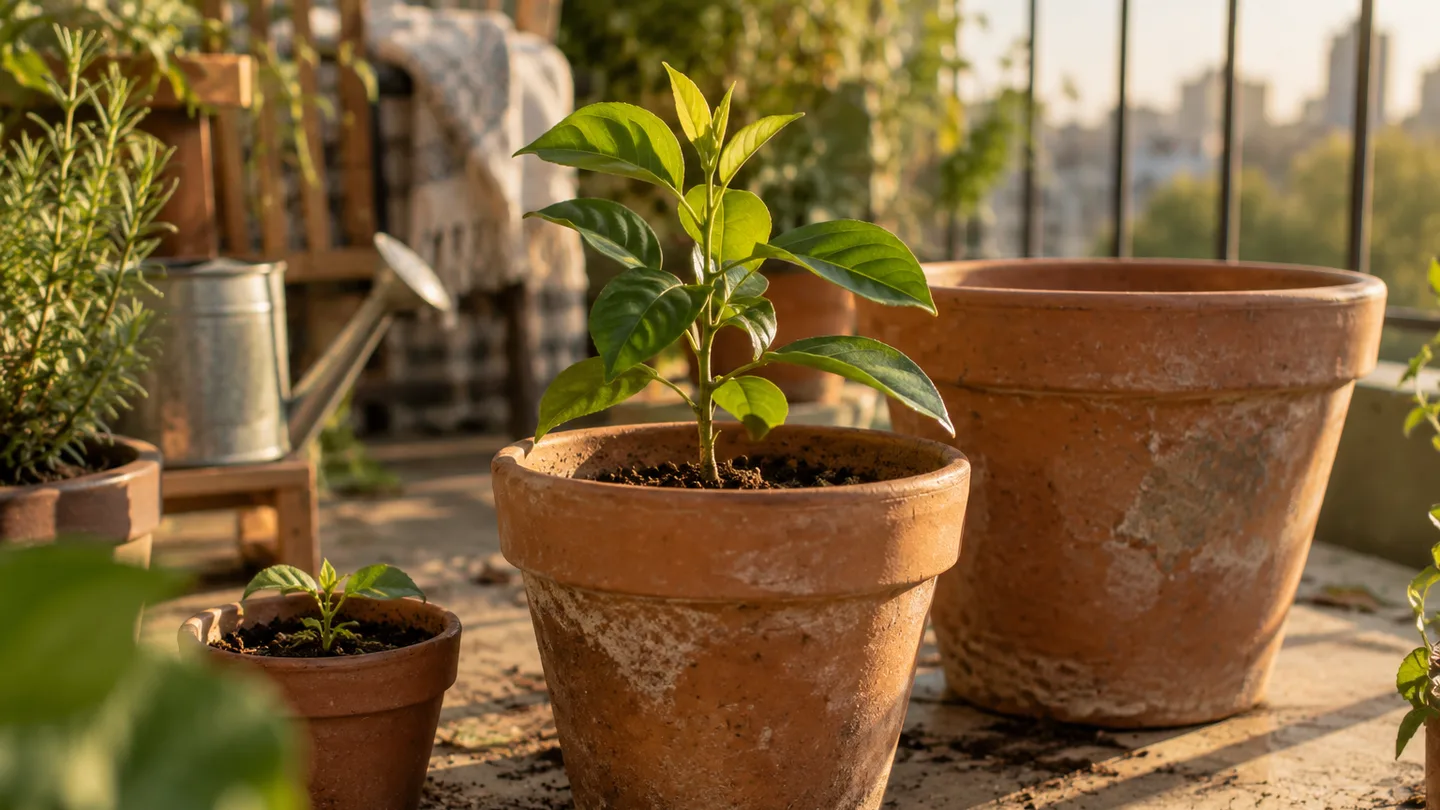
Winter survival and the long wait for flowers
If your outdoor space gets cold, plan where the pot will go before autumn weather arrives. Move it indoors before cold conditions threaten it; protect it from temperatures near 5°C (41°F) and below. A container exposes roots to colder conditions than the ground does, and a pot on an exposed balcony also faces wind. The exact risk depends on the tree, how long the cold lasts, and how sheltered the position is, so don’t treat one temperature as a magic safe line.
Indoors, give the tree the brightest winter position available and keep it away from direct blasts of hot air. Growth may slow when light and warmth decline. Check the mix before watering, because a plant using less water in a cool, dim room can remain wet longer than it did outdoors. If you bring it back outside in spring, acclimate it gradually rather than moving it straight from a room to strong sun and wind.
Seed-grown lemon trees can take years to flower, sometimes a decade or more, and a tree kept indoors may not fruit. Those are possibilities, not a countdown. The next useful sign is steady, healthy new growth: leaves that develop normally and stems that strengthen tell you more about the care you’re giving now than a calendar estimate does. If earlier fruiting or a more predictable variety matters, grafting a suitable fruiting lemon onto an established seedling is an option, but it requires compatible plant material and careful technique. Look up authoritative citrus horticulture references on grafting before attempting it.
For the cold-season routine, see how to overwinter a potted lemon tree. This is also where I’d be realistic about space: if the plant needs a brighter winter spot than you can provide, growing it for the pleasure of the foliage may still be worthwhile, but fruit shouldn’t be the measure of success.
Why did two shoots come from one lemon seed?
Some citrus seeds can form more than one embryo, so more than one shoot may emerge from a single seed. The shoots may not all have the same genetic origin. Let them establish before deciding whether to separate them; tugging seedlings apart while their roots are tangled can damage both.
Can I graft a seed-grown lemon later?
Yes, a suitable fruiting variety can be grafted onto an established seedling. The grafted top can make the fruit type more predictable than relying on the seedling alone, but success depends on compatible material, timing, and technique. A seedling is a possible rootstock, not an automatic shortcut.
Can I use a lemon seed that has been refrigerated?
A plump seed from a refrigerated lemon may still germinate. I’d focus on removing the pulp and sowing the seed before it dries out completely, rather than rejecting it solely because the fruit was chilled. Keep a second seed if you want a backup; neither one is guaranteed to sprout.
This week, choose a bright spot and check how many hours of direct sun reach it. Then sow a fresh, cleaned seed in a draining starter pot, label the date, and check the mix every few days rather than watering by habit.
Frequently Asked Questions
Why did two shoots come from one lemon seed?
Some citrus seeds can produce more than one embryo and therefore more than one shoot. Explain that seedlings from the same seed may not all have the same genetic origin, and advise waiting until they are established before attempting to separate them.
Can I graft a seed-grown lemon later?
Yes. Explain that grafting a suitable fruiting variety onto an established seedling can change the likely fruit type and shorten the wait compared with relying on the seedling alone, but it takes compatible material and careful technique.
Can I use a lemon seed that has been refrigerated?
A plump seed from a refrigerated fruit may still germinate; freshness and avoiding complete drying matter more than the fruit having been chilled. Set expectations that no seed is guaranteed to sprout.