Rice Water for Plants: How to Use It Without Root Rot
Rice water can be used on potted plants, but it is not a root-rot remedy. The practical rule is simple: use plain, cooled, diluted rice-rinse water only when the pot is already due for its normal watering; never pour it onto mix that is still wet.
The word rice is not the risk; the wet root zone is. Roots need moisture and air, and a pot that stays saturated gives decay a better chance to start.
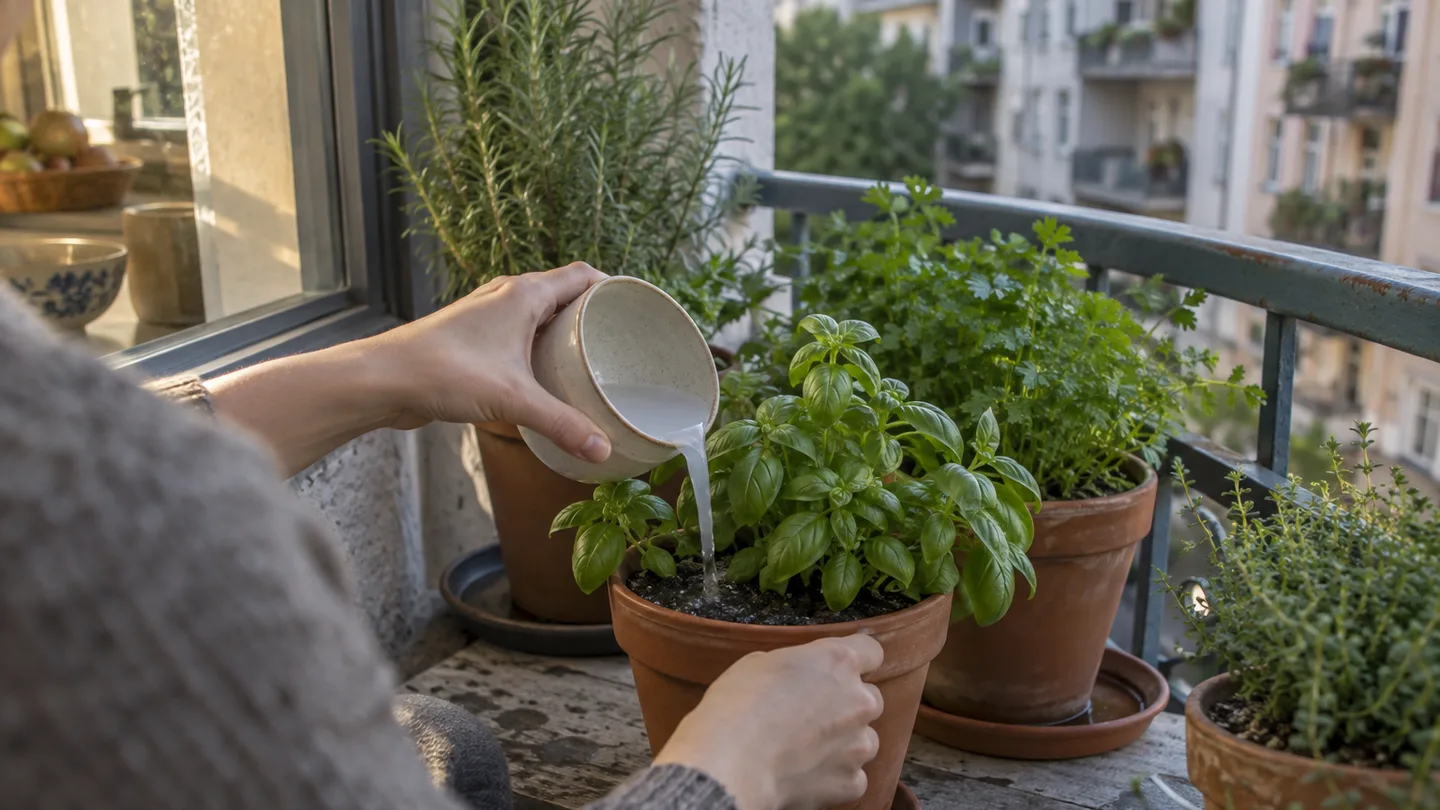
The honest answer: rice water is optional moisture, not a root-rot treatment
Rice water is best treated as an optional kitchen-water experiment, not as medicine for a struggling plant. If a plant has root rot, the problem is already in the root zone: the mix has stayed wet long enough for roots to lose access to air, weaken, and begin to decay. Adding another liquid, even a mild one, does not repair that damage.
I start with the pot rather than the rice. Is the mix dry at the depth where most of the roots are? Does the container drain freely? Is water sitting in the saucer? Those questions matter more than whether the liquid came from rinsing rice.
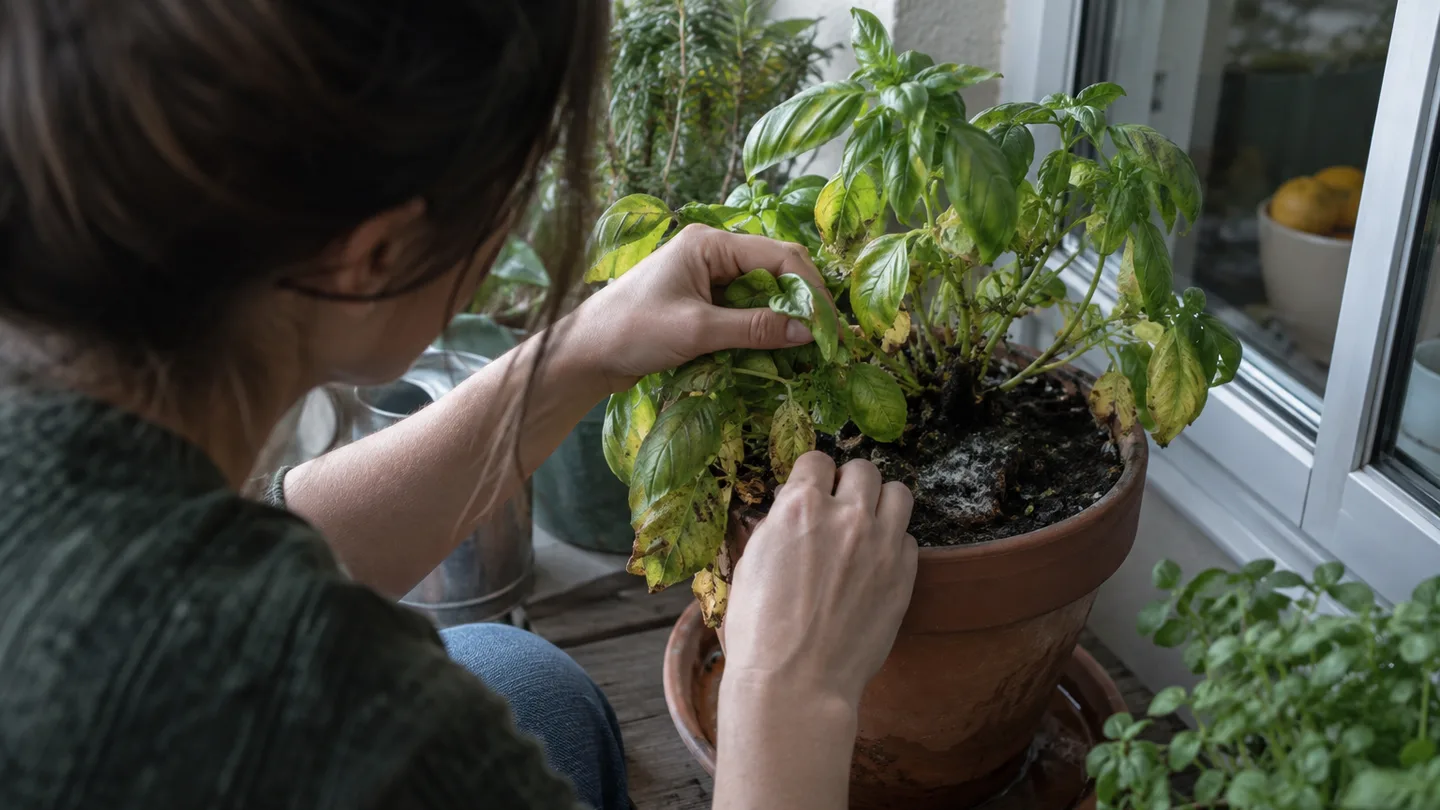
In my own balcony setup, I once reached for cooled rice-rinse water after a basil pot looked thirsty. The top layer was dry, but the deeper mix was cool and clung to my finger. I left the rice water in the jar and waited. That small check mattered because the plant did not need more moisture; it needed time for the existing water to move out and air to return to the mix.
Use rice water only as a replacement for an ordinary watering. Do not give the plant its normal water and then add rice water on top. If the pot is already wet, the safest rice-water application is no application at all.
Three kitchen liquids, three risk profiles: rinse, cooked, fermented
Three kitchen liquids are worth separating before you pour any of them. Water from rinsing uncooked rice, water left after boiling rice, and deliberately fermented rice water may look similar in a jar, but they are not a standardized plant feed.
My safest baseline is plain, unsalted, unseasoned, fully cooled liquid. I discard anything with oil, sugar, seasoning, visible mold, slime, or an unexpectedly sour or rotten smell. A plant pot is not a compost bin, and a questionable kitchen leftover is not made safer by dilution.
| Type | My decision | Why |
|---|---|---|
| Fresh rice-rinse water | Keep as the optional starting point; dilute it | It is usually milder than cooked rice water, but its starch and mineral content still varies with the rice, rinsing method, and water. |
| Cooked rice water | Second choice; use only if plain, fresh, cooled, and diluted | Boiling can leave a starchier liquid that turns stale more quickly, especially if it is left warm. |
| Fermented rice water | Skip as a default | Fermentation changes the mixture’s acidity, microbes, smell, and strength without giving you a reliable household concentration. |
| Seasoned, oily, moldy, slimy, or foul-smelling liquid | Discard | Those additions are unnecessary in a pot and make the liquid harder to judge. |
Fermented does not automatically mean better. I treat that word as a warning that the mixture has changed, not as proof that it has become a superior fertilizer. If you are curious about fermentation, keep the experiment away from plants that matter to you and do not use a strong-smelling batch indoors.
For storage, I use food-safety guidance on storing cooked rice as the stricter reference rather than relying on a gardening video. Fresh is simplest. My conservative limit is the same day at room temperature and roughly 24 to 48 hours in the refrigerator, with an immediate discard if the liquid develops an off smell, slime, mold, or unexpected fermentation.
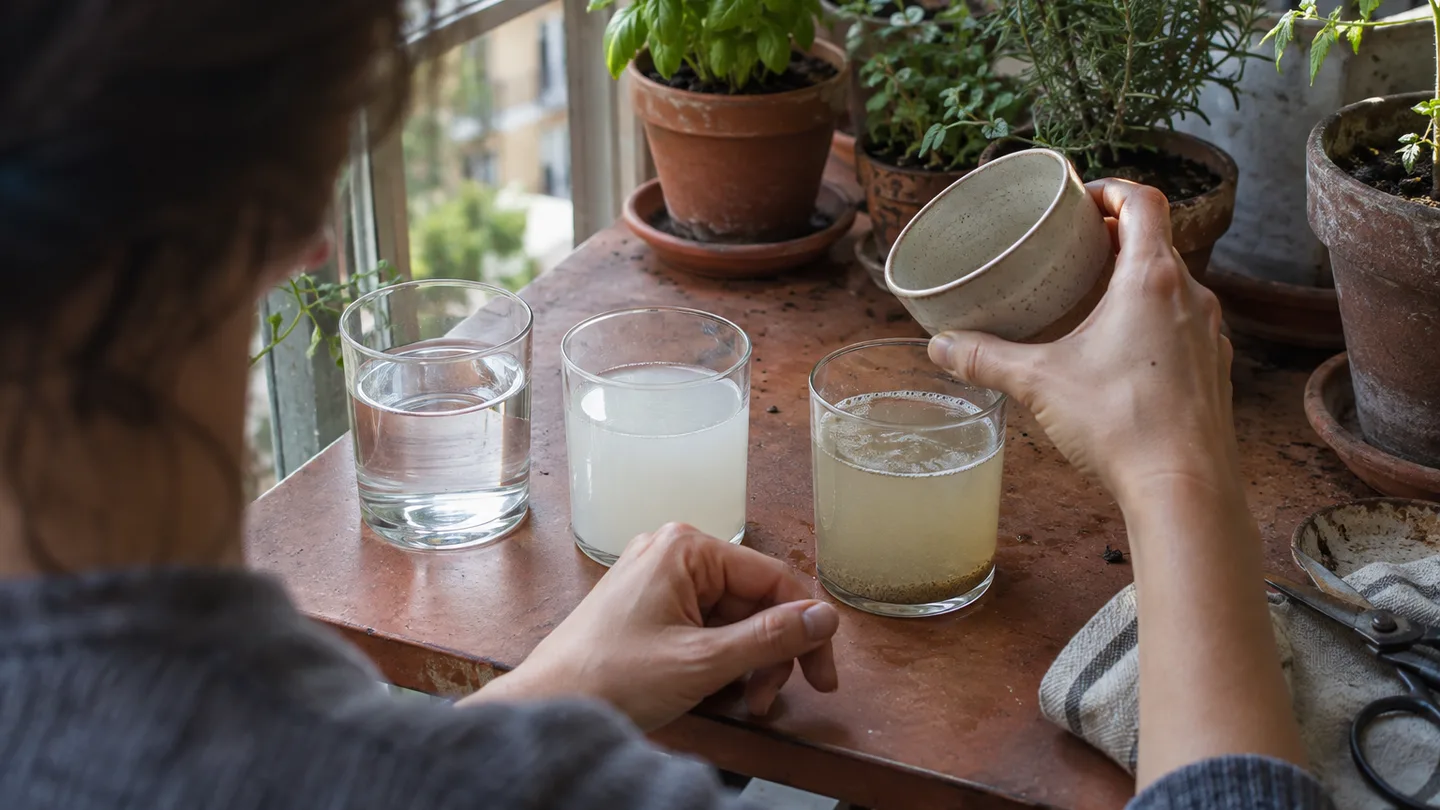
A cautious starting plan: 1:1 dilution and a 3–4 week ceiling
The safest trial is boring on purpose: dilute, replace a normal watering, and wait. A 1:1 mixture of one part plain rice-rinse water to one part clean water is my conservative starting point. It is not a scientifically fixed fertilizer recipe, and I would not present it as one.
Use this sequence during active growth:
- Check the root-zone moisture first. If the pot is still wet below the surface, wait.
- Prepare a fresh batch of plain, cooled rice-rinse water and mix it half-and-half with clean water.
- Use that mixture instead of the plant’s normal watering, not in addition to it.
- Pour slowly over the potting mix until the root ball is evenly moistened and a little water begins to drain.
- Empty the saucer, then leave the pot alone until it reaches its usual dry-down point.
For a first trial, I would use it no more than once every 3 to 4 weeks during active growth. Stretch the interval or skip it entirely if the room is cool, light is weak, the plant is small in a large pot, or the mix normally takes more than about a week to dry at root depth.
I also separate rice water from complete fertilizer. Do not combine both on the same day while you are trying to understand how the plant responds. Adding several inputs at once makes it difficult to tell whether a problem came from excess moisture, fertilizer salts, a dense mix, or the plant’s ordinary seasonal slowdown.
If a normal-drying plant receives a mild rice-water drench once every few weeks, I would expect the rice component itself to add little root-rot risk. That expectation depends on the pot draining and drying normally; it would be wrong if the same plant stayed wet for days after every watering.
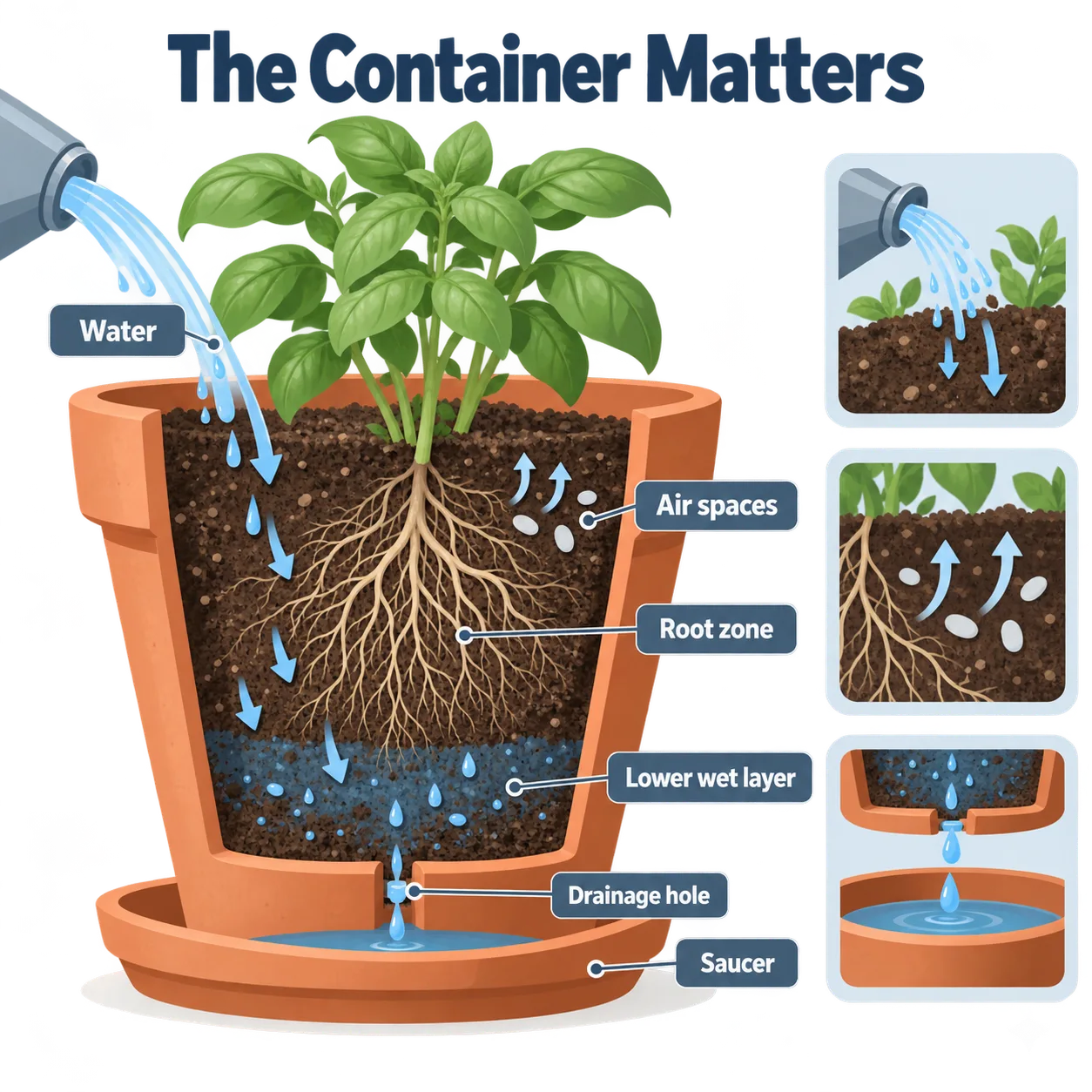
Root-rot prevention starts with the pot: drainage hole, air space, and the saucer
The container matters more than the kitchen liquid. Before using rice water, check that the pot has an unobstructed drainage hole, the mix contains enough coarse or fibrous material to leave air spaces, and the pot is not dramatically oversized for the root ball.
An oversized container can hold a large reserve of wet mix around a small root system. The surface may look ready for another watering while the lower section remains damp. Low light, cool conditions, a glazed pot, and a heavy mix can all lengthen that wet period.
A perched water table is the saturated layer that can remain at the bottom of a container above the drainage hole. It forms because water does not leave every pore the moment it reaches the hole. The upper mix can look crumbly while the lower mix still has very little air.
This is why I do not put gravel or stones in the bottom of a pot as a drainage cure. The layer does not remove the saturated boundary; it can simply reduce the volume available to roots and move the wet zone higher in the container. A clear drainage hole and an appropriate potting mix solve a different problem more directly.
Let runoff leave the pot, then empty the saucer after about 10 to 15 minutes. That is my practical window, not a universal timer. The point is to avoid leaving the lower part of the container standing in water. If the saucer refills after every watering, the pot may be sitting on an uneven surface, the hole may be blocked, or the mix may be so dense that water is moving through a narrow channel instead of wetting the root ball evenly.
For a second explanation of the mechanics, I would use university extension guidance on container drainage rather than a recipe claiming that one kitchen ingredient prevents root rot.
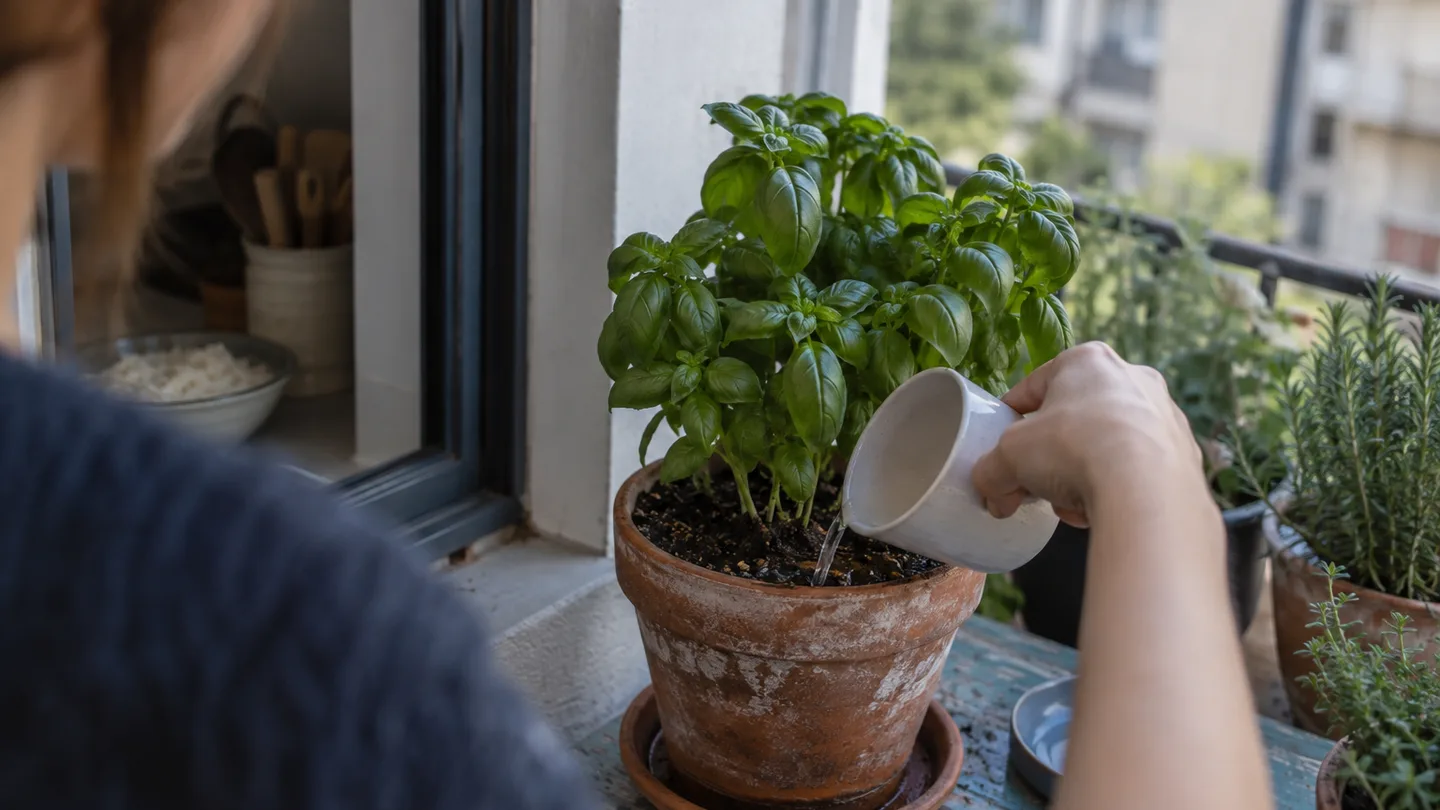
The pour itself: check, drench, drain—never top up a wet pot
For the baseline, I’d rather answer how much to water container plants than invent a special cup measurement for rice water. Rice water should follow the plant’s ordinary watering volume. The only difference is that you are replacing part of that water with a diluted, optional liquid.
- Check below the surface. Feel the mix at the plant’s usual root depth, or lift the pot if it is small enough to judge by weight. A dry crust alone is not a reliable signal.
- Prepare it fresh. Use plain, cooled, diluted liquid. Do not warm it, sweeten it, season it, or add oil.
- Pour onto the mix. Keep the stream away from leaves, stems, and the crown where the stems meet the soil. Rice water has no special reason to be sprayed on foliage.
- Moisten the root ball evenly. Pour slowly rather than tipping a large amount into one spot. Stop when a small amount of runoff appears.
- Drain and wait. Empty the saucer, then wait for the same moisture cue you use with plain water.
Shallow surface sips are a poor compromise. They can keep the top layer damp while leaving dry pockets lower down, especially if the mix has pulled away from the pot wall. Repeated pours onto already wet soil create the opposite problem: water is present, but air is being pushed out of the root zone.
Read the failure early: a symptom → cause → fix decision tree
The most useful diagnosis starts with what you can see and feel. A yellow leaf by itself does not prove root rot. I pair the leaf symptom with the moisture of the mix, the smell of the pot, and the condition of the roots before deciding what to do.
| What you notice | What it may indicate | First action |
|---|---|---|
| Yellow leaves and wet mix | The root zone may be staying too wet, although older leaves can yellow for other reasons. | Stop rice water and let the pot reach its normal dry-down point. Check the drainage hole before adding anything else. |
| Limp leaves while the soil is wet | Roots may be short of air and unable to move water effectively to the leaves. | Do not respond with more water. Inspect the lower mix and roots if the limpness persists. |
| Sour or rotten smell from the pot | The mix is staying saturated and decomposing under low-air conditions. | Stop all additives. If roots are soft or brown, repot into fresh, airy mix rather than merely diluting the rice water. |
| White or fuzzy growth on the surface | The surface has remained damp; this is not, by itself, proof that the roots are rotting. | Pause extra watering, improve airflow, and let the appropriate surface layer dry between waterings. |
| Fungus gnats around the pot | The upper mix may be staying persistently damp. | Stop rice water and correct the moisture pattern. Do not treat the presence of gnats as a reason to add another liquid. |
| White crust on the mix or pot rim | Mineral or fertilizer residue is more likely than root rot. | Do not add rice water. If the pot drains freely, use plain water to flush the mix, then allow it to drain completely. |
| The pot stays wet for 7 to 10 days | The container, mix, light level, or watering volume is not matching the plant’s demand. | Stop rice water, check the hole and pot size, and review the plant’s light and airflow. |
| Soft stems or mushy brown roots | The plant has a serious root-zone problem that needs inspection. | Remove the plant, trim away clearly soft roots with clean scissors, and repot in fresh mix if enough firm roots remain. |
For a broader checklist, overwatered plant symptoms are more useful than treating every yellow leaf as a diagnosis. The key distinction is whether the plant is limp because it is dry, or limp because damaged roots cannot supply the leaves despite wet soil.
When I find soft, brown roots, I do not try to rescue the plant with weaker rice water. I correct the physical conditions first: remove stagnant mix, use a clean pot with a clear hole, choose a lighter mix, and hold fertilizer until the plant is producing healthy new growth. A liquid additive cannot compensate for missing air space.
When plain water wins: plants and situations that should skip rice water
Plain water wins whenever the immediate need is simply moisture. Rice water is also a poor fit for plants that depend on a pronounced dry-down, especially succulents and cacti in small pots. Their main challenge is often getting dry enough between waterings, not receiving another weak kitchen input.
I would skip rice water for a recently repotted plant, a seedling with a small root system, a plant in a cool or dim room, and any container whose mix already dries slowly. I would also skip it for a pot that has no drainage hole or a saucer that cannot be emptied.
If the plant genuinely needs nutrients, a complete, labelled fertilizer is the more predictable choice because its intended dilution and nutrient balance are stated on the package. If you are comparing rice water with compost tea for plants, apply the same question to both: does the plant need food, or does it need the root zone to dry and breathe?
Rice water is optional. You do not need it for a healthy container garden, and you do not need to force a use for every bowl of rinse water. My preference is to use it occasionally only when the plant is actively growing, the pot dries at a sensible pace, and the liquid is fresh enough that I would not hesitate to discard it.
Quick questions about rice water for plants
How long does rice water last before I should discard it?
Use it fresh whenever possible. My conservative boundary is the same day at room temperature and roughly 24 to 48 hours refrigerated. Discard it sooner if it smells sour or rotten, develops slime or mold, or begins fermenting unexpectedly.
Can I spray rice water on plant leaves?
I would use it as a soil drench instead. There is no clear reason to put it on the leaves, and a dried starch residue can leave a film without solving a root-zone watering problem.
Is fermented rice water better than regular rice-rinse water?
Not reliably. Fermentation changes the microbes, acidity, and strength of the mixture, but it does not give a consistent household concentration. Fresh plain rinse water is the simpler default.
Can I use rice water on succulents and cacti?
Usually skip it, especially in a small pot, low light, or cool room. Let the plant’s mix dry properly between waterings before considering any optional additive.
Before the weekend, discard any old batch, check the drainage hole, and feel the mix below the surface of the pot. If the plant is actively growing and the container dries normally, prepare a fresh 1:1 batch for the next ordinary watering. If the pot is still wet, use nothing but patience.
Frequently Asked Questions
How long does rice water last before I should discard it?
Use it fresh whenever possible; set a conservative limit of the same day at room temperature and roughly 24–48 hours when refrigerated, and discard any batch that develops a sour or rotten smell, slime, mold, or visible fermentation.
Can I spray rice water on plant leaves?
There is no clear need to use it as a foliar spray; use it as a soil drench instead, because leaf residue can dry into a film and does not solve a root-zone watering problem.
Is fermented rice water better than regular rice-rinse water?
Not reliably. Fermentation changes the mixture’s microbes, acidity, and strength without giving a consistent household concentration, so fresh plain rinse water is the simpler default.
Can I use rice water on succulents and cacti?
Usually skip it, especially in small pots or low light, because these plants depend more on a thorough dry-down between waterings than on a weak kitchen-water additive.